
Tarique Rahman Returns to Bangladesh: A Game Changer for Upcoming Elections?
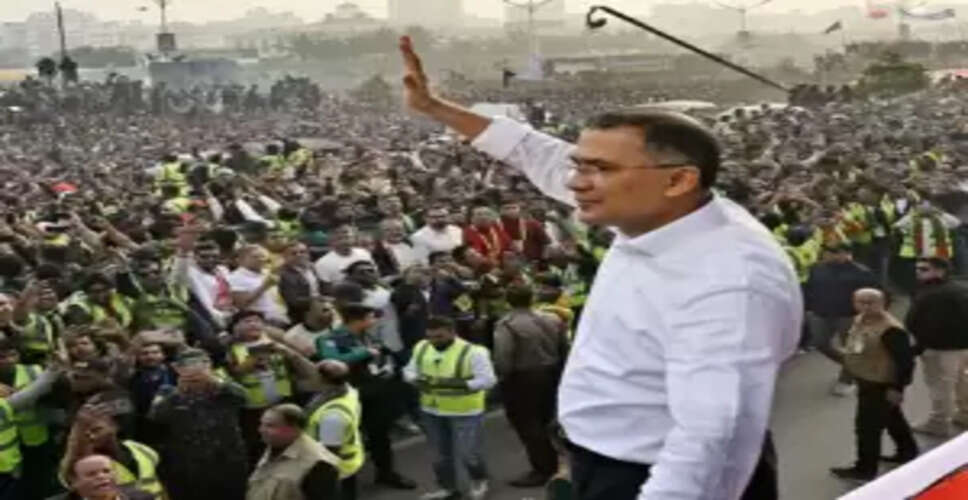
Tarique Rahman's Significant Return
Dhaka: Tarique Rahman, the son of former Prime Minister Khaleda Zia, has made a notable return to Bangladesh after spending 17 years in exile, positioning himself as a key figure in the upcoming electoral contest set for early next year.
Having chosen self-exile in London since 2008, Rahman has been the acting chairman of the Bangladesh Nationalist Party (BNP) since 2018.
With the Bangladesh Awami League, led by Sheikh Hasina, unable to participate in the elections and Khaleda Zia facing health issues, Rahman's return fills a significant political void. Although other contenders, such as Jamaat-e-Islami and various student organizations that emerged following last year's protests, are also in the race, Rahman's refined political strategy and his mother's legacy are expected to play a crucial role in his political journey.
Upon his return, Rahman has encountered criticism regarding his past, particularly his 2007 arrest on corruption charges, from which he was later cleared in what has been described as a negotiated settlement. He had distanced himself from active politics before assuming the role of acting chairman.
His return is perceived as a strategic political move, possibly orchestrated by the interim government to ensure a 'managed transition' before the elections. The grand reception he received upon arrival further suggested a state-supported return.
"The shift from being labeled a 'fugitive' to a 'frontrunner' was not solely due to public protests but involved a series of high-level agreements, particularly a June 2025 meeting in London with Chief Adviser Muhammad Yunus. This meeting occurred amid controversies surrounding the Yunus-led interim government, while radical factions aimed to promote chaos," stated a report from a research center focused on South and West Asia.
Rahman's return, just months before the elections, indicates both his and the BNP's determination to be serious contenders in the political landscape.
Transitioning from a 'fugitive' to a potential prime ministerial candidate, Rahman is also working to strengthen his position by promoting a 'Bangladesh First' narrative, positioning himself and the BNP as a moderate alternative to radical and Islamist groups.
In a recent public address, Rahman shared a broad and inclusive vision for a 'safe Bangladesh', moving beyond mere rhetoric and referencing Martin Luther King Jr. with the statement: 'I have a plan for the people of my country and for my country.'