
Taliban Conducts Airstrikes in Pakistan, Escalating Tensions
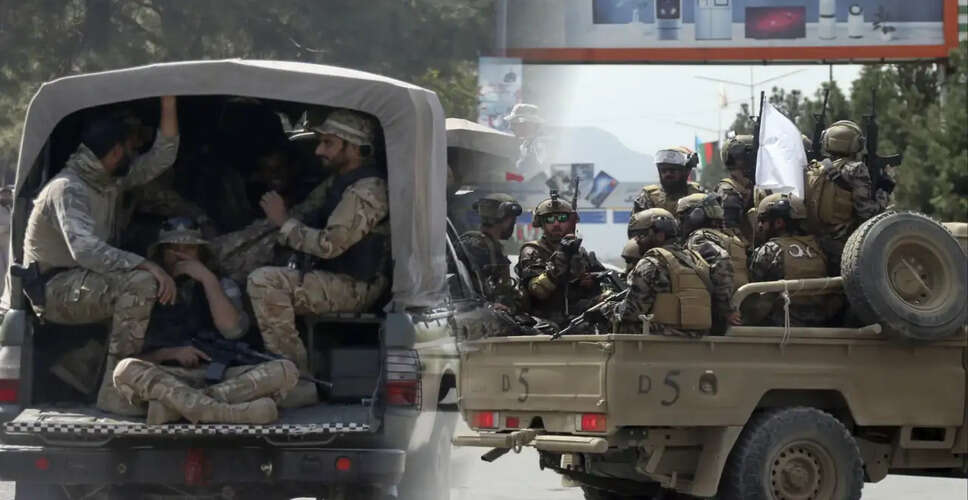

Taliban's Airstrikes Target ISKP in Pakistan
The Taliban-led government in Afghanistan has announced that it executed cross-border airstrikes against positions of the Islamic State Khorasan Province (ISKP) within Pakistan. This action signifies a notable increase in tensions between the two neighboring nations, particularly following recent military operations by Pakistan on Afghan soil. As reported by TOLOnews, the Afghan Ministry of Defence stated that its air force targeted several sites in Pakistan's Balochistan and Khyber Pakhtunkhwa provinces, alleging these locations were being utilized to plan attacks against civilians in Afghanistan.
Targeting ISIS Command Centers
The Afghan Defence Ministry claimed that the airstrikes focused on what it referred to as joint operational centers and logistical hubs of ISIS in:
- Saranan area of Pishin district, Balochistan
- Shah Salim Valley in Chitral
- Kambar Khel in Khyber Pakhtunkhwa
Airstrikes Carried Out on Joint ISIS and "Mischief and Corruption" Centers in Balochistan and Khyber Pakhtunkhwa. The Afghan Ministry of Defense's Air Force carried out airstrikes tonight on a joint ISIS and "mischief and corruption" center in the Saranan area of Pishin District,… pic.twitter.com/rzVYRLNN38
— صدیق الله نصرت / Sadeequllah Nasrat (@NasratMOD) June 30, 2026
Officials from the Taliban asserted that these facilities were being used to orchestrate sabotage and terrorist operations against Afghanistan. Reports from TOLOnews also indicated that a school in the Saranan area, allegedly converted into an ISIS base, was among the targeted sites. The Taliban claimed that the operation resulted in significant casualties among ISIS fighters and inflicted considerable damage to their infrastructure, asserting that no civilians were harmed, although these claims remain unverified.
Firm Stance on Security Threats
In the aftermath of the airstrikes, Afghanistan's Ministry of Defence issued a stern warning regarding cross-border security. They stated, "The air forces of the Afghan Ministry of Defence tonight conducted airstrikes on an ISIS joint centre and elements of evil and corruption in the Saranan area of Pushin district, Balochistan province." The ministry emphasized its commitment to addressing any threats to national security, declaring, "We will target every location that poses a threat to our security." This statement underscores Kabul's increasingly assertive stance against militant groups it accuses of operating from Pakistani territory.
Recent Pakistani Military Actions
This Afghan operation follows closely on the heels of Pakistani airstrikes and military actions along the border with Afghanistan. Pakistan reported that its forces targeted militant hideouts associated with the Tehreek-e-Taliban Pakistan (TTP), claiming to have killed at least 29 militants. However, the Taliban administration contested this narrative, alleging that the strikes resulted in the deaths of at least 38 civilians, including women and children. The United Nations Assistance Mission in Afghanistan (UNAMA) reported that at least 28 civilians were killed and 49 others injured, warning that casualty figures could rise as rescue operations continued. The discrepancies in casualty reports have further strained relations between Islamabad and Kabul.
India's Reaction to Pakistani Operations
Earlier this week, India condemned Pakistan's military actions within Afghanistan. The Ministry of External Affairs characterized the strikes as a "blatant act of aggression" that undermined Afghanistan's sovereignty and threatened regional peace and stability. India accused Pakistan of a "persistent pattern of reckless behaviour" by attempting to externalize its internal security issues through military actions beyond its borders. Pakistan has consistently accused the Taliban government in Afghanistan of harboring militants responsible for attacks within Pakistan, a claim that the Taliban has repeatedly denied, asserting that Pakistan's insurgency is an internal matter. With both nations now openly acknowledging military operations across their borders, the security situation along the Afghanistan-Pakistan frontier appears to be entering a more precarious phase, raising concerns about potential further escalations.