
Taiwan's Role in Upcoming Trump-Xi Summit: A Critical Discussion

Taiwan Takes Center Stage in Trump-Xi Talks
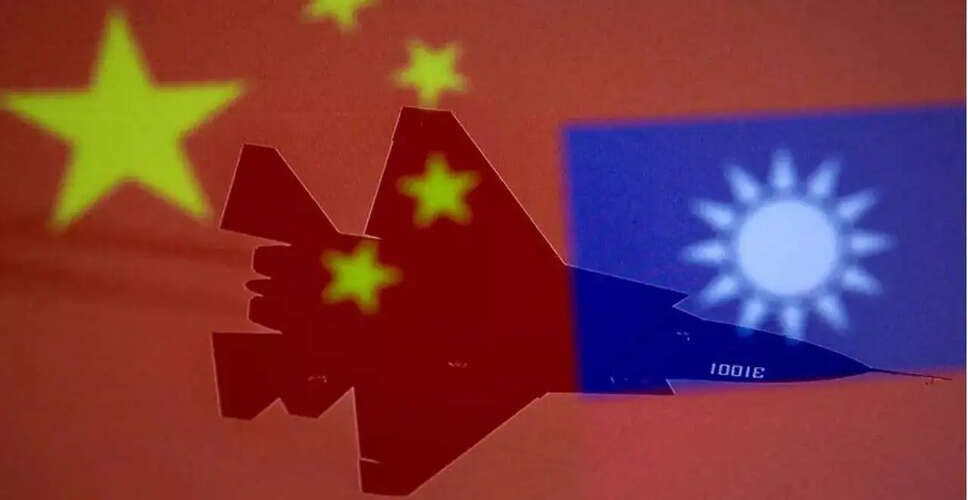
As President Donald Trump gears up for his upcoming summit with Xi Jinping in Beijing, discussions are anticipated to heavily focus on Taiwan, particularly regarding U.S. arms sales to the island. For China, Taiwan is considered a pivotal issue, and Xi is likely to press Trump to curtail or restrict American military support to the self-governing region.
A Long-Standing Flashpoint
The United States has long adopted a policy of 'strategic ambiguity' concerning Taiwan, providing support for its defense while refraining from officially recognizing it as an independent nation. This delicate balance is now facing challenges as Trump, known for his deal-making approach, meets with Xi. Chinese officials have indicated that Taiwan will be a significant topic of discussion, with Foreign Ministry spokesman Lin Jian emphasizing that the matter is non-negotiable for Beijing.
Concerns are mounting within Taiwan's government, as many fear that Trump might make concessions regarding arms sales or issue statements that align more closely with Beijing's stance that Taiwan is part of China.
Billions in Arms at Stake
Last year, the Trump administration approved $11 billion in arms sales to Taiwan, which sparked strong objections from China. An additional arms package valued at approximately $14 billion is pending final approval. Xi is expected to urge Trump to postpone or reduce these sales. During a phone conversation in February, Xi reportedly advised Trump to approach the arms sales issue with 'extreme caution.' China perceives ongoing U.S. military support as bolstering what it terms 'Taiwan independence forces,' prompting Beijing to enhance military exercises around the island and issue warnings regarding potential repercussions if the sales proceed.
Economic Leverage in Play
Analysts suggest that Xi might propose economic incentives, such as increased purchases of U.S. agricultural products or Boeing aircraft, in exchange for Trump refraining from advancing the latest arms package. However, strong bipartisan support for Taiwan in Congress, coupled with the recent approval of a $25 billion special defense budget by Taiwanese lawmakers, complicates the possibility of significant concessions from Trump. Secretary of State Marco Rubio has recently tempered expectations for any major policy changes, noting that both parties are aware of each other's positions on Taiwan.
Nonetheless, the summit poses risks for Taiwan. Even minor gestures from Trump, such as expressing stronger 'opposition' to Taiwanese independence instead of the usual 'does not support,' could be leveraged by Beijing to intensify diplomatic pressure on the island. The outcomes of the Trump-Xi meeting regarding this issue could significantly influence U.S.-Taiwan relations and the stability of cross-strait dynamics for years to come.