
Surge in Commercial Shipping Through Strait of Hormuz Following US-Iran Agreement

Increase in Vessel Traffic
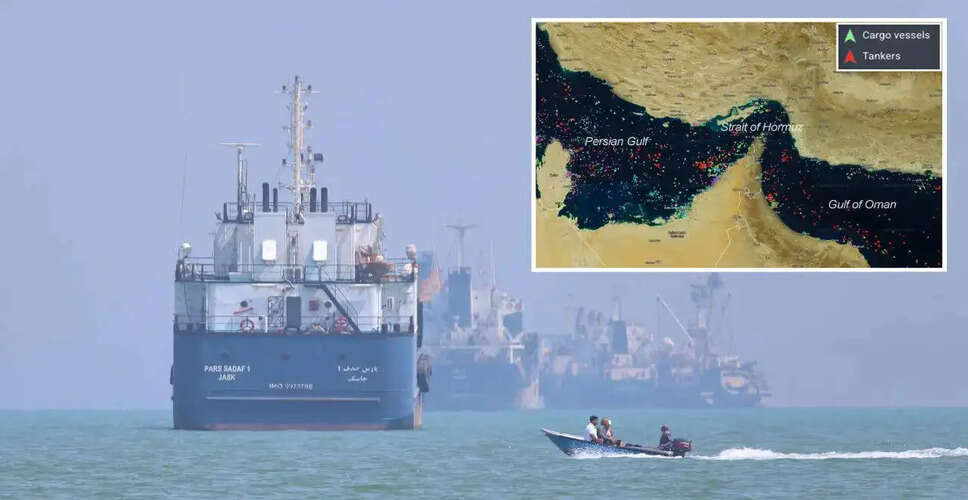
Recent maritime tracking data indicates that commercial shipping traffic in the Strait of Hormuz has reached its highest level in two months, following a peace agreement between the United States and Iran. On Thursday, 25 commercial vessels navigated this crucial waterway, marking the highest daily count since mid-April, as reported by maritime tracking company AXSMarine. This uptick in traffic follows a deal between Washington and Tehran aimed at ceasing hostilities and reopening the route.
Vessel Crossings Surge
AXSMarine noted, "On June 18, we recorded 25 verified commercial vessel crossings through the Strait of Hormuz, the highest single-day total since April 18, and over five times the average daily count observed in the first ten days of June." The strait had been effectively closed by Iranian forces following US and Israeli military actions that escalated into conflict on February 28. During this period, maritime authorities documented numerous attacks on vessels in the region. Although Iran briefly reopened the strait to commercial traffic on April 18, the average daily crossings had plummeted to about 7.6 since early March, according to AXSMarine.
Iranian Oil Exports on the Rise
The increase in shipping activity coincides with Iran's efforts to boost oil exports that had been limited by a US blockade. Shipping data from Bloomberg reveals that 11 tankers carrying a total of 20 million barrels of oil departed from the Iranian port of Chabahar this week. Previously, the US military had restricted these vessels from entering the Indian Ocean to limit Tehran's oil revenue. Most of Iran's oil exports are directed towards China, and while the recent US-Iran memorandum aims to enhance oil and gas flows in the region, the most significant increase in exports has been from Chabahar, located outside the Persian Gulf near Iran's border with Pakistan.
Ongoing Oversight and Future Uncertainty
Despite the uptick in traffic, Iran continues to manage maritime movement through the Strait of Hormuz. The Persian Gulf State Authority has mandated that shipping companies adhere to designated routes and has outlined potential transit fees for vessels. The future of shipping operations remains uncertain following the delay in negotiations for a permanent peace agreement between the US and Iran.
Confusion Over Waterway Status
There were initial concerns regarding the status of the Strait of Hormuz after a radio message suggested it had been closed again. However, Iranian officials later confirmed that commercial traffic was proceeding under the terms of the recent agreement with the US. Iranian Foreign Ministry spokesman Esmail Baghaei stated, "The armed forces of Iran, in accordance with the memorandum of understanding (MOU) to end the war dated June 18, 2026, have taken the necessary measures to ensure the safe passage of commercial vessels through the Strait of Hormuz, and shipping in this route is currently underway." Earlier, a statement from Iran's Islamic Revolutionary Guard Corps warned vessels against entering the strait, claiming the US had violated the memorandum signed by US President Donald Trump and Iranian President Masoud Pezeshkian. The US Central Command announced on Thursday that it had officially lifted its two-month blockade of Iranian ports.