
Supreme Court Upholds Access to Mifepristone Amid Ongoing Legal Battle
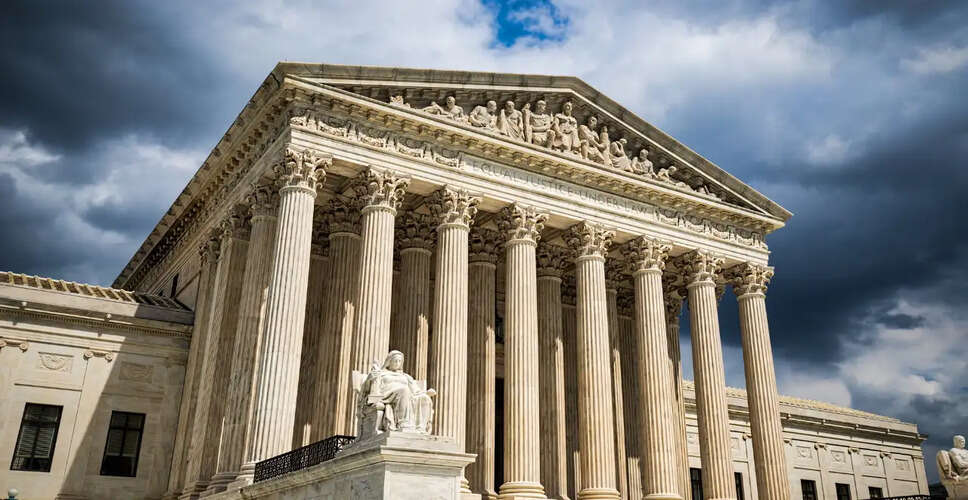

Supreme Court Decision on Mifepristone
On Thursday, the Supreme Court ruled to maintain women's access to mifepristone, a medication commonly used for abortion, while a lawsuit is still pending. This decision allows women to obtain the drug either at pharmacies or via mail without needing an in-person consultation with a healthcare provider. As the legal proceedings unfold, including a possible appeal to the Supreme Court, access to mifepristone is expected to remain uninterrupted for the foreseeable future.
The justices responded to emergency requests from the manufacturers of mifepristone, who are contesting a federal appeals court ruling that mandated in-person doctor visits and halted mail deliveries of the drug. The FDA, which approved mifepristone for abortion use in 2000, had eliminated the in-person requirement five years ago.
Dissenting opinions came from Justices Clarence Thomas and Samuel Alito, with Thomas arguing that the companies involved are not entitled to protection from what he termed 'lost profits from their criminal enterprise.'
Anti-abortion advocates, dissatisfied with the pace of the FDA's review process under the Trump administration, are urging for quicker action that could lead to stricter regulations on mifepristone, including a ban on telehealth prescriptions. The administration has stated that thorough reviews take time.
Earlier this week, FDA Commissioner Marty Makary resigned following criticism from Trump’s allies, particularly those opposed to abortion, who had urged his dismissal due to the slow progress on the mifepristone review.
This ruling comes four years after the Supreme Court's conservative majority overturned Roe v. Wade, allowing numerous states to impose strict abortion bans. The current case originated from a lawsuit filed by Louisiana, aiming to challenge the FDA's regulations on mifepristone prescriptions. The state argues that these regulations undermine its abortion ban and raises concerns about the drug's safety, despite the FDA's repeated affirmations of its safety and efficacy.
Alito, who authored the opinion that overturned Roe, acknowledged that Louisiana's efforts have been obstructed by medical providers and organizations that continue to supply mifepristone to women in the state despite the ban. He noted that the companies involved are aware of the situation yet continue to profit from the drug's use in Louisiana.
Thomas pointed out that mailing the pills violates the Comstock Act, a long-standing law that prohibits sending any items intended for abortion. Lower courts had indicated that Louisiana is likely to succeed in its case, leading a three-judge panel of the 5th U.S. Circuit Court of Appeals to rule that access to mifepristone via mail and telehealth should be suspended during the legal proceedings.
Mifepristone is typically used in conjunction with another medication, misoprostol, for abortion procedures. In 2023, medication abortions accounted for nearly two-thirds of all abortions in the U.S. Telehealth providers were prepared to switch to a regimen using only misoprostol if necessary.
While the Supreme Court's ruling maintains the current access to mifepristone, advocates for abortion rights caution that the legal battle is far from over. Serra Sippel, executive director of The Brigid Alliance, expressed relief that access remains protected but emphasized that such issues should not be subject to court decisions.
Gavin Oxley, a spokesperson for Americans United for Life, described the ruling as disappointing but not a defeat, asserting that the Supreme Court still has the chance to address the case comprehensively.
This ongoing dispute mirrors a previous case that reached the Supreme Court three years ago, where the justices blocked a ruling from the 5th Circuit that would have restricted mifepristone access. In that instance, the court unanimously dismissed a lawsuit from anti-abortion doctors, stating they lacked the legal standing to sue.
In the current situation, various medical organizations, the pharmaceutical industry, and Democratic lawmakers have voiced concerns about limiting access to mifepristone, warning that such a ruling could disrupt the drug approval process. The debate surrounding mifepristone's safety has persisted for over 25 years, with the FDA having relaxed several initial restrictions on the drug.
Despite the FDA's assurances, anti-abortion groups have continued to file petitions and lawsuits against the agency, alleging violations of federal law regarding safety issues. The Trump administration has remained notably silent on the Supreme Court's proceedings, refraining from submitting a brief regarding the case, which places it in a challenging position given the mixed public sentiment on abortion rights.