
Supreme Court Allows Dismissal of Steve Bannon's Contempt Conviction
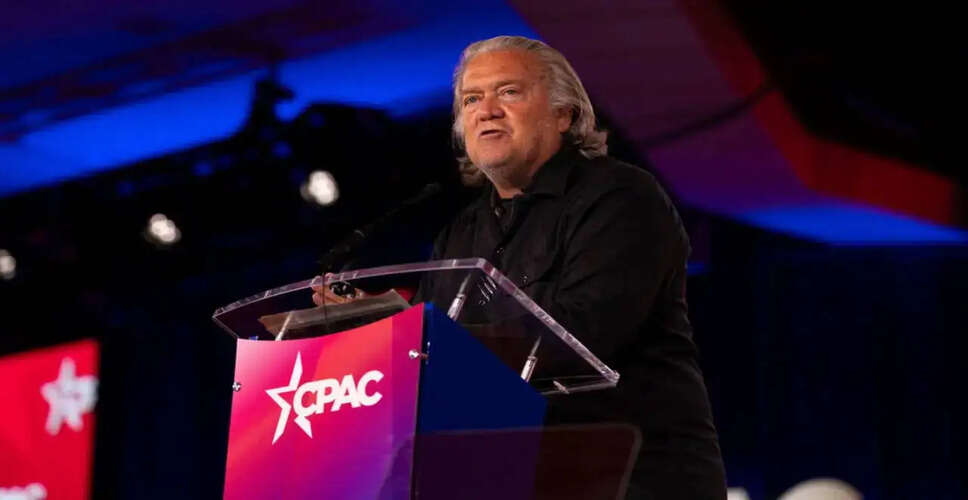
Supreme Court's Decision on Bannon's Case
On Monday, the United States Supreme Court paved the way for the Trump administration to potentially dismiss the contempt of Congress conviction against Steve Bannon, a former ally of the former president. The court responded to a request from the Department of Justice, overturning previous rulings that upheld Bannon's conviction and sending the matter back to a district court, where prosecutors are seeking dismissal.
Bannon, who currently hosts a popular podcast, was found guilty in 2022 for failing to comply with a subpoena from the House Select Committee investigating the January 6 Capitol attack. He has already completed a four-month prison sentence. In 2024, the Supreme Court denied his request to remain free while appealing the conviction, yet Bannon persisted in contesting the case.
Following Trump's return to the presidency, the Justice Department retracted its support for the conviction, a move that could lead the Supreme Court to dismiss the case. The administration stated that "the dismissal of this criminal case is in the interests of justice." Trump has consistently criticized the prosecution of Bannon and others as politically motivated and has issued pardons to around 1,600 individuals charged in connection with the Capitol incident.
Previously, Trump pardoned Bannon at the end of his first term while he faced separate fraud charges in New York related to a fundraising campaign for a border wall. Prosecutors accused Bannon and three others of defrauding donors involved in the "We Build the Wall" initiative. In the contempt case, a jury found Bannon guilty after he refused to respond to a subpoena, claiming he relied on legal advice regarding compliance while a separate issue was pending. He argued that Trump could invoke executive privilege to block his testimony.
Bannon asserted that he acted in good faith and did not "willfully" refuse to comply, also questioning the subpoena's validity. House lawyers contended that he ignored the committee's authority. Lawmakers aimed to question Bannon, who had advised Trump during the 2016 campaign, partly due to his comments on October 31, 2020, where he suggested Trump would falsely declare victory regardless of the election outcome, warning of a potential "firestorm." In his podcast, Bannon criticized former Vice-President Mike Pence, implying he had abandoned efforts to contest the election results. On January 5, 2021, Bannon warned on a right-wing radio show that "all hell is going to break loose tomorrow."