
Strategic Symbolism: Netanyahu and Trump's War Room Conversation
A Significant Moment Captured
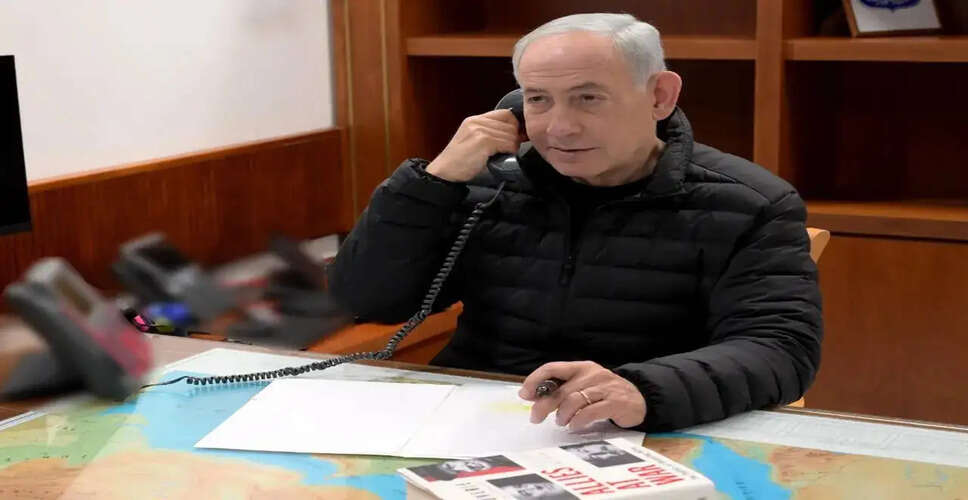
A recent image shared on social media by the handle '@EylonLevy' during a tense period with Iran appears unremarkable at first glance. It features Israeli Prime Minister Benjamin Netanyahu engaged in a phone conversation with former US President Donald Trump, leaning over a wooden table with several officials in the background, seemingly awaiting further instructions. However, the focal point of interest is not merely the leaders' dialogue but a book placed conspicuously on the table titled 'Allies at War.' This detail transforms the interpretation of the photograph, suggesting a deliberate message to Iran and beyond. In military settings, every item is intentionally selected and positioned, indicating that the book's presence is far from coincidental.
Prime Minister Netanyahu just spoke with President Trump on the phone. 🔎 Pinch and zoom to see the strategically placed book on his desk. pic.twitter.com/1uIzExQAbj
— Eylon Levy (@EylonALevy) February 28, 2026
Israel and the United States maintain a close strategic alliance in contemporary geopolitics. On February 28, both nations initiated a joint military operation dubbed 'Operation Epic Fury,' aimed at critical Iranian military sites. Trump urged the Iranian populace to 'take control of your destiny' by opposing the Islamic regime that has governed since the 1979 revolution. In response, Iran launched missiles and drones targeting Israel and US military bases in the Middle East, including locations in Bahrain and the UAE. Iran has pledged to persist with its attacks, especially as negotiations in Geneva have stalled. Interestingly, mediators from Oman had indicated to CBS News that a deal was nearly finalized just hours before the bombings commenced.
In a video posted on TruthSocial shortly after the bombings began, Trump addressed the Iranian people, stating, 'When we are finished, take over your government. It will be yours to take. This will probably be your only chance for generations.' Netanyahu echoed similar sentiments, asserting, 'Our joint operation will create the conditions for the brave Iranian people to take their fate into their own hands.'
Given that Netanyahu was in direct communication with Trump, who has long been regarded as a staunch ally of Israel, the symbolism of the book cannot be dismissed as mere coincidence. Images captured in war rooms are often analyzed for deeper meanings long after the events have transpired—considering the maps, documents, and expressions present. Sometimes, history is not solely recorded through speeches; it can also be subtly conveyed through objects placed within the frame. In this pivotal moment between Netanyahu and Trump, the book may have conveyed more than their spoken words ever could.