
Strait of Hormuz: Navigational Challenges Amidst Conditional Easing
Strait of Hormuz: A Complex Situation
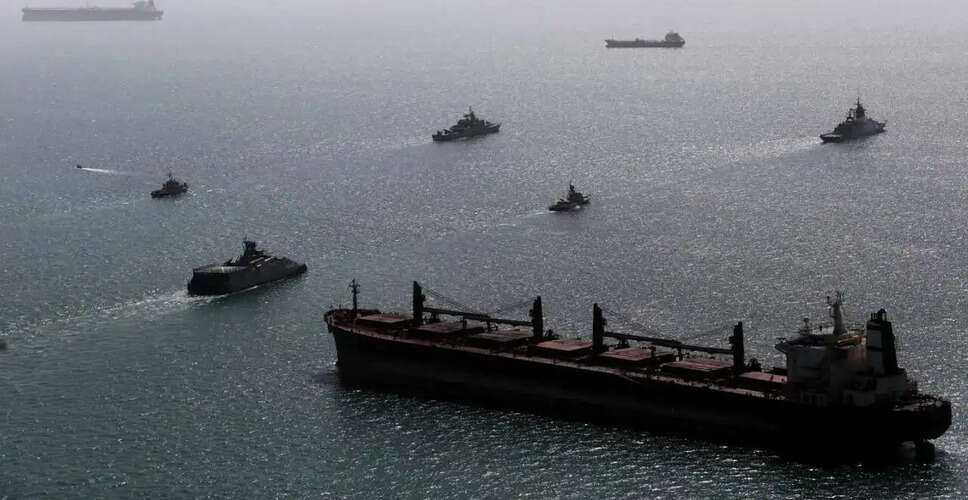
While the Strait of Hormuz appears open on paper, the reality is quite different. Following Iran's announcement of a conditional easing of its blockade, the crucial maritime route is still experiencing significant disruptions. Recent shipping data indicates that only seven vessels managed to pass through the strait in a 24-hour period, a stark decline from the typical daily average of over 130 ships. This limited activity highlights a broader uncertainty, as Iran has allowed passage only under strict coordination with its military, effectively controlling the movement of vessels. One of the conditions states that “safe passage through the Strait of Hormuz will be possible via coordination with Iran's Armed Forces.”
Restricted Navigation Routes
Controlled Access, Not Free Navigation
The dynamics of transit have changed significantly. Instead of utilizing the main shipping lanes, many vessels are now opting for routes along Iran’s coastline, which observers have likened to a “toll booth” pathway. Out of the seven ships that successfully crossed, six were bulk carriers adhering to this monitored route, while tracking data for another vessel seemed to vanish mid-journey. This indicates not only restrictions but also active surveillance and selective access. Reports suggest that Iran may permit only a limited number of ships — approximately a dozen daily — a figure that is considerably lower than the usual capacity. The implication is clear: while the strait may not be officially closed, it is certainly not freely navigable.
Economic Implications of Limited Access
Global Supply Chains Begin To Feel The Strain
The economic ramifications are already becoming evident. Numerous vessels are anchored in the Gulf, awaiting further clarity on the situation. Even if traffic resumes promptly, experts caution that it could take months for global oil and gas supply chains to stabilize. One analyst pointed out that depleted reserves in Asian refineries will necessitate a consistent flow of crude oil before markets can return to normal, estimating that recovery might require “at least three months.” In the meantime, shipping costs have surged dramatically, with insurance premiums for tankers navigating the strait — already considered a high-risk area — skyrocketing to as much as $7 million per voyage, reflecting the ongoing threats despite the ceasefire.
Ongoing Risks Amidst Diplomatic Efforts
War Risks Persist Beneath Diplomatic Calm
The ceasefire remains tenuous. Conflicting reports have surfaced, with some suggesting that Iran may have reinstated restrictions following Israeli strikes in other regions, while others indicate efforts to safely guide vessels through potentially mined waters. The Strait of Hormuz has evolved into more than just a shipping lane; it has become a strategic bargaining tool. Iran’s broader proposal reportedly includes controlled passage and transit fees, emphasizing its desire to maintain influence over this critical energy chokepoint.
The Uncertain Status of the Strait
The ‘Open Or Not’ Question Remains Unanswered
Currently, whether the Strait of Hormuz is open depends on one's interpretation of the term “open.” Technically, vessels are moving, but in practice, the strait remains constrained, controlled, and unpredictable. Even with a pause in hostilities, the reluctance among ship operators — driven by security concerns and soaring insurance costs — indicates that confidence will not be restored quickly. As one industry expert succinctly put it: the real question is not merely whether the strait is open, but whether anyone is willing to navigate through it.