
Stalemate in Ukraine: Diplomatic Efforts Stall Amid Ongoing Conflict
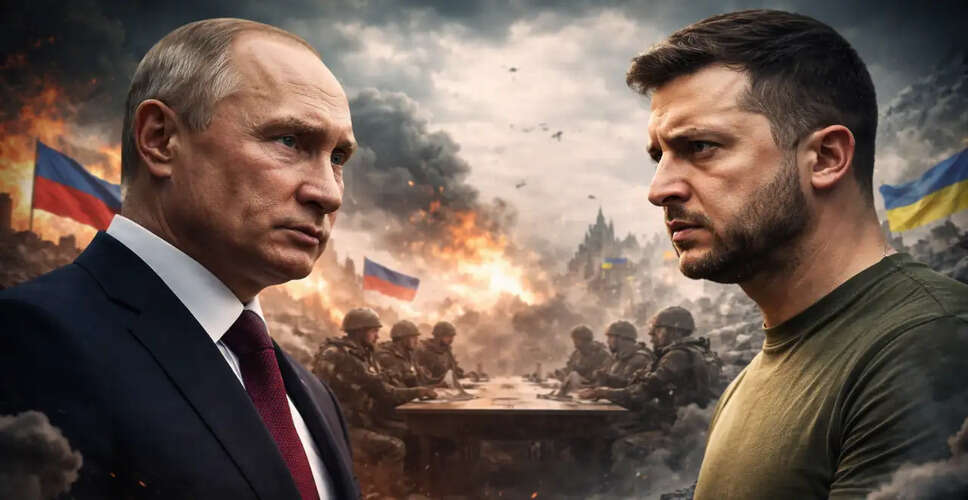
Diplomatic Efforts Stalled in Ukraine Conflict
As the conflict in Ukraine marks four years since Russia's invasion in 2022, attempts by Western nations to mediate a peace agreement have stalled. The negotiations have lost momentum, and the battle lines are firmly established. Diplomatic initiatives led by the US have only underscored the significant divide between Moscow and Kyiv. Since the war began on February 24, 2022, Russia has maintained control over approximately 20% of Ukrainian territory. Although there was initial optimism regarding diplomatic resolutions following Donald Trump's return to the presidency in 2025, discussions have repeatedly faltered over critical issues such as territorial disputes in eastern Ukraine and the control of the Zaporizhzhia nuclear facility, the largest in Europe, according to a report from Bloomberg.
Washington is eager to advance negotiations ahead of the crucial US national elections in 2026. However, European and NATO representatives express concerns that Vladimir Putin shows no willingness to make necessary concessions. Moscow insists on recognition of its territorial claims and broader security guarantees, while Ukraine remains steadfast in defending its positions in eastern Donetsk and refuses to accept any agreement that legitimizes Russian occupation.
Multiple negotiation rounds this year, including discussions in Abu Dhabi and Geneva, have failed to yield a solid framework. European allies, who have significantly funded Ukraine's defense amid reduced US military support, find themselves excluded from direct talks, creating tension within the Western coalition. Diplomats describe the negotiations as brisk in tone but lacking substance, resembling a high-stakes game of chicken. Both Washington and Moscow appear to be waiting for the other to make a move: whether Russia will retreat from its core demands or US-led allies will reconsider their long-term support for Ukraine, which neither side seems inclined to do.
On the battlefield, the conflict has transformed into a war of attrition, characterized less by swift territorial gains and more by prolonged engagements. Since 2022, Russia has made only modest territorial advances, with frontlines now entrenched in heavily fortified zones dominated by drone warfare and artillery strikes. Military analysts increasingly view the conflict as a battle of resource exhaustion rather than land acquisition.
Despite ongoing missile and drone strikes targeting Ukraine's energy infrastructure, Kyiv remains resolute in its sovereignty and continues to resist. President Volodymyr Zelenskiy has stated he will not engage in peace talks without assurances for Ukraine's borders and has expressed willingness to meet Putin directly.
The Zaporizhzhia nuclear plant, occupied by Russian forces since the early days of the conflict, remains a particularly contentious issue. The US has proposed a joint management arrangement involving the international community, but Ukraine is unwilling to accept any solution that would legitimize Russian control.
Western officials have voiced concerns about a potential temporary truce that could allow Russia to conduct hybrid warfare tactics, including infiltration and cyber operations, without facing immediate military pressure, complicating the path to a political resolution.
Amid these tensions, economic and geopolitical factors are influencing diplomatic efforts. On September 13, Russian officials hinted at the possibility of an economic partnership with the US, contingent on improved bilateral relations, should pressure to conclude the war succeed.
Military assessments indicate an unpredictable trajectory for the conflict. Since winter, Ukrainian forces have regained small territories, while Western analysts report significant Russian losses and financial strains. However, these pressures do not appear to prompt any substantial concessions from the Kremlin in the near future.
As the new year approaches, the gap between diplomatic aspirations and political realities remains vast. Efforts at diplomacy continue, albeit unsuccessfully, raising doubts about the likelihood of a breakthrough peace agreement. Currently, the push for peace in Ukraine has shifted from hopeful beginnings to a prolonged stalemate.