
Sheikh Hasina's Legal Battle: Will the Former PM Face Justice or Evade Execution?
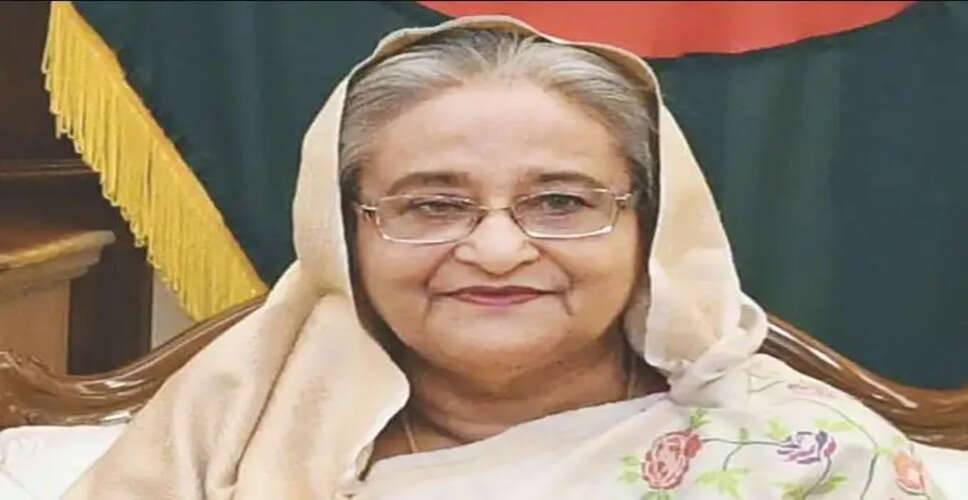

Sheikh Hasina's Legal Predicament
Dhaka: Sheikh Hasina, the former Prime Minister of Bangladesh, faces a grim legal reality as the Chief Prosecutor of the International Crimes Tribunal, Md Aminul Islam, stated that she has no legal recourse left but to confront her death sentence. This statement comes in light of a request from a London-based legal firm seeking a passport and national identity card for Hasina, who has expressed her desire to return to Bangladesh in December to confront the legal challenges against her.
At 79 years old, Hasina has been residing in India since fleeing Bangladesh in August 2024, following a student-led uprising that resulted in the fall of her Awami League government. She was sentenced to death in absentia for crimes against humanity related to a violent crackdown on protesters. Hasina has consistently denied any wrongdoing and has raised questions about the legitimacy of the legal proceedings against her.
According to Islam, if Hasina truly wished to return, she would have done so during her trial and filed an appeal within 30 days of the verdict. He emphasized that the Bangladesh Passport Order of 1973 prohibits the issuance of travel documents to individuals sentenced to death, particularly for serious offenses like crimes against humanity.
The prosecutor also expressed skepticism regarding the legitimacy of the passport application, noting that it was not submitted by Hasina herself and that no formal legal agreement existed between her and the law firm.
If Hasina is serious about returning, she should formally request her return to India under the extradition treaty, he added. Islam also suggested that there might be political motives within the Awami League using Hasina's situation to create instability in Bangladesh.
On Monday, the prosecutor labeled Hasina's passport request as a political maneuver, asserting that she lacks genuine intent to return to face justice. Meanwhile, Zahed Ur Rahman, an adviser to the Prime Minister, clarified that reports of Hasina applying for a passport were inaccurate, stating that a law firm merely sent a letter requesting arrangements for its issuance. He emphasized that only Hasina could submit a passport application, which she has not done.
Hasina's legal representatives at Matrix Chambers in London have urged the Bangladesh mission to expedite the issuance of her documents, as her previous passport and identity card were revoked by the interim government led by Muhammad Yunus.
In February, the Bangladesh Nationalist Party (BNP), led by Tarique Rahman, won the parliamentary elections, replacing the interim administration. Rahman pointed out that Hasina's conviction was for far more serious offenses than ordinary murder, asserting that crimes against humanity cannot be compared to individual killings.
Referring to Article 47 of the Bangladesh Constitution, the adviser noted that individuals convicted of such serious crimes do not retain fundamental rights. Hasina was sentenced to death by the International Crimes Tribunal for her role in the crackdown on student protests in 2024, which led to her 15-year rule's downfall. The United Nations estimates that up to 1,400 individuals lost their lives during this crackdown, a charge Hasina vehemently denies.
Bangladesh has persistently sought Hasina's extradition from India under a bilateral treaty. While India has acknowledged receiving these requests, it has not made any decisions regarding her extradition, stating that the matter is under review.
As the daughter of Bangladesh's founding leader, Sheikh Mujibur Rahman, Hasina's political legacy is complex. Her Awami League government has faced accusations of human rights violations and suppressing dissent, leading to the party's exclusion from political activities following her ousting.
Home Minister Salahuddin Ahmed stated that the government is currently assessing the authenticity and legal basis of Hasina's applications. The Ministries of Foreign Affairs and Law are investigating whether the applications were properly submitted and if Hasina has the legal right to request these documents.
The relevant ministries will evaluate all legal aspects before taking any necessary actions, he informed reporters. State Minister for Foreign Affairs Humaiun Kobir dismissed Hasina's application as absurd, reiterating that Bangladesh would pursue her return through the existing extradition treaty, emphasizing that the country does not issue passports to individuals sentenced to death.