
Sheikh Hasina's Bold Return: Will the Former PM Defy Death Sentence to Reclaim Bangladesh?
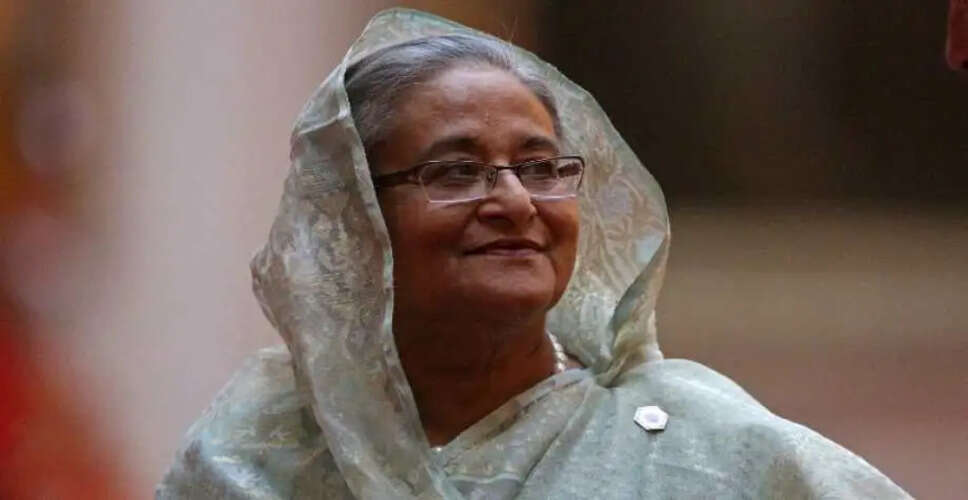

Sheikh Hasina's Determined Return to Bangladesh
Dhaka: Sheikh Hasina, the former Prime Minister of Bangladesh who was ousted during a mass uprising in 2024, has expressed her intention to return from her exile in India next month, despite facing a death sentence linked to her government's violent response to protests.
After being forced to flee to India due to student-led demonstrations, Hasina has remained there since her departure.
In 2025, a special tribunal in Bangladesh sentenced her to death for crimes against humanity, holding her accountable for a crackdown that resulted in numerous fatalities and injuries.
According to a United Nations report, nearly 1,400 individuals lost their lives during this period. Hasina has consistently denied any wrongdoing and has challenged the tribunal's ruling.
Bangladesh has made repeated requests for her extradition, but India has refused to comply. Hasina had initially announced her plans to return in December during August.
In her email response to questions from The Associated Press, she stated, "If death is my destiny, I would rather die on the soil of my own country, among my own people. So, I will return to Bangladesh. That decision has not changed."
Hasina, who served as Prime Minister from 2009 to 2024, did not reveal her method of returning from India, where she could potentially face arrest upon her arrival.
She acknowledged the risks, saying, "I know that I may be arrested when I return. I may be imprisoned, tortured, or even killed. I am fully aware of those possibilities. But I cannot spend the rest of my life watching my people suffer from a distance."
Following her ousting, Nobel Peace Prize winner Muhammad Yunus took over as the head of an interim government, leading the nation for the subsequent 18 months.
In February, Tarique Rahman, the son of former Prime Minister Khaleda Zia and Hasina's long-time political adversary, won a decisive election under Yunus's administration, while Hasina's Awami League party was barred from participating.
Hasina's anticipated return occurs amid a turbulent future for her party, which is currently banned, with many senior leaders arrested or forced into exile.
She claimed that since August 2024, at least 20,000 members of her party have been killed, with thousands more arrested, tortured, or driven into hiding. Supporters have reportedly lost their homes, businesses, and livelihoods due to their political affiliations.
"There is no normal political or democratic environment," she stated, accusing the authorities of systematically suppressing her party.
Numerous human rights organizations, including Human Rights Watch, have condemned Rahman's government for recent violations of civil and political rights.
The government, however, maintains that the arrests are based on specific charges.
When asked if she anticipated pressure from countries like the United States and India for her safe return, Hasina replied that she does not seek foreign protection.
"I value friendship and cooperation with all nations. That has always been our (Bangladesh's) foreign policy. But I do not need the blessing of a foreign power to return to my own country," she emphasized.
Global human rights organizations and independent observers have previously raised alarms about the rise of radical groups attempting to suppress liberal forces during the interim government. Minority groups have reported facing intimidation.
The Yunus-led administration has denied these allegations. The current government is under scrutiny for a worsening law and order situation in the country.
Hasina, who took a firm stance against radical groups during her 15 years in office, expressed concern over the increasing influence of extremists in Bangladesh.
"The present political environment has allowed extremist elements to become more confident," she remarked.
The Press Wing of the Prime Minister's office did not respond to a request for comment from The Associated Press.