
RSS Leader Dattatreya Hosabale Defends Hindu Identity During US Engagements
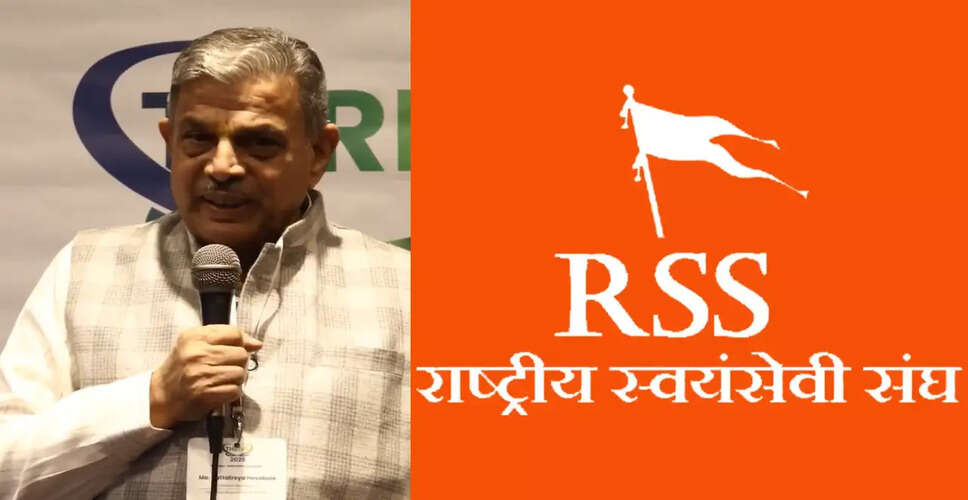

A Strong Message from the RSS General Secretary
During a week filled with public appearances in the United States, Dattatreya Hosabale, the General Secretary of the Rashtriya Swayamsevak Sangh (RSS), conveyed a powerful message: Hindus should take pride in their history and culture. He firmly stated that the RSS is not akin to the Ku Klux Klan and emphasized that India's ancient civilizational identity is crucial for fostering national unity and global collaboration.
At the Hudson Institute in Washington DC on April 23, Hosabale addressed long-standing misconceptions about the RSS and Hindu society. He asserted, “Hindus have never embraced supremacist ideologies, nor have they invaded other nations or have anything to apologize for.” He highlighted that Hindu philosophy promotes the idea of the world as one family, devoid of any supremacy. “All beings are siblings, and there is no room for supremacy,” he explained, adding that the essence of Hinduism negates any notion of superiority.
Hosabale pointed out the disparity between reality and perception in America, noting that many still view India as a land of poverty and chaos. He argued that this perspective overlooks India's advancements, such as its status as a global technology hub and its achievements in space exploration, as well as its position as the fourth-largest economy worldwide. He criticized the portrayal of the RSS as a Hindu supremacist organization, stating that critics have focused on negative narratives rather than the positive contributions of the organization.
#WATCH | California | RSS General Secretary Dattatreya Hosabale participated in the THRIVE, 2026 conference, which took place at Stanford University Faculty Club, CaliforniaRSS General Secretary Dattatreya Hosabale says, "...When you present nature as your slave, and nature is… pic.twitter.com/TtMneaWmVH
— News Media (@NewsMedia) April 24, 2026
He also emphasized the strong ideological connection between the RSS and the ruling Bharatiya Janata Party (BJP), particularly highlighting Prime Minister Narendra Modi's active involvement with the RSS. “The BJP was formed in 1980 to maintain ties with the RSS,” he noted, asserting that this relationship is fundamental and cannot be disregarded.
On the ground, the RSS is engaged in grassroots initiatives through approximately 83,000 daily shakhas (morning meetings) across India, focusing on character building, service, and social harmony. When asked about India's internal security challenges, Hosabale pointed to the politicization of the country's diversity as a significant issue. He expressed concern over illegal immigration along the eastern border, which has led to demographic shifts in certain areas, potentially causing social tensions.
During his address at the THRIVE 2026 conference in California, Hosabale shifted to a philosophical discussion about the need to harmonize scientific progress with ancient wisdom. He cautioned against exploiting nature, stating, “When you treat nature as a slave, exploitation begins.” He reiterated that Hindu tradition advocates for respect towards all living beings, emphasizing the interconnectedness of life.
#WATCH | California | RSS General Secretary Dattatreya Hosabale says, "...We should encourage young scientists to explore the science and history of the scientific journey of various societies. The purpose of life should also be discussed in scientific fields, not only the… pic.twitter.com/lcFGd06WUv
— News Media (@NewsMedia) April 24, 2026
He described the conference as a valuable platform for authentic dialogue among civilizations and traditions. Hosabale emphasized that the advancement of science should be guided by the wisdom of the heart, advocating for a holistic approach to human progress. He encouraged young scientists to delve into the historical context of scientific endeavors and to consider the purpose of life within their research.
Regarding India's role on the global stage, Hosabale highlighted that realizing the country's potential as a strategic partner to the United States hinges on mutual trust and respect. He clarified that the RSS perceives Hindu identity as a broad civilizational ethos rather than a narrow religious label, promoting inclusion over alienation.
#WATCH | Washington, DC (US): On the biggest internal security threat for India and RSS' role in fighting it, RSS General Secretary Dattatreya Hosabale says, "Within India, there are a lot of diversities. Playing upon these diversities and putting one against another for… pic.twitter.com/5f41UBUYBo
— News Media (@NewsMedia) April 24, 2026
Overall, Hosabale’s statements in Washington and California reflect an RSS that is confident in its heritage, actively engaging on the global stage, and eager to rectify misconceptions while promoting a vision rooted in unity, respect, and constructive nation-building. As India strengthens its international relationships, voices like his are ensuring that the civilizational perspective of the RSS is clearly articulated.