
Rising Tensions: Russia's Oil Facilities Under Attack Amid US-Iran Conflict

Russia's Longstanding Friendship with India Faces New Challenges
In the realm of politics and diplomacy, there's a saying that an old friend is always the best. For India, Russia has been that longstanding and reliable ally, consistently supporting India through tough times. However, on May 2, as the world focused on the escalating tensions between Iran and the United States, troubling news emerged from Russia. One of Russia's largest oil refineries was targeted by Ukrainian drones, marking the fourth such attack in recent days. This isn't merely a Ukrainian initiative; the underlying strategy appears to be orchestrated by Washington. This raises questions about whether the oil facilities, deemed the backbone of Russia's economy, are being systematically destroyed at the behest of Donald Trump. A 90-minute conversation between Putin and Trump revealed evident tension, followed by attacks on ten major Russian oil sites. The US must remember that if Russia's oil is set ablaze, the repercussions will be felt globally, and Russia will not stand alone.
Iran's Strategic Moves Against US Naval Presence
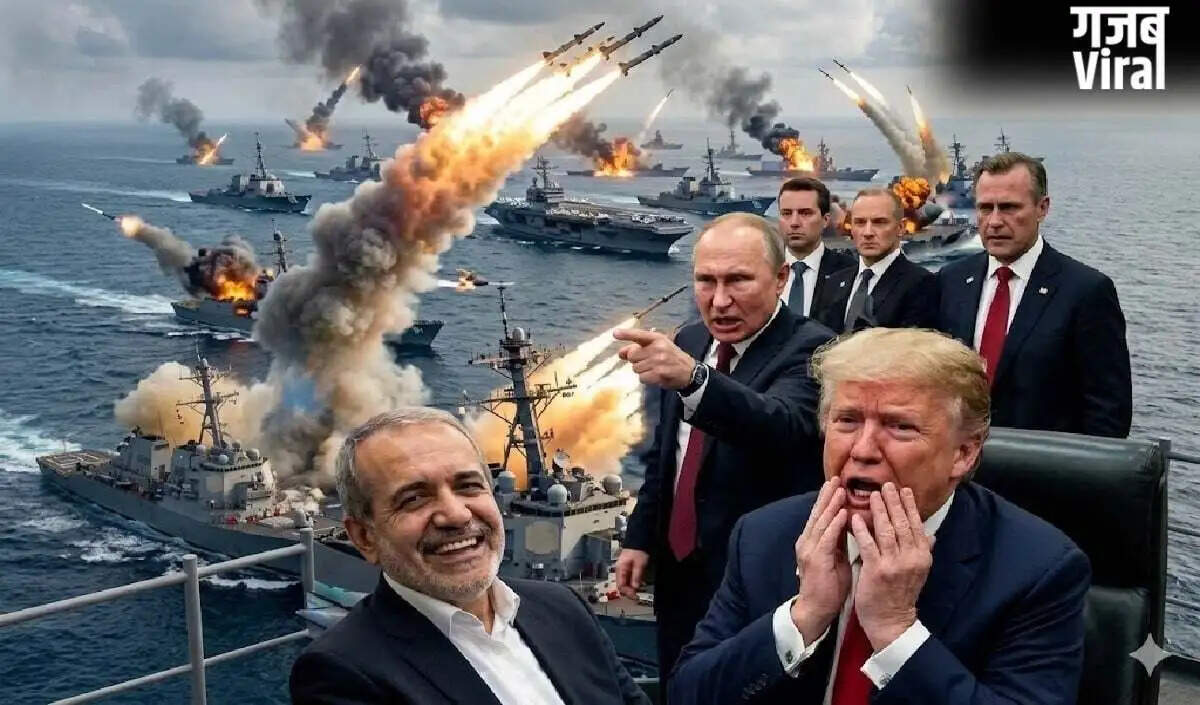
In the Gulf of Hormuz, the US has stationed 19 formidable warships attempting to block Iran's movements. However, Iran is now prepared for a decisive confrontation. Sources indicate that Iran has devised a covert strategy to break this blockade, involving military experts from Russia and spies from China. Iran has made it clear that if this siege continues, those 19 US ships will find themselves submerged. The US is now apprehensive, primarily due to Iran's advanced missile technology. Recently, a high-level meeting at the White House saw CENTCOM Chief Brett Cooper briefing Donald Trump on the capabilities of Iran's missiles, which are not ordinary; they are equipped with MIRV (Multiple Independently Targetable Reentry Vehicle) technology, allowing a single missile to alter its trajectory mid-air, evading any defense systems.
The Impact of Conflict on Regional Economies
Consequently, the US is now seeking hypersonic missiles like the Dark Eagle, which can exceed speeds of 6000 km/h. The ramifications of this conflict are beginning to manifest in neighboring regions. In Pakistan, there is a significant oil crisis unfolding. Meanwhile, Iran has executed a masterstroke by circumventing US maritime sanctions, initiating oil shipments to China via rail routes through Kazakhstan and Uzbekistan. This is the same route that the US will likely never be able to block. The dream that began in 2006 is now materializing, providing a new lifeline to Iran's economy. The tension is no longer confined to the Middle East; a recent phone conversation between US Secretary of State Marco Rubio and China's Wang Yi has only intensified the situation, with China bluntly stating that Trump would be welcomed in Beijing.