
Rising Tensions: Israel and Iran's Military Showdown
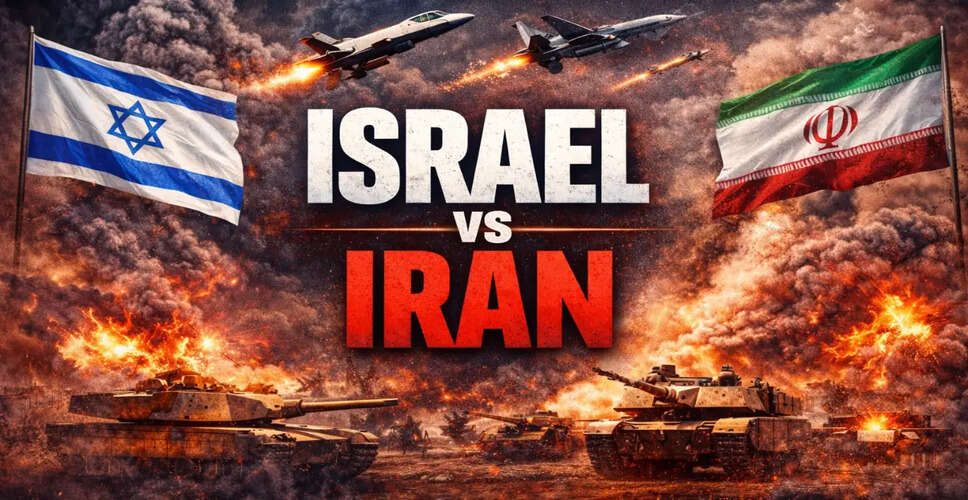
Escalating Conflict Between Israel and Iran
New hostilities have erupted between Israel and Iran following Israel's announcement of "preventive" airstrikes within Iranian territory. Reports from Iranian media and various international sources indicate that explosions were detected in multiple cities, including Tehran, Isfahan, Qom, Karaj, and Kermanshah. Smoke was observed rising from areas in the capital, with at least one strike occurring near the office of Supreme Leader Ali Khamenei. In response, Israel’s Defence Minister Israel Katz declared a nationwide emergency. The Israel Defense Forces (IDF) cautioned that Iran might retaliate with missile or drone strikes, advising civilians to remain close to shelters. Additionally, Israel has restricted its airspace and suspended civilian flights.
A Comparative Overview of Military Strengths
Troop Strength: Quantity vs. Quick MobilizationIran boasts one of the largest military forces in the Middle East, with approximately 610,000 active personnel and a significant number of reservists and paramilitary members. This numerical advantage allows Iran to effectively manage border security, internal stability, and prolonged conflicts.
In contrast, Israel's standing army is considerably smaller, comprising around 170,000 active troops. However, it can rapidly mobilize about 465,000 reservists during wartime, emphasizing a strategy of swift mobilization over maintaining a large standing force.
Air Power: Technological Superiority vs. Numerical Strength
Israel operates over 600 aircraft, including fighter jets, attack helicopters, and surveillance planes, focusing on advanced technology, precision strikes, and real-time intelligence. Its air force employs electronic warfare aircraft and airborne warning systems to enhance operational accuracy and coordination, enabling long-range and precise missions.
Conversely, Iran has a slightly smaller fleet of aircraft, many of which are older models. Instead of relying solely on fighter jets, Iran has heavily invested in drones, cruise missiles, and air defense systems, allowing it to strike from a distance and defend against incoming threats.
Ground Forces: Heavy Firepower vs. Tactical Mobility
Iran possesses between 1,700 and 2,000 tanks, along with tens of thousands of armored vehicles and over 1,500 mobile rocket launchers. Its military strategy is centered around large numbers and heavy firepower, making it formidable in defensive and prolonged engagements.
Israel, while having fewer tanks and armored vehicles, prioritizes speed, advanced targeting systems, and precision weaponry. Its military is structured for rapid operations, supported by high-tech sensors and smart munitions.
Naval Power: Regional Dominance vs. Strategic Deterrence
Iran’s naval strategy is concentrated on local waters, particularly the narrow sea lanes of the Strait of Hormuz. It employs submarines, fast attack boats, and missile-equipped vessels, utilizing swarming tactics and coastal missile systems to challenge more powerful navies.
Israel’s navy, although smaller, is highly specialized. Its submarine fleet plays a crucial role in strategic deterrence, while its missile-equipped ships safeguard coastal regions and offer strike capabilities. Israel’s naval focus is more on defense and deterrence rather than global power projection.
Defense Spending: A Significant Disparity
Israel allocates approximately $30.5 billion annually for defense, while Iran's budget is around $15.45 billion. Israel's larger financial resources enable investments in advanced weaponry, research, and technology, including cyber warfare, missile defense, and surveillance systems. In contrast, Iran, facing international sanctions, has concentrated on domestic weapon production and expanding its missile and drone capabilities.
Global Military Rankings
According to the 2026 Global Firepower rankings, Israel is positioned 15th globally, while Iran ranks 16th, indicating that both nations maintain strong and comparably capable conventional forces. A significant factor in Israel's military strength is its close relationship with the United States, which has reportedly deployed additional American forces, including a second aircraft carrier, to the region, reflecting concerns about the potential for an expanded conflict.
Risks of Escalation
With airstrikes, emergency alerts, and military movements escalating on both sides, tensions are rapidly intensifying. Analysts caution that even a limited response could spiral into a larger conflict, potentially involving other regional players and impacting oil routes, trade, and air travel throughout the Middle East. Given the robust offensive and defensive capabilities of both nations, including missiles, drones, advanced aircraft, and submarines, the situation remains precarious.