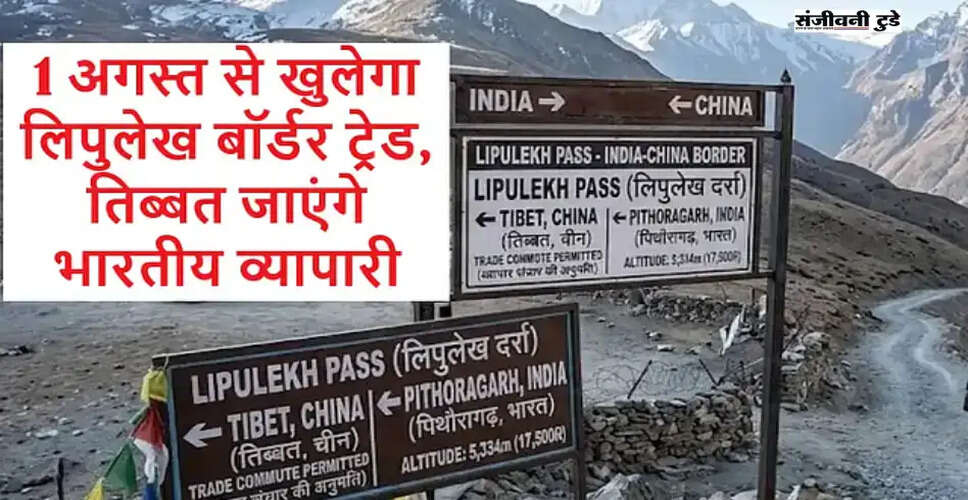
New Delhi: The traditional border trade between India and Tibet is set to gain momentum once again. After a prolonged wait, the India-Tibet border trade will resume through the Lipulekh Pass in Uttarakhand starting August 1. This decision allows Indian traders to once again engage in the exchange of traditional goods with Tibet, which is expected to bolster the economy of border regions.
The Lipulekh Pass is a crucial border route located at the tri-junction of India, China (Tibet), and Nepal. For years, it has served as a major hub for traditional trade between India and Tibet. The resumption of trade is anticipated to benefit local merchants, as well as transportation, hospitality, and other small businesses.
According to the administration, all necessary preparations for border trade have been completed. Relevant departments have been instructed regarding trader registration, document verification, and security arrangements. Health checks, customs, and security agencies will remain vigilant at the border to ensure smooth operations.
During the border trade, Indian traders will export traditional Indian products to Tibet, while importing woolen garments, herbs, pashmina, salt, and other local goods back to India. This trade is not only economically significant but is also seen as a means to strengthen the long-standing cultural and social ties between the two regions.
Local traders have welcomed this decision, stating that the prolonged halt in border trade had caused them significant financial losses. The resumption of trade is expected to create new job opportunities and revive the vibrancy of border markets. Traders are optimistic that commercial activities will increase in the future.
The Uttarakhand government and local administration have stated that essential infrastructure in the border area has been improved for the convenience of traders. Roads, communication, and other facilities have been strengthened to ensure that traders face no difficulties.
Experts believe that the restart of trade at the Lipulekh border is a positive step for the economic development of border areas. It is expected to increase local incomes, indirectly benefit tourism, and give traditional border trade a new identity.
The border trade commencing on August 1 not only brings new hope for local businesses but is also considered a significant step in revitalizing the historical trade relations between India and Tibet.