
Red Sea Shipping Routes Disrupted by Houthi Threats to Saudi Ports

Houthi Movement's Warning Alters Oil Tanker Routes
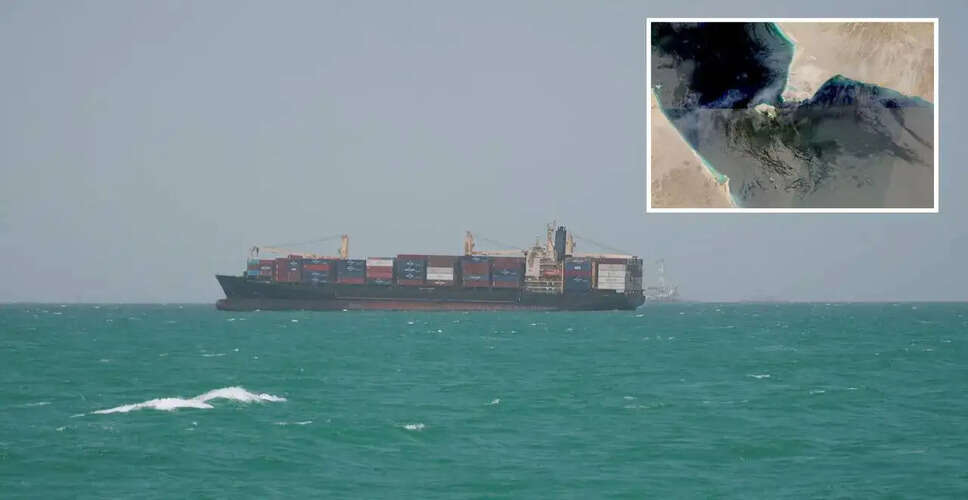
Recent shipping data indicates that two oil tankers transporting Saudi crude to China and India have altered their paths in the Red Sea. This change follows a warning from Yemen's Houthi movement, which is aligned with Iran, advising shipping companies against loading or unloading at Saudi ports. This shift raises concerns about potential disruptions in one of the globe's busiest maritime routes, further complicating the already tense global energy supply situation amid ongoing disputes at the Strait of Hormuz.
On Monday, the Houthis declared a naval blockade against Saudi Arabia, which could escalate the conflict involving the US and Israel against Iran. In a communication to shipping firms, they cautioned that vessels involved in cargo operations at Saudi ports might be targeted anywhere.
The Houthis control significant portions of northern Yemen, including the coastline along the Bab el-Mandeb Strait, which is crucial for access to the Red Sea. With the Strait of Hormuz currently closed due to conflict, Saudi Arabia's Yanbu port has emerged as a vital alternative for exporting Middle Eastern crude oil. According to shipping data, the Very Large Crude Carrier (VLCC) Xin Long Yang, which loaded two million barrels of Saudi crude at Yanbu on Monday, initially headed south towards Bab el-Mandeb but then redirected north towards the Suez Canal.
Another tanker, the Rodos, which was transporting approximately 700,000 barrels of Saudi crude to India, also reversed its course on Tuesday, heading towards Suez. The management companies for both tankers, Dynacom Tankers Management and Cosco Shipping, did not respond to requests for comments.
Additionally, another VLCC, New Prime, which was scheduled to arrive at Yanbu later this week for loading, also turned back before entering the Red Sea from Oman. Its management, Associated Maritime Co HK, also did not provide comments. Despite these changes, three shipping sources confirmed that Yanbu remains operational and continues to load oil onto vessels already in the Red Sea or those arriving via the Suez Canal.
Shipping data revealed that the tanker Olympic Luck, which entered the Red Sea through Suez, is still en route to Yanbu, accompanied by several other vessels. Should more tankers be compelled to avoid Bab el-Mandeb and instead navigate through the Suez Canal, their journeys to Asian customers could be significantly prolonged by several weeks.
In the past 24 hours, war risk insurance costs have surged as insurers reevaluate the risks associated with Saudi ports. A British maritime security firm, Ambrey, has advised that vessels planning to dock at Saudi Arabian ports should reconsider their routes through the Red Sea and implement enhanced safety measures, indicating that ships calling at Saudi ports are currently at high risk.
Shipbroker Clarksons noted that while a complete Houthi blockade seems improbable due to the resources it would require, an increase in hostilities could lead to the Houthis targeting Saudi-associated vessels in the Bab el-Mandeb strait. They further stated that if the Houthis disrupt traffic in the region, it could result in a reallocation of crude shipments, with more volumes directed towards Europe from Yanbu. On average, around ten crude tankers have been passing through the Bab el-Mandeb daily in recent months. Reports indicate that fully loaded VLCCs using the Suez Canal must first offload part of their cargo, with some oil bypassing the canal via Egypt's SUMED pipeline before being reloaded in the Mediterranean.