
Recent Meteor Sightings Illuminate U.S. Skies
A Surge of Meteor Sightings Across the U.S.
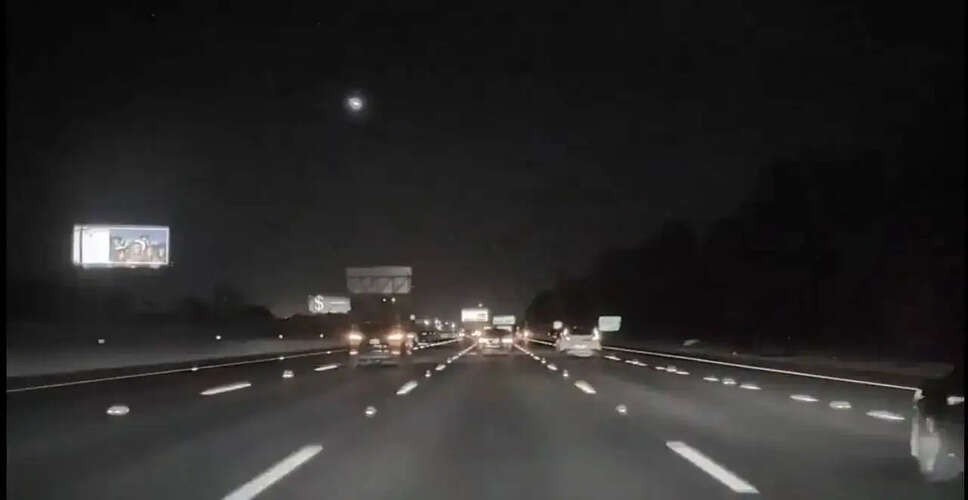
In recent days, numerous bright meteor sightings have been reported throughout the United States, with the latest occurrence noted over Northern California on March 23. Observers described a striking green fireball racing across the sky, marking the third significant sighting in the area within a week. The American Meteor Society (AMS) received over 200 reports from witnesses in California, Nevada, and Arizona. According to the AMS, the meteor was first detected approximately 49 miles above Chowchilla, traveling at an impressive speed of around 35,000 mph (56,000 km/h). It traveled about 58 miles before disintegrating at an altitude of roughly 29 miles above Colfax. Similar sightings have been documented in other parts of the country. On March 21, a meteor was observed over Texas, becoming visible about 49 miles above Stagecoach, northwest of Houston, and moving at a similar velocity, as per NASA data.
🚨🇺🇸 UPDATE: Another fireball now confirmed over the U.S. WestA bright object streaked across the sky on March 22 (~8:19 PM PDT), visible from California, Nevada & ArizonaWitnesses report intense flash & possible sonic boom#California #meteoriet #sstvi #akaryakıt https://t.co/WVvBiEqb7G pic.twitter.com/F8ilHE4rMg
— GlobeUpdate (@Globupdate) March 24, 2026
Earlier, on March 17, a fireball was spotted over Pittsburgh, initially seen above Lake Erie, moving at an estimated speed of 40,000 mph and traveling over 34 miles before breaking apart. Both the Pittsburgh and Texas sightings were accompanied by loud booms. Despite the clustering of these events, scientists suggest they are likely unrelated. Mike Hanker, operations manager at the AMS, noted that such occurrences are typically random. NASA also indicated that the California meteor had a different trajectory and speed compared to the earlier sightings, suggesting they originated from distinct directions in space. According to NASA, meteors are remnants of rock and ice that detach from comets or asteroids as they orbit the Sun. When Earth traverses these debris fields—often during heightened activity in February and March—the fragments enter the atmosphere at high velocities, sometimes exceeding 35,000 mph. As they travel through the atmosphere, friction with the air causes them to heat up and emit light, creating the bright streaks known as fireballs. If any part of the object survives its descent and lands on Earth, it is classified as a meteorite.