
Protests in Pakistan-Occupied Kashmir: Activists Challenge Army's Role
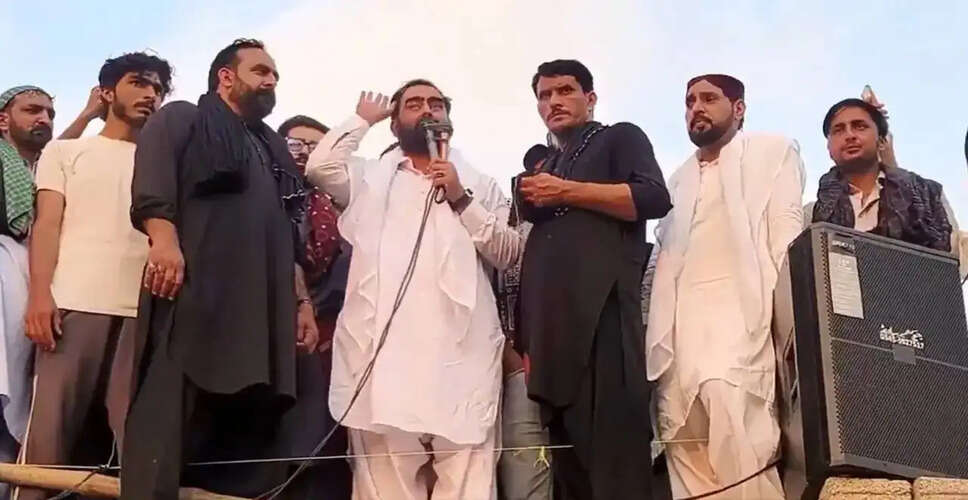

Protests Continue in Pakistan-Occupied Kashmir
On Thursday, the anti-government demonstrations in Pakistan-occupied Kashmir (POK) reached their 24th day. Sardar Aman Khan, a key figure in the Joint Awami Action Committee (JAAC), delivered a passionate address at the Eidgah ground in Rawalakot, where approximately 30,000 protesters gathered. Khan made a striking statement, criticizing the Pakistani Army for previously supplying weapons to Kashmiris and now labeling them as terrorists. He asserted, “It was the Pakistan Army that provided arms and ammunition to Kashmiris across the Line of Control. And now they have the audacity to call us terrorists,” which elicited cheers from the crowd.
JAAC openly called Pakistani Army as the facilitator of terrorism. Addressing over 80,000 people in Rawalakot JAAC leader Sardar Aman Khan alleged that the Pakistan Army itself armed Kashmiris, asking, "They gave us the guns, and now they call us terrorists?+1 pic.twitter.com/96Y3bVSZC2
— Avinash K S🇮🇳 (@AvinashKS14) July 2, 2026
Khan also referenced a rally held by Jaish-e-Mohammed (JeM) in Rawalakot last February, where armed participants paraded with AK-47s and swords. He pointed out that this event had received official approval from the Deputy Commissioner of Rawalakot, who had also provided security for the gathering. “Deputy Commissioner Rawalakot, you used to organize rallies here with weapons. Do you recall? And now you label us as terrorists,” he remarked.
Earlier this week, thousands of demonstrators assembled in Rawalakot. In a speech on Tuesday, Khan declared that the Pakistan-occupied Jammu and Kashmir (PoJK) is “not a part of Pakistan.” He emphasized, “We do not require Pakistan; it is Pakistan that is in dire need of PoK,” addressing the large crowd.
The recent surge in protests was fueled by claims that Pakistani authorities had obstructed the delivery of food and essential supplies for two weeks, leading to significant shortages and rising frustration among the local population. Organizers state that the protests are based on a 38-point charter of demands aimed at addressing years of alleged state oppression, administrative neglect, inflation, and worsening living conditions.