
Pete Hegseth Stands Firm on Iran War Amid Political Backlash
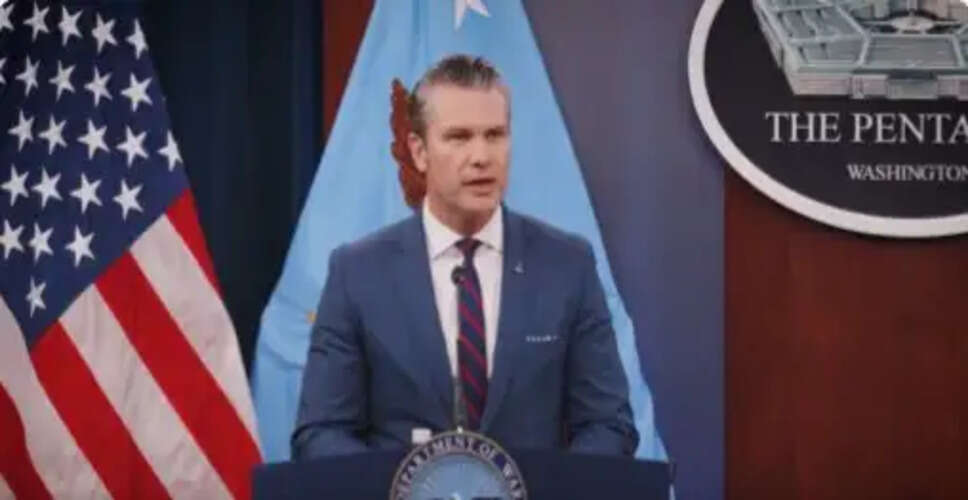

Hegseth Defends Military Actions
Washington: Pete Hegseth, the Secretary of War, has defended the ongoing military operations in Iran, asserting their necessity despite concerns regarding their impact on electoral outcomes. He dismissed impeachment worries and called on Republicans to back a significant military funding initiative.
After addressing reporters following his speech at the Naval War College on Monday, Hegseth expressed alignment with President Donald Trump’s stance on potential military actions.
"This doesn’t need to be popular; it simply needs to be necessary," he stated.
His remarks followed a journalist's reference to a social media comment from the Vice President, suggesting that the Iran conflict was a key factor in the Republicans' midterm election losses.
Hegseth refrained from placing blame or confirming discussions with the Vice President regarding this issue.
"I hold the Vice President in high regard, and I won’t engage in a blame game," he remarked.
He acknowledged the Vice President's valuable contributions and emphasized the importance of honest feedback within the team. Hegseth also defended Trump’s decision to address Iran's nuclear ambitions.
He claimed that Tehran was developing a conventional missile defense system to shield its nuclear pursuits from external intervention, referencing operations Midnight Hammer and Epic Fury as the administration's counteractions.
When questioned about Republican support for defeating impeachment articles, Hegseth expressed confidence but did not provide specific numbers.
"We’re not concerned about that," he stated.
Earlier, he characterized the push to remove him as politically driven, arguing that critics were undermining successful military efforts and the accomplishments of U.S. forces.
He credited the administration for enhancing contributions from European allies, fostering cooperation against Latin American cartels, and strengthening Pacific alliances.
Hegseth did not clarify the conditions that would lead to a formal conclusion of the Iran war, stating that Trump holds the advantage and can decide to cease operations while cautioning Tehran against nuclear material movements.
"The decision rests with him, and the War Department is ready to provide the necessary resources," he added.
He emphasized that securing funding is the top priority for his department in the coming months, urging Republicans to rally behind a reconciliation bill that he described as a historic investment.
Hegseth highlighted key areas of focus, including intelligence technology, space initiatives, the Iron Dome, munitions, and shipbuilding, but did not disclose specific funding amounts or a legislative timeline.
He also mentioned that significant reforms to senior military colleges would follow an extensive evaluation lasting nearly 18 months, aiming to enhance warfighting capabilities, deter conflicts, and ensure victory when necessary.