
Palestinian Activist Mahmoud Khalil Faces Deportation After Immigration Board Ruling
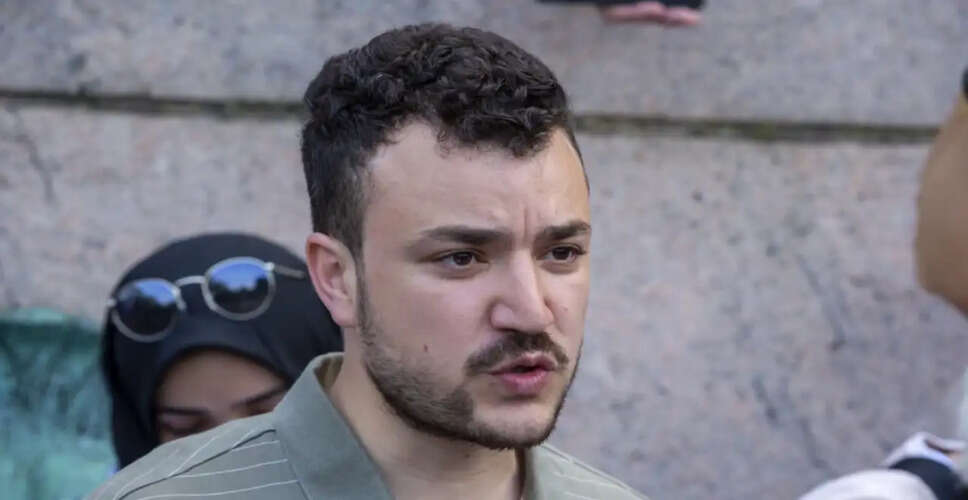

Immigration Board's Decision on Khalil
The Board of Immigration Appeals has denied Palestinian activist Mahmoud Khalil's recent effort to stop his deportation, bringing him closer to the risk of being re-arrested and expelled from the United States. According to his legal representatives, the board issued a final removal order against Khalil on Thursday. The decisions made by the board are typically not disclosed to the public, and the U.S. Department of Justice had not provided any comments at the time of this report.
Khalil expressed that he was not surprised by the ruling, labeling it as "biased and politically motivated." He asserted that his only wrongdoing has been voicing his opinions. "I am guilty solely of speaking out against the 'genocide' in Palestine, and this administration has weaponized the immigration system to retaliate against me for it," he stated.
His attorney, Marc Van Der Hout from the ACLU, echoed Khalil's sentiments, criticizing the decision as baseless and politically driven. "In my extensive experience as an immigration lawyer, I have never encountered such a groundless and politically charged ruling," he remarked. "The BIA's decision lacks any support in the record, contravenes a federal court order, and we will contest it vigorously," he added.
Background on Mahmoud Khalil
Who Is Mahmoud Khalil?
Khalil, a 31-year-old legal permanent resident, was born in Syria to a Palestinian family and has Algerian citizenship through a distant relative. He gained visibility as a leader of anti-Israel and pro-Palestine demonstrations at Columbia University and was notably the first individual publicly arrested as part of the Trump administration's crackdown on noncitizens critical of Israel's actions in Gaza.
The government has claimed that his protest activities are "aligned with Hamas," yet no evidence has been provided to substantiate this connection, and Khalil has firmly denied any allegations of antisemitism.
Khalil's Ongoing Legal Battle
A Long and Painful Road
Khalil's struggles began with his arrest in March, during which he spent 104 days in immigration detention, missing the birth of his first child. Although a federal judge in New Jersey ordered his release, this victory was short-lived. A federal appeals panel later overturned that order, stating that the New Jersey judge had exceeded his authority. The panel ruled that Khalil's case must proceed through the immigration court system before he can challenge it in federal court.
His legal team is now urging the full appeals panel to reconsider this decision and has requested that one of the judges recuse himself due to his previous role as a senior Justice Department official involved in investigations of student protesters.
Legal Arguments and Future Steps
What His Lawyers Argue
Despite the recent ruling, Khalil's attorneys maintain that he cannot be legally detained or deported while his federal court case remains active. This argument will be crucial for their next legal strategies.
The Board of Immigration Appeals holds significant authority within the U.S. immigration court system, which is managed by the Department of Justice.
What's Next?
With the appeals board's decision now in place, Khalil's legal team faces a challenging path ahead. The federal case is ongoing, and his attorneys are determined to continue fighting. However, with each unfavorable ruling, the chances of preventing his deportation diminish. For Khalil, the battle is far from over, although the challenges are mounting.