
Pakistan's Geopolitical Balancing Act Amid West Asia Tensions
Navigating Complex Geopolitical Challenges
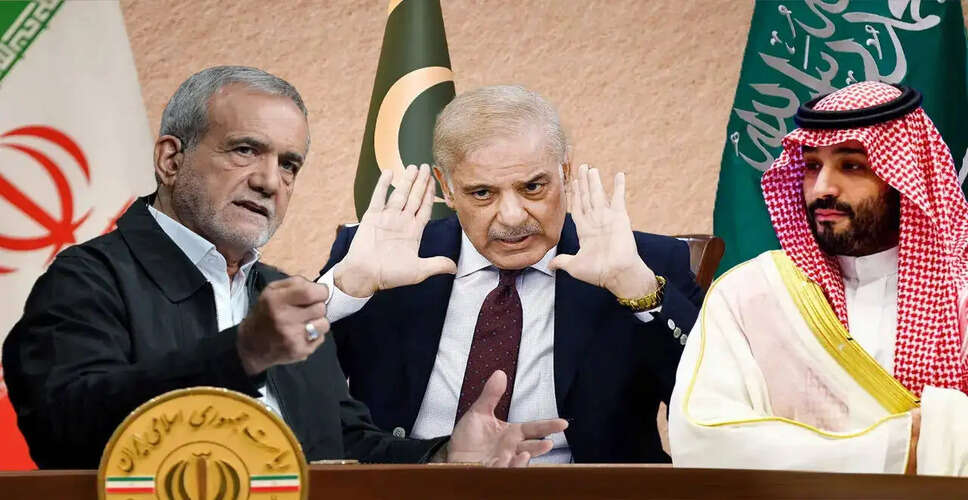
Pakistan is currently facing a challenging geopolitical landscape as the escalating conflict in West Asia impacts the region. The nation is attempting to maintain a delicate equilibrium amid rising tensions between Iran and Saudi Arabia. This complexity arises from Pakistan's long and sensitive border with Iran, coupled with its defense agreements and strong financial connections to Saudi Arabia. The ongoing conflict has reverberated throughout West Asia, affecting nearly every nation with missile strikes, drone attacks, and collateral damage. As countries grapple with casualties and the closure of vital embassies and economic routes, Pakistan finds itself in a precarious position between its two allies, Iran and Saudi Arabia. Additionally, six nations in West Asia have experienced Iranian missile and drone assaults, further complicating Pakistan's stance, which has historically supported the 'Muslim Brotherhood'. Pakistan currently faces three significant challenges: 1. Balancing relations between Iran and Saudi Arabia amidst the escalating conflict in West Asia 2. Addressing the discontent within its minority Shi'ite Muslim community 3. Continuing to engage with US President Donald Trump.
Understanding Islamabad's Relations with Tehran and Riyadh
Both Tehran and Riyadh hold considerable importance for Islamabad. Saudi Arabia is a key ally in the Muslim world, providing crucial financial support, oil on deferred payment terms, and investments during economic downturns. Historically, the Pakistani military has collaborated closely with Saudi forces, highlighted by a recent mutual defense agreement. Moreover, millions of Pakistani workers reside in Saudi Arabia, contributing to their economy. Conversely, Iran is a neighboring country with which Pakistan must maintain functional relations, sharing a 900-kilometer border. The two nations also engage in significant trade, and Iranian President Masoud Pezeshkian visited Islamabad in August 2025, indicating ongoing diplomatic efforts.
Pakistan's Dilemma Between Iran and Saudi Arabia
Pakistan's challenge lies in sustaining its strategic partnerships without appearing to favor one side in a conflict that threatens regional stability. The mutual defense agreement with Saudi Arabia complicates this situation. Since the conflict's onset, Pakistani leaders have been in constant communication, with Army Chief Asim Munir visiting Saudi Arabia to meet with top officials. Following the US-Israel strikes that resulted in the death of Iran's Supreme Leader Ayatollah Khamenei, Pakistan condemned the attacks as "unwarranted" and later denounced Iran's retaliatory actions as violations of sovereignty.
The Shia Perspective in Pakistan-Iran Relations
Pakistan is home to the second-largest Shia community globally, and recent events have sparked anger among this population towards Islamabad, particularly following the deaths of protesters in Karachi after Khamenei's passing. The historical context of Pakistan's political landscape, including the Sunni Islamization under General Zia ul Haq in the 1980s, has contributed to the marginalization of Shia communities. The Iranian Revolution of 1979 provided a new source of support for Shias in Pakistan, leading to a complex relationship influenced by sectarian dynamics.
The Impact of Trump's Return on Pakistan's Foreign Policy
Since Donald Trump's return to the White House, Pakistan's relationship with the US has strengthened, marking an end to over a decade of being sidelined. Trump's close ties with Pakistani leaders, including Army Chief Asim Munir and Prime Minister Shehbaz Sharif, have led to increased cooperation. However, this relationship appears to be driven more by transactional interests rather than strategic alignment. The US is reportedly interested in Pakistan's natural resources and potential cryptocurrency deals, complicating Islamabad's position in the ongoing West Asia conflict.