
Pakistan's Defence Minister Sparks Outrage with Anti-Israel Comments Amid Diplomatic Talks

Diplomatic Tensions Rise Over Controversial Remarks
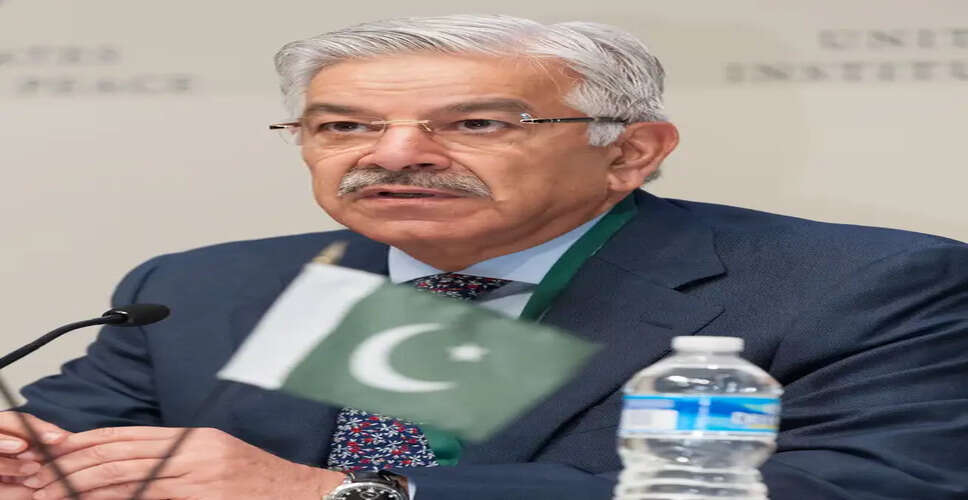
Washington: A new diplomatic conflict has emerged following Pakistan’s Defence Minister Khawaja Muhammad Asif's harsh criticism of Israel, which has drawn immediate backlash from Israeli officials, US lawmakers, and analysts during a crucial period of ceasefire negotiations.
Asif expressed on X that Israel represents 'evil and a curse for humanity,' accusing it of committing genocide in Lebanon and killing innocent civilians in Gaza, Iran, and now Lebanon. He further stated, 'I hope and pray that those who established this cancerous state on Palestinian land to expel European Jews suffer greatly.'
These remarks surfaced just 50 hours prior to significant diplomatic discussions in Islamabad, where Pakistan is facilitating talks between the US and Iran amid rising regional tensions.
In response, Israel's Prime Minister's Office condemned Asif's comments, labeling the call for Israel's destruction as 'outrageous' and asserting that such statements are intolerable from any government, especially one that claims neutrality in peace efforts.
US Congressman Josh Gottheimer also denounced the comments, describing them as 'vile rhetoric targeting Jews and Israel.' He emphasized that such hateful language is unacceptable and counterproductive at this delicate time, urging for condemnation.
This incident has raised doubts about Pakistan's ability to act as a mediator. Islamabad has been positioning itself as a neutral ground for US-Iran discussions amidst escalating Middle Eastern tensions.
Critics have voiced their concerns as well. Emily Schrader referred to Asif's remarks as a 'Jew-hating diatribe,' highlighting his statement about Israel being a curse for humanity. She argued that Pakistan should not be allowed to mediate any discussions.
Former US official Ellie Cohanim questioned Pakistan's neutrality, recalling its history of harboring Osama Bin Laden, and stated that Asif's comments have compromised any perception of objectivity regarding Pakistan's role.
Observers noted that the timing of Asif's post, coinciding with the arrival of delegations and final security arrangements, raises significant questions about Pakistan's impartiality.
This controversy follows earlier confusion regarding a ceasefire announcement from Pakistan's leadership, which suggested a ceasefire that included Lebanon, a claim later refuted by Israel.
Israel has reiterated that its military operations in Lebanon are distinct from the broader ceasefire framework, continuing its actions against Hezbollah, including a significant bombardment on April 8.
The combination of the ambiguous ceasefire announcement and the defence minister's comments has led to criticism that Pakistan's mediating role is being jeopardized at a pivotal moment.
Despite the ongoing controversy, preparations for the Islamabad talks are proceeding, with heightened security measures and international delegations already present.
The stakes are high for these discussions, which are being characterized as one of the most significant US-Iran engagements in decades, with regional stability at risk.