
Escalating Violence in Pakistan-Occupied Kashmir: Civilians Caught in the Crossfire
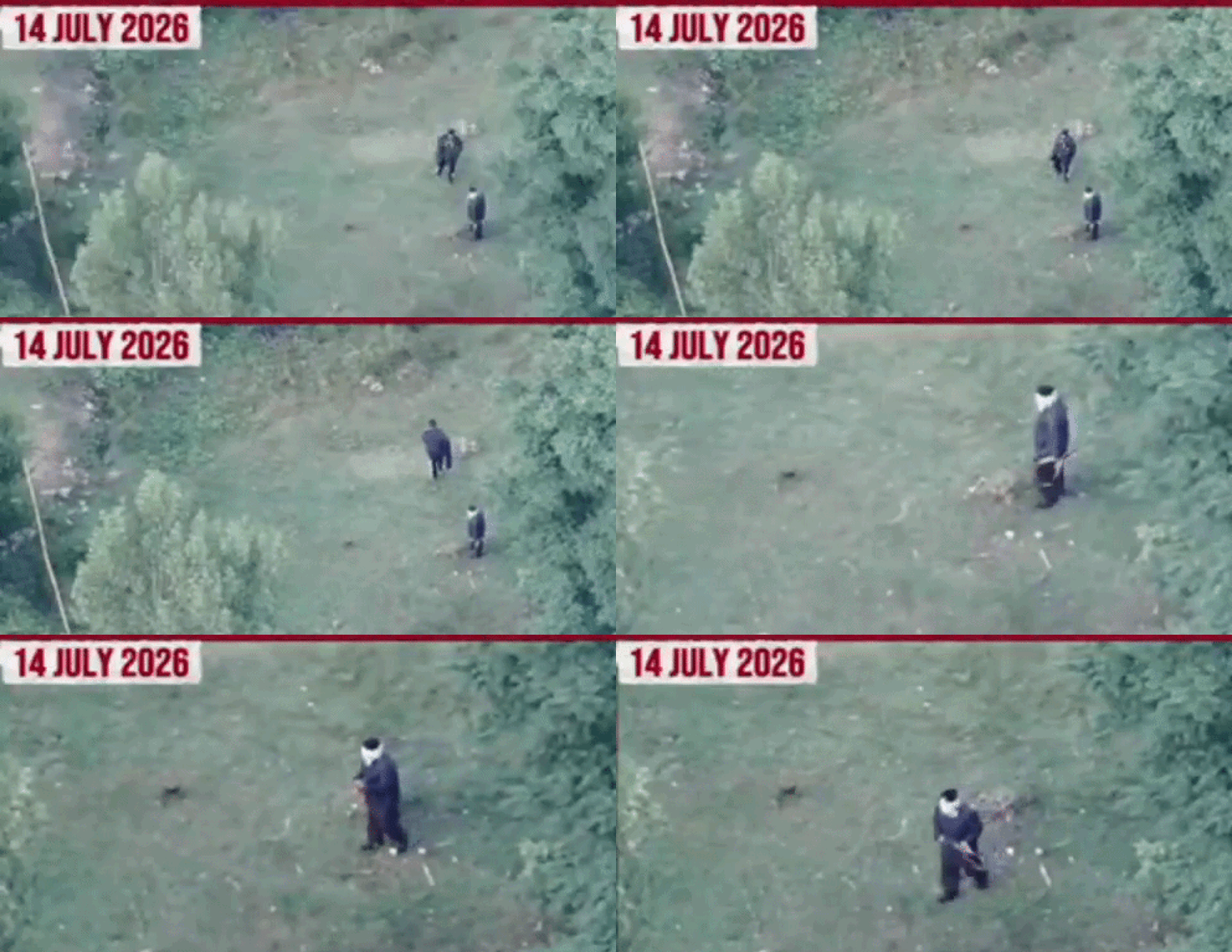

Recent Clashes in Rawalakot
New Delhi: Fresh violence erupted in Pakistan-occupied Kashmir (PoK) as security forces initiated a crackdown on civilians in Rawalakot, leading to confrontations near the New Bus Terminal. Reports indicate that at least six civilians lost their lives on Tuesday when security personnel allegedly opened fire during these clashes, heightening tensions in the area. Among the deceased were Zahid Mughal, Zafar Mughal, Arsalan Akbar, and Wajid Hayat, who were killed close to the Matial Mira Bus Terminal in Rawalakot. Local sources confirmed that these fatalities occurred amid clashes in the Baloch Sadhunati district.
Pak forces and PoK protesters clash again - Fresh clashes reported in Rawalakot, PoJK- Number of civilian fatalities rise in PoK- 6 civilians killed on fresh clashes in PoK@AnkitBhat09 shares more updates with @swatij14 pic.twitter.com/B6r27Ksiwv
— TIMES NOW (@TimesNow) July 14, 2026
This latest wave of unrest has intensified the existing discontent towards Islamabad, with protests and demonstrations becoming more frequent in recent months.
Understanding the Situation in PoK
Understanding the Situation in PoK
The protests in Pakistan-occupied Kashmir (PoK) stem from a deep-rooted economic and political crisis. Initiated by the Joint Awami Action Committee (JAAC), residents are voicing their frustrations over rampant inflation, soaring electricity costs, and limited access to subsidized wheat flour. The security situation remains precarious, with eight significant protests occurring across various districts ahead of the planned July 15 protest march by the Jammu Kashmir Joint Awami Action Committee. Recent clashes in Sudhnoti and Mathiyal Mera reportedly resulted in nine fatalities, including one member of the Pakistan Rangers, bringing the total death toll since June 5 to 28, comprising 23 civilians and 5 security personnel. The unrest has severely disrupted daily life, leading to ongoing sit-ins, market closures, road blockades, and reports of essential supply shortages. The JKAAC has called upon Bilawal Bhutto Zardari to intervene regarding the alleged crackdown, while social media reflects a growing public outcry against mainstream political figures and increasing support for the protest movement.
Protests Reach the White House
Protests Reach the White House
Just a day prior to the violence, members of the Pakistan-occupied Kashmir diaspora in the United States organized a protest outside the White House, seeking international attention for what they termed a deteriorating humanitarian crisis in the region. Nearly 100 participants, including women, children, and community leaders, took part in the demonstration. They called for the withdrawal of Pakistani military forces from civilian areas in PoK and urged the international community to intervene regarding the alleged excessive use of force against unarmed civilians. The protesters also expressed concerns over a prolonged internet blackout, which they claimed has isolated nearly four million residents from the outside world. They made an unusual appeal to India for assistance in facilitating humanitarian aid and saving civilian lives. Additionally, they demanded the opening of the Line of Control (LoC) through the Poonch and Doda sectors to allow relief supplies to reach those in need.
Ongoing Economic and Humanitarian Issues
Ongoing Economic and Humanitarian Issues
Beyond the recent violence, the residents of PoK continue to grapple with significant economic and humanitarian challenges. A 2025 study published in Nature revealed that while approximately 66% of the population relies on agriculture and livestock for their livelihoods, over 57% of households face food insecurity. Nearly 29% of the population is undernourished, a figure that is notably higher than Pakistan's national average of 19.9%. In the mountainous regions, food insecurity reportedly affects as many as 90% of households. Healthcare indicators are equally alarming; according to Pakistan's Voluntary National Review Report, 39% of children under five suffer from stunted growth, and the maternal mortality ratio stands at 104 deaths per 100,000 live births.
India's Response to the Unrest
India's Response to the Unrest
In response to the ongoing unrest, the Ministry of External Affairs (MEA) on Tuesday attributed the protests to Pakistan's long-standing exploitation of the region, stating that they are a direct result of decades of "systematic exploitation" in Pakistan-occupied Kashmir. MEA spokesperson Randhir Jaiswal remarked, "The ongoing protests in PoJK are a direct consequence of Pakistan's decades-long systemic exploitation, denial of fundamental rights, and administrative oppression in areas under its illegal and forcible occupation." The ministry further accused Pakistan of addressing public grievances with excessive force rather than seeking solutions. Jaiswal stated, "Instead of addressing the legitimate grievances of the local populace, the Pakistani state has responded with extreme police brutality, including against helpless women and children, blocking essential supplies, including food and medicine, enforcing internet blackouts, and deploying lethal force against unarmed civilians that has resulted in tragic fatalities." India has called on the international community to hold Pakistan accountable for its actions against civilians in Pakistan-occupied Kashmir.