
Pakistan Offers to Mediate US-Iran Talks Amid Escalating Tensions
Pakistan's Proposal for Dialogue
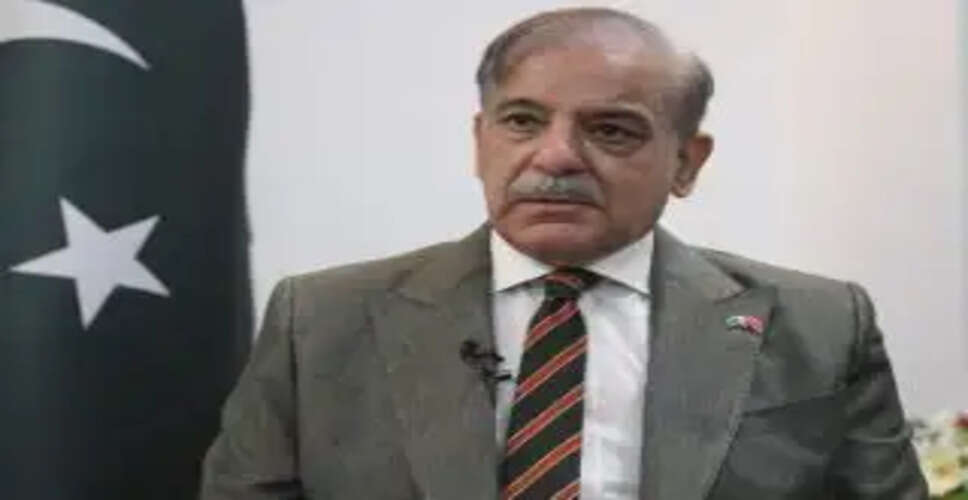
On Tuesday, the Prime Minister of Pakistan expressed his country's readiness to facilitate discussions between the United States and Iran aimed at resolving the ongoing conflict in the Gulf region. This announcement came shortly after President Donald Trump indicated a delay in military action against Iranian facilities, citing 'productive' discussions. In a message posted on X, Prime Minister Shehbaz Sharif emphasized Pakistan's commitment to supporting dialogue efforts, stating, 'If both the US and Iran agree, we are prepared and honored to host significant talks for a comprehensive resolution.'
Tensions escalated after the US and Israel conducted airstrikes on Iran on February 28, claiming insufficient progress in negotiations regarding Iran's nuclear ambitions, despite Oman reporting notable advancements.
In retaliation, Iran has targeted nations housing US military bases and attacked energy infrastructure in the Gulf, effectively blocking the Strait of Hormuz, a critical passage for a significant portion of the world's oil and liquefied natural gas, leading to unprecedented energy supply disruptions.
A source within the Pakistani government revealed that plans for a potential meeting are progressing, although the realization of such a meeting remains uncertain, with a timeline of about a week being suggested.
Iran's Denial of Negotiations
President Trump remarked on Monday that the US and Iran had engaged in 'very good and productive' discussions aimed at achieving a complete resolution of hostilities in the Middle East. He noted that these talks commenced on Sunday and continued into Monday, involving Special Envoy Steve Witkoff and Jared Kushner. However, following Trump's comments on Truth Social, Iranian officials refuted the existence of any negotiations. Mohammad Baqer Qalibaf, the speaker of Iran's parliament, labeled the reports of direct talks as 'fake news'.
Recent Attacks and Military Responses
In a recent escalation, Iranian missiles set off air raid sirens in Tel Aviv, Israel's bustling commercial center, which also houses military installations. One missile caused significant damage, creating a large crater in a road and damaging a multi-storey apartment building, though no fatalities were reported. In response, Israel's military conducted a series of airstrikes in central Tehran, targeting command centers linked to the IRGC's intelligence division and the Intelligence Ministry. They claimed to have struck over 50 targets overnight, including sites for ballistic missile storage and launch. Air defense systems were activated across Tehran, with multiple explosions reported in various parts of the capital. Additionally, a strike on a residential area in Tabriz, a city in northwest Iran, resulted in at least eight deaths and 28 injuries, according to local crisis management officials.