
Pakistan Moves Towards Provincial Status for Gilgit-Baltistan Amidst Internal Challenges
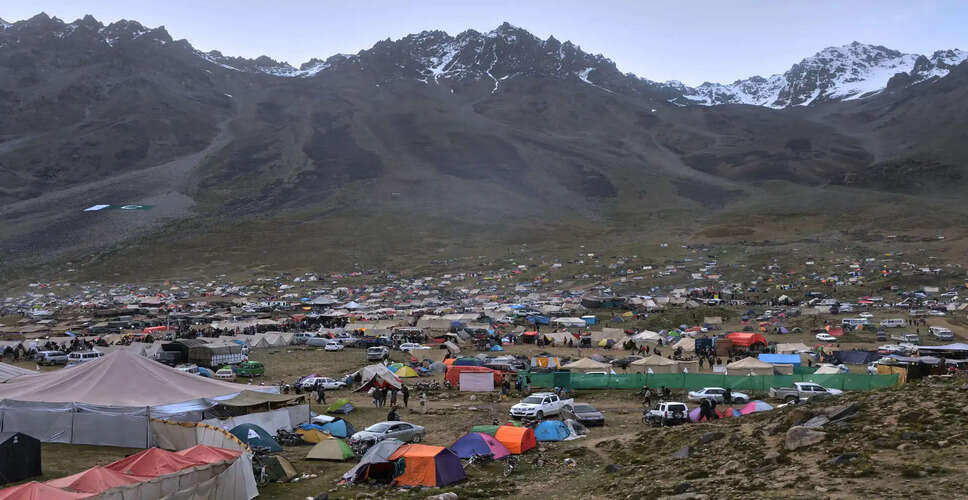

Growing Unrest in Pakistan-Occupied Kashmir
New Delhi: In light of escalating tensions in Pakistan-occupied Kashmir (PoK), Pakistan is advancing towards granting provincial status to Gilgit-Baltistan. This follows a unanimous resolution passed by the region's Legislative Assembly, which seeks constitutional recognition as the fifth province of the country. This development occurs amidst Pakistan's ongoing political and security issues, including unrest in Balochistan and increasing militant activities in Khyber Pakhtunkhwa. Additionally, a viral letter falsely claiming Balochistan's independence has fueled speculation regarding the nation's internal stability.
Details of the Resolution
What the Resolution Entails
The resolution urges the federal government of Pakistan to modify the Constitution to grant Gilgit-Baltistan full provincial status, ensuring representation in the National Assembly, Senate, and other federal bodies. It emphasizes that the residents of Gilgit-Baltistan should have the same constitutional, political, and democratic rights as those in Pakistan's established provinces. Furthermore, it suggests constitutional protections to ensure that this change remains contingent upon any future resolution of the Jammu and Kashmir dispute, in accordance with Pakistan's international commitments.
If Parliament approves this resolution, Gilgit-Baltistan will join Punjab, Sindh, Balochistan, and Khyber Pakhtunkhwa as Pakistan's fifth province. Currently, the region operates under a limited self-governance system and lacks the constitutional status of the other provinces. This initiative follows the elections held on June 7 for the Gilgit-Baltistan Assembly, which faced allegations of electoral misconduct. The Pakistan Peoples Party (PPP), led by Bilawal Bhutto Zardari, emerged as the largest party and formed a coalition government with the Pakistan Muslim League-Nawaz (PML-N) led by Prime Minister Shehbaz Sharif. Under this coalition, the PPP secured the chief minister and assembly speaker roles, while the PML-N took the governor and deputy speaker positions. Shortly after taking office, the coalition government adopted the resolution and sent it to Pakistan's Parliament for further deliberation.
This proposal is not unprecedented; Pakistan had previously considered granting provincial status to Gilgit-Baltistan after India's revocation of Articles 370 and 35A in August 2019, which reorganized the former state of Jammu and Kashmir. However, the initiative did not advance during Imran Khan's administration.
India's Response
India's Firm Rejection
India has categorically rejected the resolution, reaffirming its longstanding stance that the entire Union Territories of Jammu and Kashmir and Ladakh, including Gilgit-Baltistan, are integral parts of India. In response to media inquiries, Ministry of External Affairs spokesperson Randhir Jaiswal stated that New Delhi does not acknowledge any unilateral actions by Pakistan to change the status of territories under its illegal occupation. "Gilgit-Baltistan was, is, and will always remain a part of India," Jaiswal asserted. India has consistently argued that Pakistan lacks legal authority over the territories it controls in Pakistan-occupied Kashmir and has repeatedly condemned any administrative or constitutional modifications made there, deeming them invalid and lacking legal legitimacy.