
Pakistan Extends Airspace Ban on Indian Flights Amid Ongoing Tensions

Pakistan's Airspace Ban on Indian Aircraft Extended
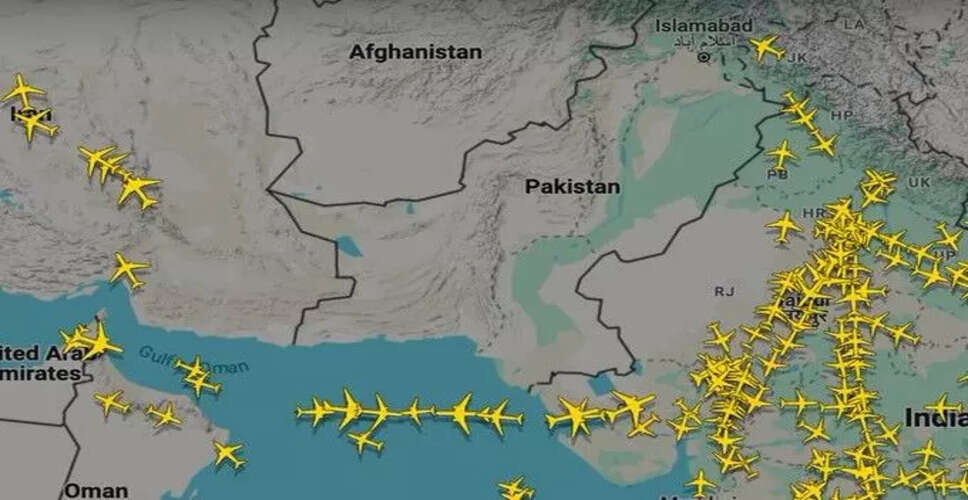
File image of diverted flights after Pakistan Air space ban (Photo: Flightradar24)
Islamabad, April 21: The Pakistani government has decided to prolong its ban on Indian aircraft utilizing its airspace for an additional month, extending restrictions that have been in effect for over a year due to ongoing tensions between the two nations.
The Pakistan Airports Authority issued a new Notice to Airmen (NOTAM) on Tuesday, stating that “all Indian-registered, leased, commercial, and military aircraft will continue to be prohibited from entering Pakistani airspace until 5 am on May 24, 2026.”
This announcement comes just days before the previous extension was set to expire on April 24.
Since April 24, 2025, Pakistan has kept its airspace closed to Indian flights, a decision that has reportedly led to significant financial losses for Indian airlines, amounting to billions of rupees.
The ban was initially implemented following increased tensions after the Pahalgam terror attack, which New Delhi attributed to Pakistan.
Pakistan has denied these allegations and has called for a thorough investigation into the incident.
In response, India also restricted its airspace for Pakistani airlines.
This is the first instance where Pakistan has enforced such extensive restrictions specifically against Indian aircraft.
The ban has had a considerable impact on Indian commercial aviation, as Pakistani airspace is a vital route for flights from northern India to various destinations in the Gulf, Europe, and North America.
Airlines have been compelled to take longer alternative routes, resulting in increased fuel consumption, higher operational costs, and longer travel times.
Major airlines like Air India and IndiGo have had to reroute numerous international flights, including those heading to New York, Azerbaijan, and Dubai, avoiding Pakistani airspace.
Data from Flightradar24 previously indicated significant disruptions, especially on westbound routes from New Delhi.
This situation is reminiscent of past instances when airspace closures occurred during conflicts, such as the Kargil conflict and the Pulwama crisis.
With this latest extension, uncertainty prevails, and there are no immediate signs of a potential rollback of the restrictions.