
Oman Rejects Iran's Proposal for Fees on Strait of Hormuz Shipping
Oman's Firm Stance on Strait of Hormuz
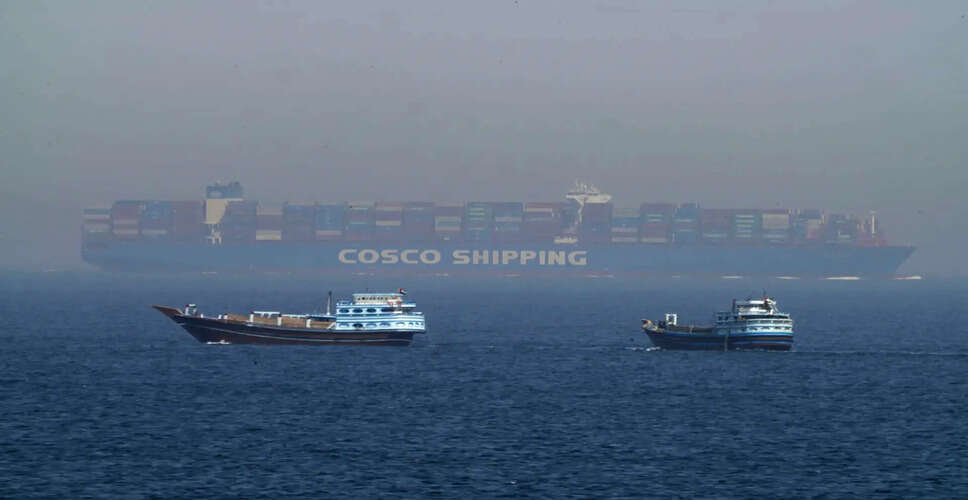
On Wednesday, Oman’s transport minister, Said Al-Maawali, stated that international agreements prohibit charging fees for ships passing through the Strait of Hormuz. His comments were made during a session of the Shura Council and reported by local media. Al-Maawali emphasized, “Oman’s position regarding the Strait of Hormuz is unequivocal. We have ratified all international maritime transport agreements.” He further explained that since the strait is a natural passage, no fees can be levied based on the agreements signed by Oman.
These remarks followed reports suggesting that Iran had proposed imposing charges on vessels navigating this crucial waterway, which connects the Gulf to the Indian Ocean and is responsible for approximately 20% of global oil shipments.
Al-Maawali mentioned that Oman’s Foreign Ministry is currently in talks regarding this matter, expressing hope for a resolution that would be beneficial for both regional nations and the international community. He pointed out that some nations, including Iran and the United States, have not signed the relevant maritime agreements, leading to what he termed a 'legal gap.'
Oman has been actively engaging with Iran at the deputy foreign minister level to find ways to ensure safe navigation through the strait. These discussions come amid rising tensions in the region following a joint offensive by the U.S. and Israel against Iran that commenced on February 28. In response, Iran has conducted drone and missile strikes targeting Israel and U.S. military locations, while also limiting shipping activities in the strait.
In a recent development, the United States and Iran declared a two-week ceasefire and announced plans to fully reopen the Strait of Hormuz, just hours before a deadline set by the U.S. president, who had previously threatened severe consequences for Iran if free passage was not allowed. This agreement, facilitated by Pakistan, was celebrated by both parties, with the U.S. president acknowledging a 10-point plan from Iran as a viable foundation for negotiations aimed at a lasting peace.
Iranian officials expressed optimism, with the first vice president declaring on social media that a new era for Iran had begun, following the failure of the U.S. to dismantle the Islamic Republic’s government. Iran also confirmed that the Strait of Hormuz would remain open during the ongoing negotiations.