
New Immigration Guidelines Impacting Indian Green Card Applicants

Changes in Immigration Policy
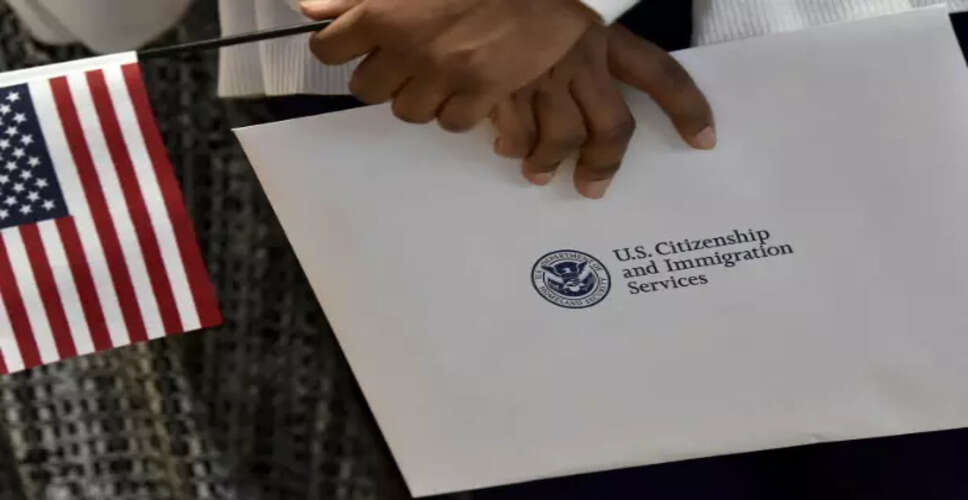
Representational Image
Washington, Aug 19: A significant number of Indians aiming for US green cards may encounter increased scrutiny regarding their financial situations and use of public assistance due to new immigration regulations set to take effect on September 18.
The US Citizenship and Immigration Services (USCIS) has indicated that officials will evaluate various forms of public assistance, including housing aid, food stamps, and educational financial aid, when determining if an applicant might become a public charge.
This new guidance follows the Department of Homeland Security's recent decision to revoke the public charge rules established during the Biden administration in 2022. The final rule was disclosed on July 16 and officially published in the Federal Register on July 20.
The updated regulations will apply to Forms I-485, which are used for seeking permanent residency or status adjustments, that are either postmarked or submitted electronically on or after September 18.
Applications submitted between December 23, 2022, and September 17, 2026, will still be evaluated under the previous 2022 guidelines.
This shift could have implications for Indians pursuing permanent residency through family or employment-based categories. However, it will not affect individuals who already possess green cards or US citizenship.
Most applicants sponsored by family members will be subject to this public charge evaluation, including spouses, children, and parents of US citizens, as well as spouses and children of lawful permanent residents.
Additionally, adult children and siblings of US citizens, fiancés of citizens, and widows or widowers of citizens are included in this assessment.
Employment-based applicants affected by this evaluation include priority workers, professionals with advanced degrees, individuals with exceptional abilities, skilled workers, investors, and religious workers.
Foreign medical graduates, international broadcasters, and certain current or former US government employees stationed abroad are also included in this provision.
Several humanitarian and special immigration categories have been exempted by Congress, such as refugees, asylees, applicants for Temporary Protected Status, victims of human trafficking, and certain self-petitioners under the Violence Against Women Act.
Other exempt groups include special immigrant juveniles, specific Afghan and Iraqi nationals who assisted the US government, applicants under the Cuban Adjustment Act, and surviving relatives of military personnel.
USCIS officers are required to evaluate five statutory factors: the applicant's age, health, family situation, financial resources, and educational background.
They may also take into account Form I-864, which is an affidavit where a sponsor commits to financially support the immigrant.
For benefits received prior to September 18, only public cash assistance for income maintenance and government-funded long-term care will be considered. However, for means-tested benefits received after this date, all such benefits, including housing and food assistance, may be evaluated.
The agency emphasized that all relevant evidence must be reviewed, and applications will be assessed on a case-by-case basis. Merely receiving a covered benefit will not automatically result in denial.
No single factor, apart from the lack of a required affidavit of support, can solely determine that an applicant is likely to become a public charge.
If an applicant is deemed inadmissible solely on public charge grounds, they may be invited to post a cash or surety bond, with the amount based on the potential government assistance they could receive over the next five years.
Applicants can submit Form I-945 for a public charge bond only after receiving a Notice of Intent to Deny that includes an invitation to post one. Unsolicited bonds will not be accepted by the agency.
According to data from the Department of Homeland Security, approximately 66,800 immigrants from India received US green cards in fiscal year 2024, representing 4.9 percent of the total 1.36 million individuals granted lawful permanent residency that year. Notably, around 61 percent of Indian recipients obtained their permanent residency through status adjustments while already residing in the United States.