
New Developments in Nancy Guthrie Disappearance Investigation
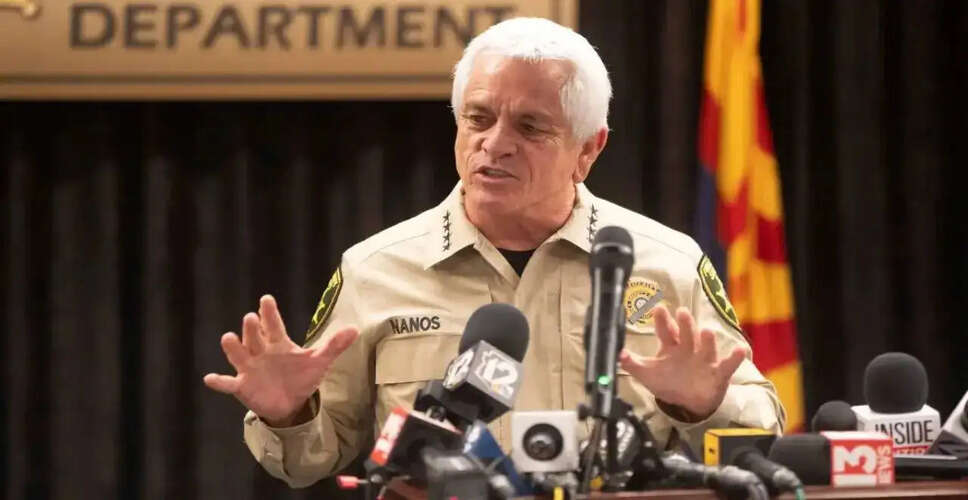

Investigation Update on Nancy Guthrie's Case
The inquiry into the vanishing of Nancy Guthrie has progressed, revealing concerns about the sheriff overseeing the investigation amid ongoing forensic analysis. An attorney for Pima County Sheriff Chris Nanos submitted a detailed 22-page letter to local officials on Tuesday, addressing questions posed by the Pima County Board of Supervisors. This document outlines Nanos's work history, disciplinary actions, collaboration with federal immigration agencies, and financial management within the department.
Attorney James M. Cool noted that Nanos resigned from the El Paso Police Department due to a conflict with a supervisor regarding vehicle towing. Nanos was part of that department from 1976 until 1982. Cool also pointed out a mistake on the sheriff's department website that inaccurately extended Nanos's tenure to 1984, stating that upon discovering this error, Nanos promptly directed his staff to amend it.
Cool characterized Nanos as having a "minimal disciplinary history," asserting that it was "irrelevant to his official duties." He emphasized that Nanos had never faced suspension during his extensive and commendable service with the Pima County Sheriff’s Department (PCSD). However, he acknowledged that Nanos had been suspended multiple times over forty years ago while working for the El Paso Police Department.
Reports from The Arizona Republic indicate that Nanos faced eight suspensions during his tenure in El Paso, with disciplinary actions stemming from various incidents, including the assault of a handcuffed suspect requiring hospitalization, use of inappropriate language, threats, gambling while off duty, and habitual tardiness.
Nancy Guthrie, aged 84 and mother of television host Savannah Guthrie, was last seen at her residence in Tucson's Catalina Foothills on January 31. Sheriff Nanos indicated in February that evidence suggested she "did not leave voluntarily" and expressed concern that her reliance on daily medication could pose life-threatening risks. He later mentioned to the BBC that he suspected she had been a victim of a targeted abduction.
The investigation has increasingly centered on forensic evidence, including DNA collected from the scene. Reports from ABC News and NewsNation reveal that the FBI is currently analyzing materials, including a hair sample. Ben Williamson, assistant director for public affairs at the FBI, stated on X that this is not new evidence, clarifying that the FBI had requested DNA testing two months prior, but the local sheriff opted to send it to a private laboratory instead. He assured that any new developments would be communicated promptly.
Retired FBI agent Jennifer Coffindaffer shared insights with Newsweek, suggesting that the investigation's success may hinge on whether the DNA can be linked to genetic databases. "It all comes down to whether that hair sample can be matched with a relative who has used services like 23andMe or Ancestry.com," she explained, noting that this process could take weeks or even months.
Investigators are also looking into additional evidence, such as a glove discovered approximately two miles from Guthrie’s residence, although no matches have been found in the national CODIS database. Sheriff Nanos has stated that the case still contains "workable" DNA, expressing confidence in the scientific capabilities available. "We have some DNA that we believe is still viable, and we need to pursue that," he told journalist Bill Buckmaster. He also mentioned that some samples might include DNA from multiple individuals.