
Nepal's Rastriya Swatantra Party Poised for Historic Election Victory
Rastriya Swatantra Party's Surge in Nepal's Elections
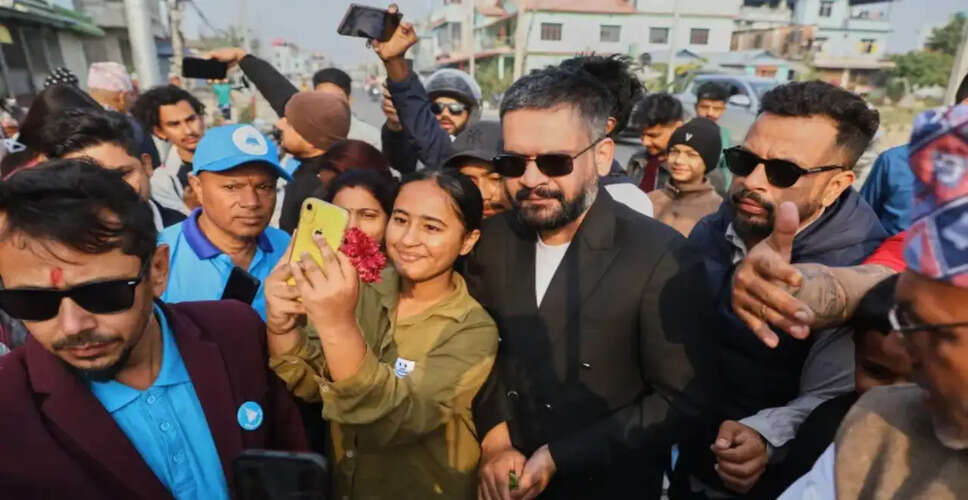
The Rastriya Swatantra Party (RSP), led by rapper-turned-politician Balendra Shah, is on track for a significant victory in Nepal's first general election following the tumultuous protests led by Gen Z. This outcome poses a serious challenge to the traditional political parties in the nation. As per the Election Commission of Nepal, results from 144 out of 165 direct-election constituencies indicate that the RSP has already secured three seats and is leading in 104 others, according to local media sources. The party's impressive performance highlights the public's growing discontent with the long-standing political elite and a shift towards new leadership. If this trend continues, Shah, affectionately known as “Balen,” is anticipated to become Nepal's next prime minister.
Nepal has experienced considerable political turbulence, with 14 different governments established over the last 18 years. The federal parliament consists of 275 members, with 165 elected directly and the remaining 110 through a proportional representation system.
Election Results: A Shift in Power
- The RSP is leading in 104 constituencies
- The Nepali Congress has secured two seats and is leading in 13 others
- The CPN-UML is leading in 10 constituencies
- The Nepali Communist Party has won one seat and is leading in six
- The Shram Sanskriti Party is leading in six constituencies
Balendra Shah, who recently served as the Mayor of Kathmandu, is currently leading in the Jhapa-5 constituency against K P Sharma Oli, the CPN-UML chair and four-time prime minister, in what has traditionally been Oli's stronghold. Shah garnered 6,551 votes, while Oli received only 1,428 votes. Balen was a favored candidate to lead the interim government after the Gen Z protests resulted in the ousting of the Oli-led coalition government in September of the previous year, following two days of nationwide demonstrations against corruption and social media restrictions. However, he opted to contest the parliamentary elections instead of leading the interim administration.
In January, he joined the RSP, which was established in 2022 by Ravi Lamichhane, and was soon named the party's candidate for prime minister. The RSP gained substantial support during the election campaign.
India Observes the Developments
The elections have drawn significant attention from India, which seeks a stable government in the politically volatile Himalayan nation to enhance their developmental partnership. Ministry of External Affairs Spokesperson Randhir Jaiswal expressed, "We look forward to collaborating with the new Government of Nepal to strengthen the multifaceted ties between our nations for mutual benefit." He added that India has consistently supported peace and stability in Nepal and provided logistical assistance as requested by the Nepalese government for these elections.
The Gen Z protests on September 8 and 9 led to the removal of Prime Minister Oli, who was leading a coalition government with the Nepali Congress, which had nearly two-thirds majority support. Following Oli's ouster, President Ramchandra Paudel dissolved the House of Representatives on September 12 and appointed Sushila Karki as the caretaker prime minister. The key issues raised by Gen Z included anti-corruption, good governance, an end to nepotism, and a demand for generational change in political leadership.