
Nepal's Political Landscape Shifts: Balendra Shah Triumphs Over K P Sharma Oli
A New Era in Nepalese Politics
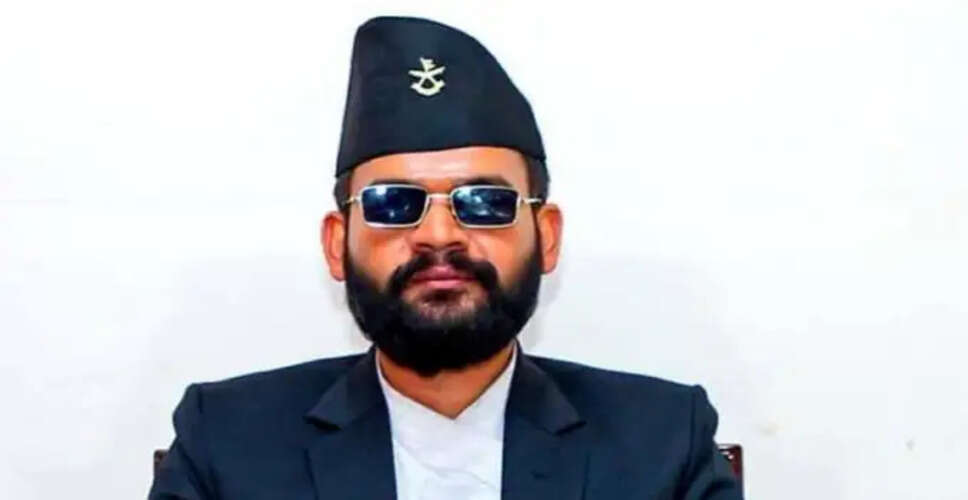
Kathmandu: On March 7, Balendra Shah, the leader of the Rastriya Swatantra Party (RSP), achieved a significant victory over former Prime Minister K P Sharma Oli, marking a pivotal moment in Nepal's political scene. This election, the first since the Gen Z protests last year that called for a generational shift and a corruption-free government, saw Shah decisively defeat Oli by approximately 50,000 votes in the Jhapa-5 constituency.
The 35-year-old rapper-turned-politician, known as 'Balen', garnered 68,348 votes, while the 74-year-old Oli received only 18,734, according to the Election Commission (EC).
The RSP, established in 2022 by Ravi Lamichhane, has claimed victory in 62 out of 78 declared seats by 6:30 PM, with a clean sweep in all 10 constituencies of Kathmandu district and leading in 60 seats nationwide.
Traditional parties struggled to resonate with voters, who prioritized issues like corruption and nepotism, alongside a desire for new leadership.
The Nepali Congress (NC) secured nine seats and is leading in nine more, while the CPN-UML managed only three seats and is leading in nine. The Nepali Communist Party (NCP) won two seats and is leading in five, with the Shrama Shakti Party (SSP) leading in three and the Rastriya Prajatantra Party (RPP) winning one seat, as per the EC data. An independent candidate also emerged victorious.
Voter turnout for the March 5 elections was around 60%. Vote counting commenced late Thursday night, and as of Saturday at 5 PM, results were still being tallied in 162 constituencies.
India closely monitored the elections, hoping for a stable government in Nepal to enhance their developmental partnership.
Prime Minister Narendra Modi congratulated the Nepali people and government on the successful elections, expressing joy at their vibrant exercise of democratic rights. He emphasized India's commitment to collaborating with Nepal's new government for mutual progress.
The RSP, which positioned Balendra Shah as its prime ministerial candidate, began its campaign in Janakpur, aiming for a clean sweep in the province. Shah, who branded himself as the 'son of Madhesh', launched the campaign with the slogan 'Ab ki bar Balendra Sarkar' (This time, there will be Balendra's government).
In Madhesh province, the RSP has won seven out of 32 seats and is leading in 23 others. The party is also performing strongly in the Kathmandu Valley, winning all 10 seats in Kathmandu district and additional seats in Bhaktapur and Lalitpur.
Shah, who recently served as the mayor of Kathmandu, achieved 52,069 votes in Jhapa-5, significantly outpacing Oli, who received only 14,031 votes.
The anticipated next prime minister of Nepal, Shah's rise reflects a public desire to move away from established political parties, especially given that Nepal has seen 14 governments in the past 18 years.
RSP chairman Lamichhane also won decisively in Chitwan-2, marking his third consecutive victory with 54,402 votes against NC's Mina Kumari Kharel, who received 14,564 votes.
Former Prime Minister Pushpa Kamal Dahal Prachanda won from Rukum Purba district with 10,240 votes, defeating CPN-UML's Lilamani Gautam, who garnered 3,462 votes.
RPP's Gyanendra Shahi won in the Jumla constituency, becoming the only pro-monarchist candidate to secure a seat in the House of Representatives.
The RSP is leading in the proportional voting system with 126,503 votes, followed by the Nepali Congress with 38,343 votes. The CPN-UML received 28,721 votes, while the RPP, Nepali Communist Party, and SSP received 10,962, 10,794, and 6,474 votes, respectively.
Out of 275 parliamentary members, 165 are elected through direct voting, while the remaining 110 are chosen through proportional representation.
Approximately 3,400 candidates competed for the 165 direct seats, and 3,135 candidates vied for the 110 proportional seats.
The Gen Z protests on September 8 and 9 last year led to the ousting of Prime Minister Oli, who had been leading a coalition government with the Nepali Congress. Following his removal, Shah was a popular choice for the interim government but opted to run for a full term instead.
Joining the RSP in January, he was soon named the party's prime ministerial candidate. The key issues raised by Gen Z during the campaign included anti-corruption, good governance, and the need for generational change in political leadership.