
Nepal's Election Dynamics: Balen Shah Excludes Controversial China Project from Pledges
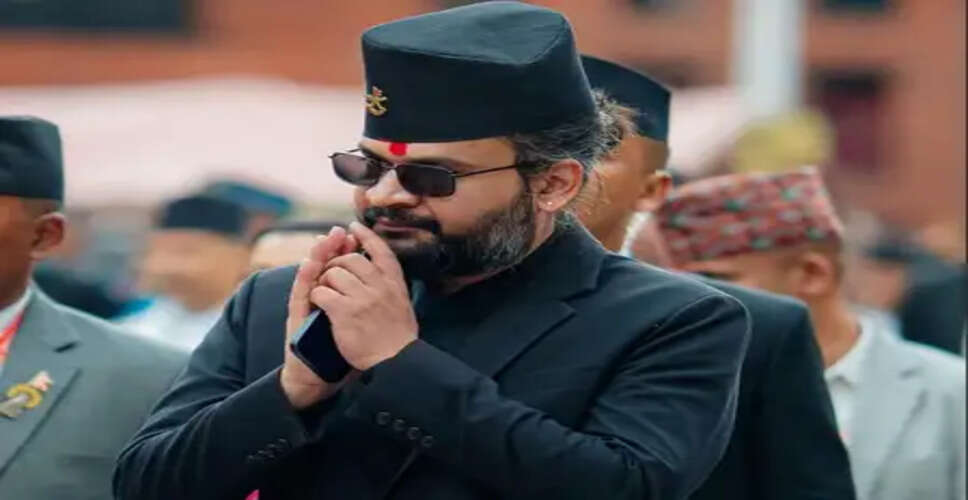
Political Shifts in Nepal's Upcoming Elections
New Delhi: A significant infrastructure initiative in Nepal, linked to China's Belt and Road Initiative (BRI), has been removed from the election manifesto of Balen Shah, the former Mayor of Kathmandu. Shah is currently running against ex-Prime Minister K.P. Sharma Oli in the Jhapa-5 constituency, as reported.
Nepal is set to hold parliamentary elections on March 5 under a temporary government formed after Oli's resignation, which followed widespread anti-corruption protests led by the younger generation last September.
The Damak Industrial Park, now referred to as the Nepal-China Friendship Industrial Park, has gained attention following Shah's decision, according to local media.
Sources indicate that the project’s proximity to the Nepal-India border, particularly the sensitive Siliguri Corridor, has raised concerns in New Delhi.
Officials have questioned why Kathmandu is allowing such a significant project to be developed near the border, highlighting the sensitivity of the issue for various reasons.
Balen Shah, a popular figure among the youth and a candidate from the Rastriya Swatantra Party (RSP), was considered a potential interim Prime Minister but has since stepped back.
The 35-year-old engineer and rapper is viewed as a promising leader for Nepal's future.
The industrial park is part of the BRI, a vast infrastructure initiative launched by Chinese President Xi Jinping. The foundation stone for the project was laid by former PM Oli in February 2021 in Kamal Rural Municipality, Jhapa.
Oli, who leads the Communist Party of Nepal (Unified Marxist Leninist), has maintained close ties with Beijing.
While Oli included the industrial park's construction in his recent 41-point commitment document, Shah has chosen to exclude it from his manifesto, as reported.
An aide to Shah mentioned, "We are aware of the project and the surrounding controversy, which is why we opted to leave it out."
Previous reports indicated disagreements between the Nepali Congress and the Communist Party regarding loan agreements with China.
Concerns have also been raised about delays in BRI project implementations, with none finalized yet, leading to skepticism about the initiative's viability.
Some factions in Nepal have expressed caution regarding the financial repercussions of BRI projects, especially in light of Sri Lanka's economic troubles linked to similar Chinese investments.
Negotiations revealed that China initially proposed various funding options, but the Nepali Congress insisted on avoiding commercial loans under the BRI framework. Ultimately, the agreement adopted 'aid financing modalities' instead of the 'grant financing modalities' preferred by the Nepali Congress.
The Damak Industrial Park aims to facilitate access to the Indian market via Kakarvitta and Birgunj ports, underscoring its significance, especially following the visit of China's Ambassador to Nepal, Zhang Maoming.
A report from the Centre for Social Innovation and Foreign Policy (CESIF) noted that a major obstacle for Kathmandu was China's demand for extensive tax exemptions, which the Finance Ministry resisted, as these would apply not only during construction but for many years post-completion.
Despite these contentious demands, a meeting of Nepal's Investment Board, led by former PM Oli, decided to expedite the project.
The report also highlighted that India has communicated that the project represents a 'red line' and has advised both the Nepali Congress and the Communist Party of Nepal (Unified Marxist Leninist) against proceeding.