
Nationwide May Day Strong Demonstrations Set for Economic Blackout
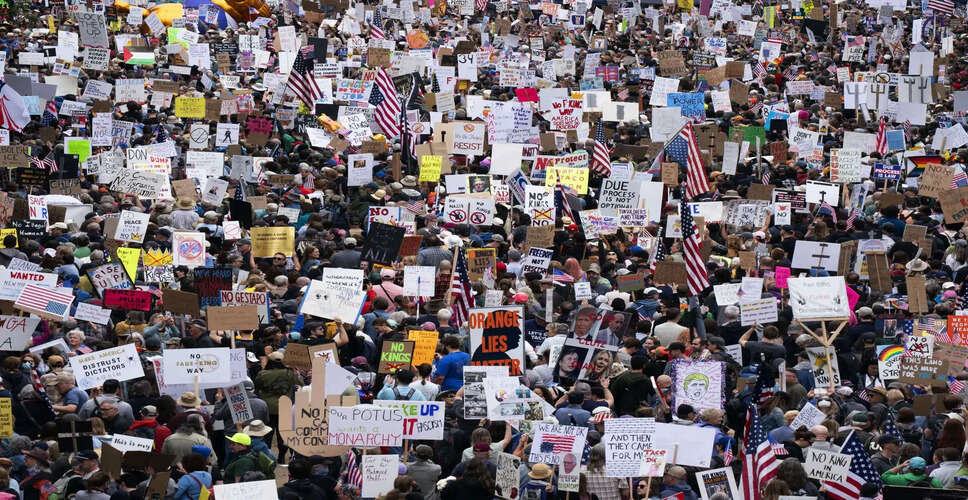

May Day Strong: A Call for Workers' Rights
Today marks a significant day of action across the nation as organizers prepare for the "May Day Strong" demonstrations. On May 1, 2026, a large turnout is anticipated for an economic blackout in honor of International Workers’ Day. The planned activities encompass walkouts from educational institutions and workplaces, marches, block parties, and various gatherings nationwide.
Historically, May Day has been a pivotal day for advocating labor and workers’ rights. This year, a coalition of groups has united under the "May Day Strong" initiative, advocating for policies that prioritize workers over the wealthy elite. Their demands include halting ICE operations, opposing certain military conflicts, and increasing taxes on the affluent.
Among the participating organizations are labor unions, immigrant rights advocates, the Democratic Socialists of America, and activists from the recent "No Kings" protests. The planned economic disruption draws inspiration from a significant protest in Minnesota earlier this year, where tens of thousands participated in a similar action against immigration enforcement.
Neidi Dominguez, the founding executive director of Organized Power in Numbers and a key figure in the May Day Strong initiative, expressed optimism, stating that they expect to see more than double the number of events compared to the previous year.
Leah Greenberg from Indivisible, a group involved in the No Kings protests, referred to the May Day economic blackout as a "structure test" for the broader movement. "We are encouraging individuals to assert their power as workers, students, and community members," she noted. "This is about enhancing our capacity for greater non-cooperation in the future."
Teachers’ unions and students have been particularly engaged in these efforts. In North Carolina, at least 15 school districts have granted teachers the day off to join a statewide rally titled "Kids Over Corporations," which emphasizes the need for better public education funding. In Chicago, the Chicago Teachers Union successfully advocated for May Day to be recognized as a "day of civic action." Stacy Davis Gates, president of the Chicago Teachers Union, stated, "As educators, we have a duty to the students and families we serve. We aim to shed light on the affordability crisis and the impact on our institutions."
At Purdue University in Indiana, student leader Sanshray Kukutla is spearheading a local walkout that includes students, educators, workers, and community members. "We’re sending a message to the billionaire class," Kukutla remarked. "Our labor, spending, and participation are what sustain the system. If we don’t work, they don’t profit."
Organizers view today’s actions as a crucial step toward generating momentum for a potential general strike, a phenomenon that has not been seen in the U.S. for decades, especially since the restrictions imposed by the 1947 Taft-Hartley Act. United Auto Workers (UAW) president Shawn Fain has publicly urged unions to synchronize contract expirations to facilitate a general strike on May 1, 2028.