
Middle East Tensions Escalate: US and Israel Intensify Strikes Against Iran
Intensified Military Actions in the Middle East
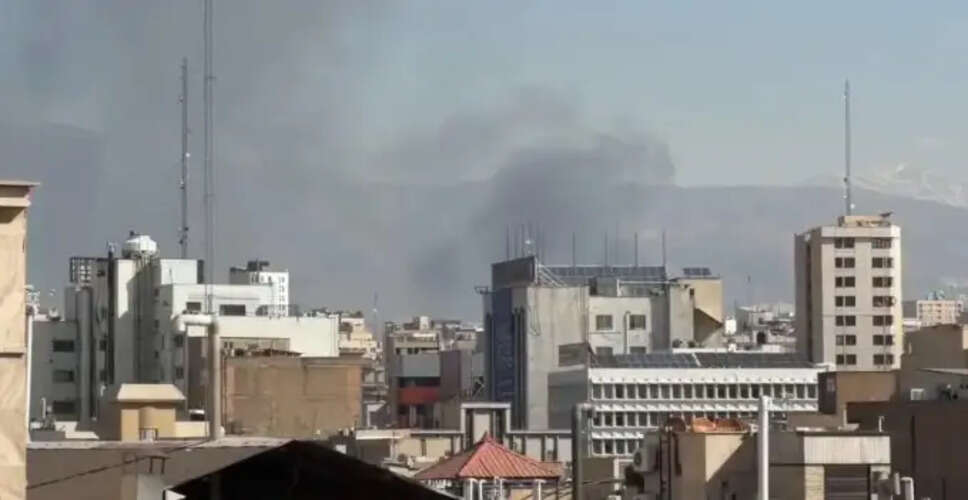
In a significant escalation of hostilities, Israeli airstrikes targeted the capitals of Iran and Lebanon early Friday, coinciding with a US attack on an Iranian drone carrier at sea. This marks a continuation of the aggressive campaign against Iran's naval capabilities.
Following a week of relentless bombardment, Iran retaliated with missile and drone strikes across the Middle East, prompting US Defense Secretary Pete Hegseth to warn of an imminent increase in military actions.
The Israeli military announced a comprehensive offensive against Tehran, with reports of intense airstrikes shaking homes and causing explosions near missile bases in Kermanshah.
Israeli forces claim to have significantly degraded Iran's air defense systems and missile launch capabilities.
The conflict has expanded its reach, affecting multiple countries in the region. Iran launched attacks on Kuwait, Qatar, Saudi Arabia, and Bahrain, all of which host US military personnel, although no immediate casualties were reported.
In Lebanon, renewed clashes between Israel and Hezbollah have led to a series of Israeli airstrikes in southern Beirut, causing panic among residents as they sought safety.
The US and Israel have conducted extensive strikes targeting Iran's military infrastructure, leadership, and nuclear ambitions, resulting in significant casualties, including over 1,230 in Iran, more than 120 in Lebanon, and around a dozen in Israel, along with six US military fatalities.
US Military Strikes Iranian Drone Carrier
The US military confirmed it struck an Iranian drone carrier early Friday, igniting a fire on the vessel. Central Command released footage showing the carrier ablaze, although the Iranian military has yet to respond to the attack.
The drone carrier, known as the IRIS Shahid Bagheri, is a converted container ship equipped with a runway for drones and capable of traveling extensive distances without refueling.
Adm. Brad Cooper, head of US Central Command, likened the size of the carrier to that of a World War II aircraft carrier, emphasizing its current state of destruction.
Under the cover of darkness, B-2 stealth bombers targeted deeply buried ballistic missile sites in Iran, with Cooper stating that they also struck Iran's equivalent of Space Command to diminish threats to US forces.
Hegseth hinted at an upcoming surge in military capabilities, including increased fighter squadrons and more frequent bomber missions.
Iran's Retaliation Against US-Hosted Nations
Qatar's Defense Ministry reported intercepting a drone aimed at Al Udeid Air Base, which serves as the forward headquarters for US Central Command.
Saudi Arabia successfully intercepted three ballistic missiles targeting Prince Sultan Air Base, which also hosts US troops.
In Bahrain, air raid sirens were activated as Iranian strikes targeted hotels and residential buildings, though no casualties were reported. Kuwait's military activated air defenses in response to missile and drone incursions.
Cooper noted that Iranian attacks have now impacted a dozen nations, expressing a desire for these countries to take a more active role in the conflict.
Trump's Remarks on Iran
In a statement from the White House, President Donald Trump urged the Iranian populace to reclaim their country, offering them 'immunity' amid the ongoing conflict, though specifics were lacking.
Cooper and Hegseth advised caution, warning Iranians against protests during active hostilities.
In an interview, Trump expressed interest in influencing the selection of Iran's next supreme leader following the death of Ayatollah Ali Khamenei in the initial strikes, dismissing his son as a potential successor.
Iran's Stance on Negotiations
Iran's ambassador to Egypt stated that the country has not sought negotiations with the US to end the conflict, citing a lack of trust following failed nuclear deal discussions.
Iranian Foreign Minister Abbas Araghchi accused the US Navy of committing an atrocity by sinking the Iranian frigate IRIS Dena, resulting in numerous casualties among the crew.
The Lebanese health ministry reported rising fatalities, with the death toll from renewed hostilities between Israel and Hezbollah reaching 123.