
Lindsey Graham's Legacy: A Controversial Figure in U.S. Foreign Policy
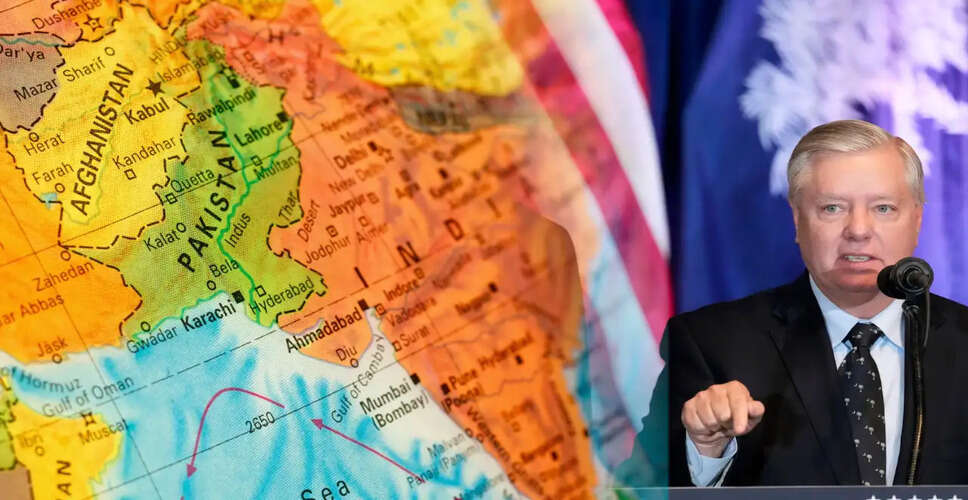

Lindsey Graham's Impact on American Foreign Policy
The passing of Lindsey Graham at 71 has reignited discussions about his influential role in shaping U.S. foreign policy over the last twenty years. The Republican senator from South Carolina was known for his steadfast views on national security, particularly regarding Ukraine and Iran. However, his increasingly aggressive stance towards India during the Russia-Ukraine conflict became a notable aspect of his international perspective. Graham's death occurred on Saturday due to what his office described as a sudden illness.
As a close supporter of former President Donald Trump, Graham frequently contended that nations buying discounted Russian oil were indirectly funding Moscow's military actions in Ukraine. India, along with China and Brazil, was often included in his critiques as he advocated for stricter economic sanctions against countries maintaining energy ties with Russia. His comments often sparked significant backlash from New Delhi, especially since the U.S. simultaneously regarded India as a crucial strategic ally in the Indo-Pacific region.
'Blood Money' and Economic Sanctions
Graham's most pointed criticisms of India surfaced during the latter stages of the Ukraine conflict. He argued that purchasing discounted Russian oil transcended mere economic choice, asserting that such actions were financially supporting Russia's military efforts. This argument became central to his push for extensive secondary sanctions.
Lindsey Graham was one of the most anti-India Senators in the US Senate. He was one of the closest aides to Donald Trump. Now he is dead pic.twitter.com/vzSkk9zzoh
— Sensei Kraken Zero (@YearOfTheKraken) July 12, 2026
In a widely circulated television interview, Graham warned, "Here's what I would tell China, India, and Brazil: If you keep buying cheap Russian oil to allow this war to continue, we're going to tear the hell out of you, and we're going to crush your economy, because what you're doing is blood money." This statement quickly became one of the most contentious remarks made by a U.S. lawmaker regarding India's energy strategy.
Earlier this year, Graham claimed that India had significantly cut its Russian oil imports due to the threat of American tariffs. However, Indian officials consistently asserted that their energy procurement was driven by market conditions and national security rather than external pressures, emphasizing their commitment to strategic autonomy.
Controversial Views on Iran and Pakistan
In addition to his comments on India, Graham was known for his hawkish foreign policy views. Earlier this year, he referred to Iran's supreme leader, Ayatollah Ali Khamenei, as the "modern-day Hitler" and urged Trump to take direct action against Iran's leadership, stating, "It's time for him to go," arguing that such a move would stabilize the Middle East.
His remarks regarding Pakistan also garnered attention. In May, Graham questioned Pakistan's reliability as a mediator between the U.S. and Iran, citing the country's historical animosity towards Israel as a complicating factor. He suggested that Pakistan should recognize Israel and reassess its regional stance, particularly in light of allegations that Iranian military aircraft were housed at Pakistani airbases—claims that Pakistan denied.