
Lahore Declared Most Polluted City Globally with Alarming AQI Levels
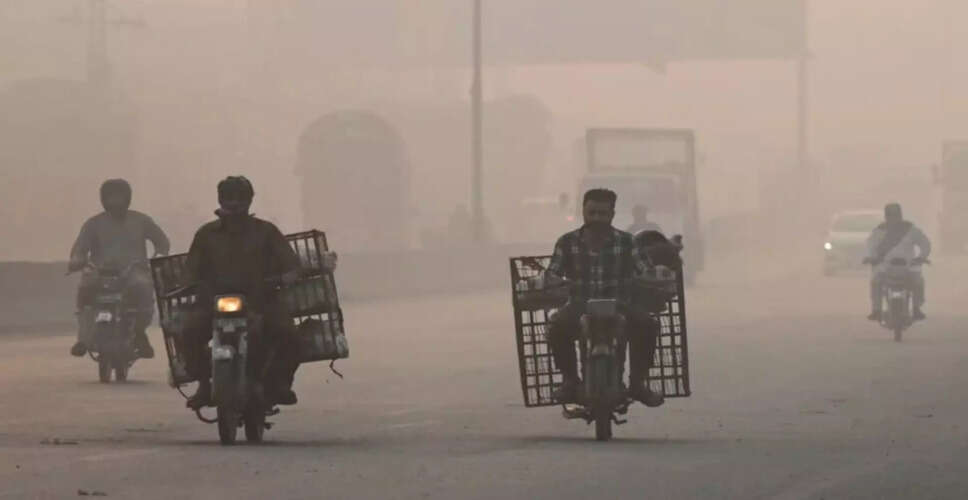

Lahore's Air Quality Crisis
Representational Image
Islamabad, Nov 2: On Monday, Lahore was reported as the most polluted city worldwide, registering an Air Quality Index (AQI) of 530, with PM2.5 levels soaring to 343 micrograms per cubic meter, according to local news sources.
As per IQAir's global assessment conducted between 9 am and 10 am on Monday, Lahore topped the list, followed by Cairo, which had an AQI of 226. Other cities in Pakistan's Punjab province also ranked among the most polluted, as reported by local media.
Lahore's AQI of 530 was the highest, with Gujranwala at 475, Faisalabad at 435, Multan at 280, and Sialkot at 241. Bahawalpur, also in Punjab, was seventh with an AQI of 180. The province is experiencing worsening air quality, largely due to a significant increase in agricultural fires.
Air pollution in Pakistan is estimated to reduce life expectancy by approximately 3.9 years and is responsible for around 128,000 premature deaths annually, according to the Pakistan Air Quality Initiative (PAQI). The economic impact of pollution is substantial, accounting for 6.5 percent of the nation's GDP, with prolonged exposure to polluted air potentially shortening life expectancy in Lahore by as much as seven years.
The report titled 'Unveiling Pakistan's Air Pollution: A National Landscape Report on Health Risks, Sources, and Solutions' provides a comprehensive emissions inventory and a multi-city air quality analysis. It investigates pollution trends in major cities like Karachi, Islamabad, Rawalpindi, Lahore, and Peshawar, identifying key emission sources and suggesting measures to cut emissions by up to 50 percent, as reported by local media.
This assessment includes data on carbon dioxide, PM2.5, nitrogen oxides (NOx), and sulfur dioxide (SO2), offering a detailed sector-wise breakdown of emissions across four urban areas. Lahore's annual average PM2.5 concentration exceeds 110 micrograms per cubic meter, which is over 22 times higher than the World Health Organization's (WHO) recommended limit of five micrograms per cubic meter. Long-term exposure to such pollution levels could reduce life expectancy in the city by up to seven years, the report warns.
Transport has been identified as the primary contributor to PM2.5 emissions in Lahore, followed by industrial activities at 28 percent and brick kilns at 17 percent. These factors significantly exacerbate Lahore's air quality issues, particularly during the winter months.