
Kim Jong Un Advances North Korea's Naval Nuclear Capabilities
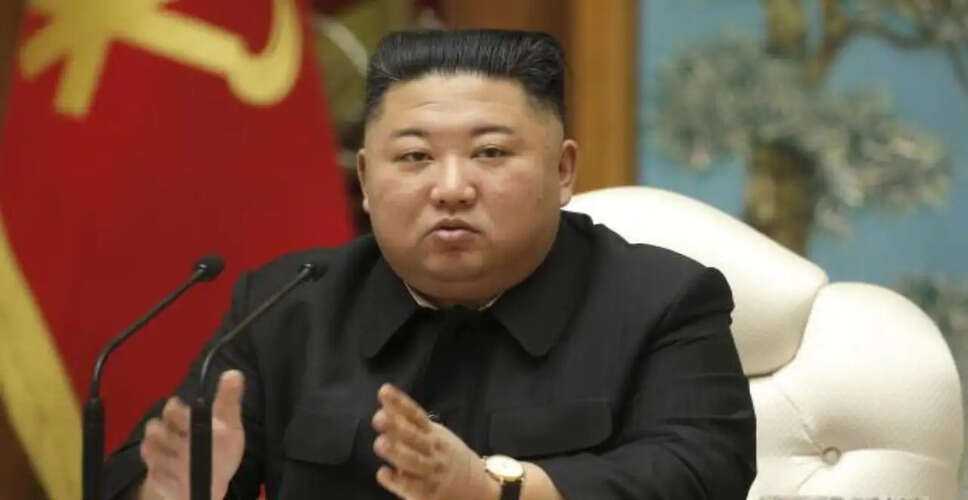
North Korea's Naval Developments Under Kim Jong Un
Kim Jong Un, the leader of North Korea, recently evaluated a newly constructed destroyer and supervised cruise missile tests conducted from the ship, as reported by state media on Thursday. He emphasized the urgency of enhancing the navy's nuclear capabilities during his two-day visit to a shipyard in Nampo this week, where he reviewed the warship ahead of its official commissioning and observed missile launch tests from the vessel, according to the Korean Central News Agency.
The destroyer, named Choe Hyon, is a 5,000-ton vessel that was first introduced in April 2025. State media highlighted its ability to carry various weapon systems, including anti-aircraft and anti-ship missiles, as well as ballistic and cruise missiles capable of nuclear delivery. Kim also inspected the construction of a third destroyer of the same class at the Nampo shipyard, which is anticipated to be completed by October, coinciding with the anniversary of the ruling Workers' Party of Korea.
After witnessing the sea trials of the Choe Hyon, Kim stated that the ship met operational standards and marked a significant advancement in enhancing North Korea's military reach and preemptive strike capabilities. He urged the construction of at least two warships of equal or greater class annually over the next five years.
Subsequent media releases included images of Kim observing from the shore as multiple cruise missiles were launched from the destroyer. The KCNA referred to these weapons as 'strategic,' a term frequently associated with nuclear-capable systems in North Korea's terminology.
Last year, North Korea introduced a second destroyer of the same class, which suffered damage during a failed launch ceremony in Chongjin. Kim labeled that incident as 'criminal.' The ship, later named Kang Kon, was reportedly relaunched in June after repairs, although external analysts have raised doubts about its operational status.
In recent years, Kim has placed a greater emphasis on bolstering naval forces alongside missile development, including efforts to create a nuclear-powered submarine. During a recent party congress, he outlined plans to expand North Korea's nuclear stockpile and develop weapons capable of underwater launches. He asserted that advancements in arming the navy with nuclear capabilities would significantly enhance the protection of the country's maritime sovereignty.
Moreover, Kim has consistently rejected the contested Northern Limit Line, a maritime boundary established by the U.S.-led U.N. Command following the Korean War, which has historically been a source of tension between North and South Korea.