
Kharg Island: A Historical and Strategic Enigma in the Persian Gulf

Introduction to Kharg Island
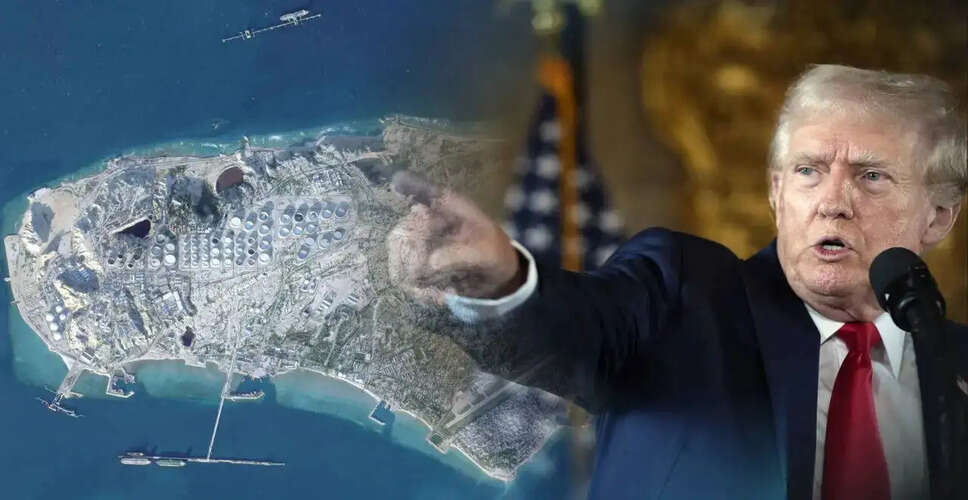
Kharg Island, located in the northern Persian Gulf and approximately twice the area of London's Heathrow Airport, has captivated various empires for over five centuries. Recently, it has drawn the attention of former US President Donald Trump. To grasp the significance of this “most-searched” island, a brief historical overview is essential. The Portuguese claimed it in 1507, followed by the Dutch in the 1700s, and the British, who occupied it twice—in 1838 and again in 1856. The island faced destruction during the Iran-Iraq War in the 1980s, and on March 13, 2026, US forces targeted its military sites. Despite numerous attempts to control Kharg, none have succeeded in maintaining a lasting hold.
The Strategic Importance of Kharg Island
Why Kharg Island Is a Valuable Asset
Kharg Island holds immense strategic value, with around 90% of Iran's crude oil exports passing through its terminal, which can handle approximately 7 million barrels daily and accommodate 10 supertankers at once. It is connected to offshore oil fields such as Faridun, Darius, Cyrus, and Ardashir, as well as mainland fields in Khuzestan. The oil transported through Kharg is valued at about $172 million daily, making it a critical point for Iran's economy.
The island's geographical features contribute to its significance. Most of Iran's coastline is too shallow for large vessels, but Kharg, situated 33 kilometers from the mainland, has deep waters suitable for the largest ships. Additionally, it possesses a rare natural freshwater supply, making it an attractive location for maritime operations.
Historical Context of British Occupation
The British Seizures of Kharg Island
Records from the Qatar Digital Library detail the two British occupations of Kharg. The first occurred in 1838 due to deteriorating relations with Persia, followed by a second occupation on December 3, 1856. Felix Jones, the Political Agent in the Persian Gulf, announced the takeover to the island's 400 residents and affixed a proclamation to the old Dutch fort's gate. Britain maintained control during the brief Anglo-Persian War, but withdrew its forces after the peace treaty was signed in May 1857.
Challenges of Occupying Kharg Island
The Difficulties of Holding Kharg Island
Occupying Kharg Island presents significant challenges. Positioned just 33 kilometers from Iran's coast, any military presence on the island is within artillery range, making it vulnerable to Iranian attacks. To maintain a garrison, constant naval support is necessary, as the island lacks local resources. Iran can disrupt operations through raids and harassment, making occupation a costly endeavor.
Historically, Britain viewed Kharg as a strategic asset for negotiations and power projection, but ultimately found that the costs of maintaining control outweighed the benefits.
Lessons from the Iran-Iraq War
Insights from Iraq's Attempts to Control Kharg
The Iran-Iraq War (1980–88) highlighted the difficulties of controlling Kharg Island. Iraq targeted the island extensively, leading to significant damage during the “tanker war.” Despite the destruction, Iran adapted by shifting exports to smaller terminals and eventually rebuilt Kharg, resuming exports of 1.5 million barrels per day by the 2020s. This experience demonstrated that while military strikes can damage infrastructure, they do not alter the geographical realities that favor Iran.
Current Geopolitical Dynamics in 2026
Kharg Island's Role in Modern Geopolitics
On March 13, 2026, US forces targeted military installations on Kharg Island, focusing on missile facilities supporting the IRGC's operations in the Strait of Hormuz. Trump noted that the oil terminal remained intact, emphasizing its importance. Analysts suggest that controlling Kharg could significantly impact Iran's economy, but occupying the island would place US troops in a precarious position, vulnerable to Iranian retaliation. The historical lessons of Kharg Island raise questions about whether the US will heed past experiences or repeat the same mistakes.