
Khalistan Movement Expands: Milan Protest Signals New International Strategy
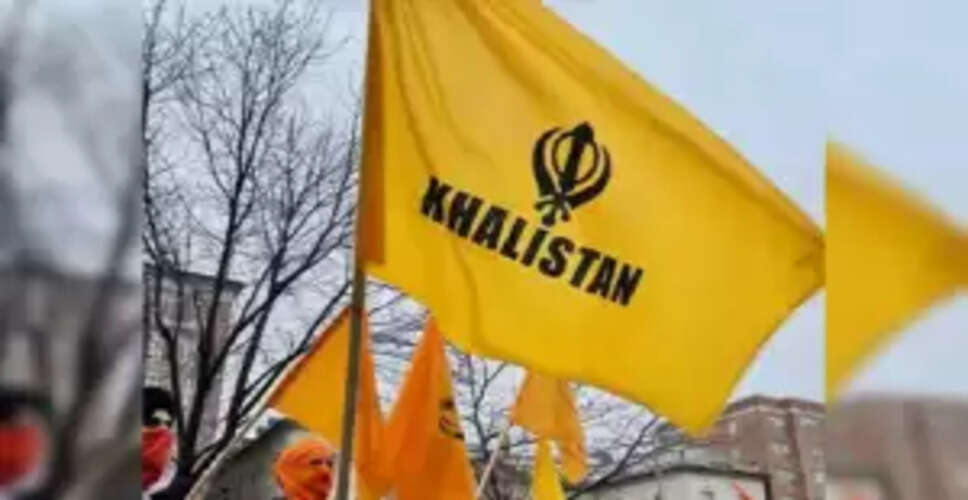
Emerging Khalistan Influence in Italy
New Delhi: A recent poster circulating in Milan, Italy, has called for a lockdown by pro-Khalistan supporters, indicating a significant shift in their global presence. While the Khalistan movement has been noted in countries like Canada, the UK, Germany, and Australia, this new development in Italy marks an expansion of their influence.
Officials from the Intelligence Bureau have reported that intercepted communications suggest Khalistani groups are actively seeking to broaden their reach into additional nations, thereby amplifying their messaging. This effort appears to be part of a larger strategy to promote a transnational narrative surrounding the Khalistan movement.
The poster not only advocates for the establishment of a separate Khalistan nation from Punjab but also references the situation in Bangladesh. The protest in Milan is being organized by Jagroop Singh and Gurpal Singh, members of the banned group Sikhs for Justice (SFJ), which leads the propaganda efforts for Khalistan. This organization has previously conducted referendums in Canada, the UK, and Australia.
Gurpatwant Singh Pannun, the head of SFJ, has infamously called for the assassination of Indian Prime Minister Narendra Modi and has circulated videos depicting the desecration of the Indian flag. The protest organizers have connected the killing of terrorist Hardeep Singh Nijjar to the murder of anti-India student leader Osman Hadi, blaming Indian agencies for Nijjar's death in Canada.
Following Hadi's murder, a narrative was constructed suggesting Indian involvement, indicating that Khalistani factions are following a script influenced by the ISI. Their aim is to capture international attention and portray India as interfering in other nations' affairs and conducting extrajudicial killings.
An official from the Intelligence Bureau stated that both Nijjar and Hadi's murders appear to be orchestrated by the ISI, which recognized both individuals as anti-India figures. After executing these operations, the ISI is attempting to propagate the narrative that India was responsible for their deaths.
As the Milan event approaches, security agencies are on high alert to prevent any disruptions. Indian officials view the Khalistan movement's expansion into Milan as indicative of a developing strategy.
With increasing scrutiny in Canada and the UK, Khalistani groups are now targeting Italy, with plans to extend their reach to other nations. They are engaged in a narrative battle against India, seeking support from as many countries as possible.
Indian intelligence has noted a rise in propaganda materials being disseminated on social media, with the Bangladesh issue being highlighted for the first time at the behest of the ISI, which aims to tarnish India's reputation globally.
As Bangladesh approaches its elections, further attempts to leverage Khalistani narratives are anticipated, with the ISI likely to exploit these groups to create the impression that India's actions are the root of Bangladesh's challenges.