
Israel's Military Operations Lead to Widespread Destruction in Southern Lebanon
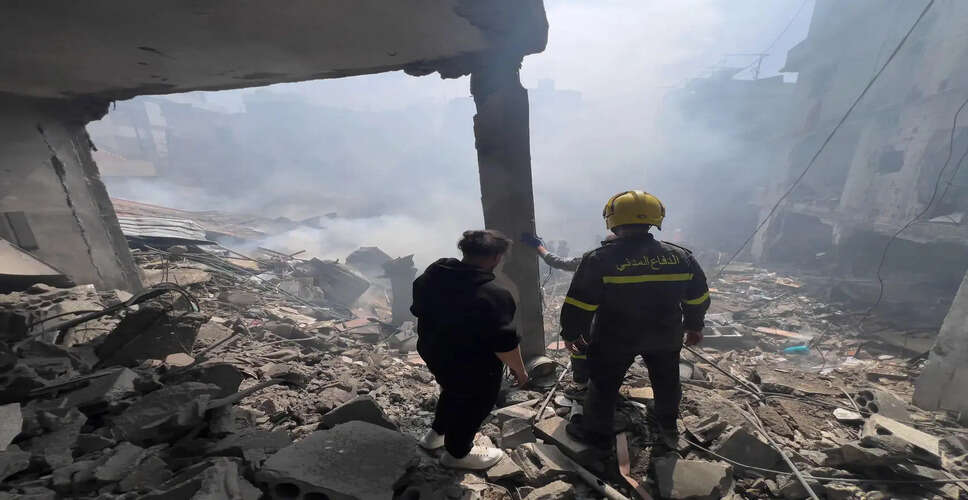

Destruction of Villages Amid Ongoing Conflict
In a significant escalation of its military actions, Israel has reportedly demolished entire villages in southern Lebanon, employing large-scale controlled explosions to level homes, as detailed in a report by a prominent news outlet. Footage analyzed by the report, along with various social media clips, captured mass detonations in border villages such as Taybeh, Naqoura, and Deir Seryan. Lebanese media have also confirmed additional demolitions. This destruction follows statements from Israeli Defence Minister Israel Katz, who advocated for the demolition of all structures in border regions, referencing tactics previously utilized in Gaza to mitigate threats to northern Israeli communities. Israeli forces assert that their operations are aimed at Hezbollah infrastructure, claiming that military facilities and tunnels are concealed within civilian residences.
Human rights organizations have expressed alarm over the extensive destruction, warning that it could constitute 'domicide,' which refers to the systematic eradication of civilian housing to render areas uninhabitable. International humanitarian law forbids the destruction of civilian property unless it is deemed necessary for military objectives. Ramzi Kaiss from Human Rights Watch stated, 'The potential for Hezbollah to utilize some civilian structures in Lebanon’s border villages for military purposes does not warrant the widespread obliteration of entire villages along the border.'
Israel has also signaled intentions to create a 'security zone' in southern Lebanon extending to the Litani River, with displaced individuals prohibited from returning until northern Israeli territories are considered secure. Residents have described the aftermath as life-altering. Ahmad Ibrahim, a farmer from Deir Seryan, lamented, 'My whole life is there... It’s a beautiful, typical village – at least it was before the war.' He further remarked, 'For the children, it was a beautiful place to grow up.'
Ahmad Abu Taam, a shopkeeper from Taybeh, recounted, 'The first thing we saw was the town square being blown up. I have a shop there. A person’s whole life is in that place, their work, their memories, everything. Suddenly you see it exploding in front of you. From that moment, I felt that I had become a refugee. I feel like I have no home.' He added, 'But this time, everything is gone. Everything has been wiped out.'
The current conflict in Lebanon ignited on March 2, when the Lebanese militant group Hezbollah targeted Israeli positions in support of Iran. Since then, Israel has intensified its air and ground operations in the region, resulting in over 2,000 fatalities, including 165 children and nearly 250 women. During his weekly address at St. Peter's Square, Pope Leo expressed solidarity with the 'beloved Lebanese people' and called for a ceasefire, emphasizing the moral duty to safeguard civilians from the devastating impacts of war.
Wednesday marked one of the deadliest days in Lebanon's recent history, as Israel launched a significant wave of airstrikes across the country, resulting in numerous casualties. Israel characterized this as the most extensive airstrike campaign in the ongoing conflict, targeting over 100 sites it identified as Hezbollah command centers and military installations within a mere 10 minutes. Areas including the southern suburbs of Beirut, southern Lebanon, and the eastern Bekaa Valley were all affected.