
Israel's Iron Beam Laser Defense System Potentially Engaged in Combat
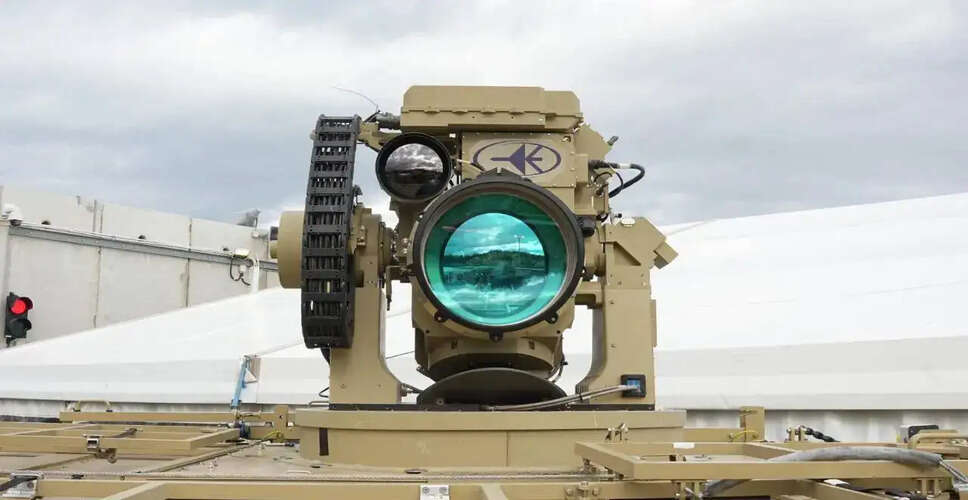
Operational Use of Iron Beam in Northern Israel
Recent reports from northern Israel indicate that the much-anticipated Iron Beam laser defense system may have been deployed to intercept projectiles launched by Hezbollah. Videos circulating on social media appear to show a focused beam of light hitting aerial targets near the Lebanese border. These clips, reportedly taken close to Kiryat Shmona, capture brief flashes in the night sky followed by falling debris. Although these visuals have sparked speculation about the system's battlefield debut, the Israel Defense Forces (IDF) have not provided a comprehensive public account of interceptions specifically linked to Iron Beam. Hezbollah has claimed responsibility for launching several rockets and drones towards northern Israel, while Israeli officials confirmed that air defense systems were activated, reporting no significant damage on the ground.
Understanding Iron Beam
Iron Beam is a high-energy laser weapon system, classified as a 100-kilowatt class, developed mainly by Rafael Advanced Defense Systems. It is designed to intercept short-range rockets, mortars, and unmanned aerial vehicles, serving as a complement to existing systems like Iron Dome rather than a replacement.
🚨 Israel has reportedly used its Iron Beam high-powered laser system in combat for the first time, intercepting rockets fired by Hezbollah over northern Israel. pic.twitter.com/eDnEAURkgC
— Breaking911 (@Breaking911) March 2, 2026
Unlike traditional kinetic interceptors that rely on missile launches, Iron Beam utilizes concentrated laser energy to neutralize or destroy aerial threats mid-flight. Analysts have noted its cost-effectiveness; while a single Iron Dome Tamir interceptor can cost tens of thousands of dollars, a laser shot is estimated to cost only a few dollars in energy usage. Israeli officials had previously indicated that Iron Beam would be integrated into the nation’s multi-layered air defense framework following successful trials in 2025. However, Israel has historically maintained a level of ambiguity regarding operational deployments until they are deemed strategically necessary.
Is This a Confirmed Use or a Strategic Signal?
Currently, there has been no official announcement confirming that Iron Beam executed its first combat interception during the recent Hezbollah attacks. Military analysts and defense journalists have noted visual signatures that align with directed energy systems, but independent verification remains scarce. The IDF has confirmed the activation of layered air defenses in response to the Hezbollah fire, but it has not specified whether Iron Beam was responsible for intercepting specific low-end threats like short-range rockets or drones. If confirmed, this would represent the first known combat application of a high-energy laser air defense system on a large scale, indicating a shift towards energy-based interception in environments with high volumes of low-cost projectiles.
Broader Strategic Implications
The potential operational debut of Iron Beam is being closely monitored on a global scale. Nations exploring directed energy systems, including India, view laser-based interception as a viable solution for countering drone swarms and rocket saturation tactics. India’s Defence Research and Development Organisation has been testing lower-power directed energy prototypes while continuing to enhance missile defense systems around key urban and strategic locations. For Israel, the situation is urgent; Hezbollah’s rocket arsenal and the increasing deployment of unmanned aerial vehicles have strained interceptor stockpiles. A laser-based system provides a sustainable defensive capability without the proportional expenditure of missiles. At this point, the evidence suggests that advanced air defense assets were activated during cross-border exchanges. Whether this marks Iron Beam’s definitive first combat use awaits official confirmation. However, it is evident that directed energy weapons are transitioning from laboratory settings to contested airspace.