
Israel's Election Results Show No Clear Majority Amid High Voter Turnout

Election Overview
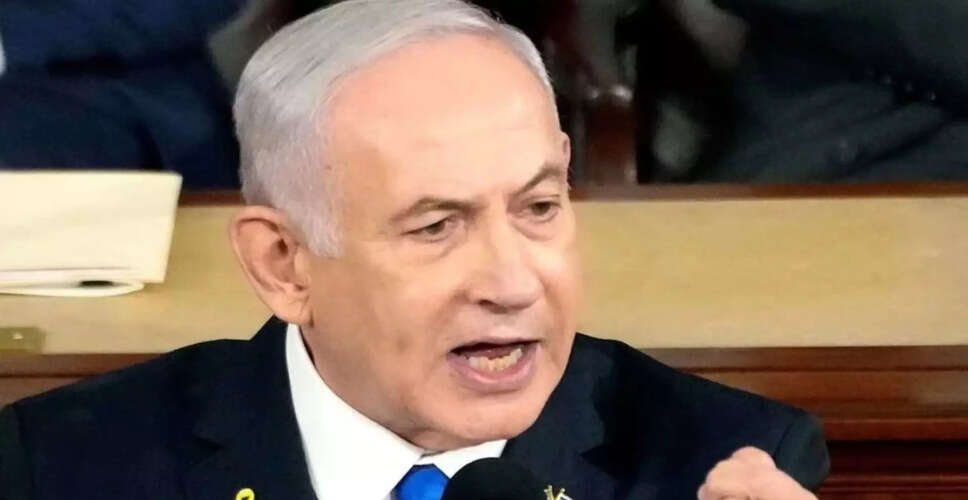
File image of Israel PM Benjamin Netanyahu(Photo: @SUDHIRb9661/X)
Jerusalem, Oct 28: The recent parliamentary elections in Israel have resulted in no decisive victor, as exit polls reveal that both Prime Minister Benjamin Netanyahu's coalition and the opposition alliance have not achieved the 61 seats necessary for a majority in the 120-member Knesset.
Poll Projections
As reported by local media, the exit polls suggest Netanyahu's coalition may secure between 51 and 52 seats, while the opposition, which includes parties like Yashar, B'Yachad, Yisrael Beytenu, and the Democrats, is projected to gain 49 to 51 seats. Some channels indicated a tie at 51 seats each, while one survey gave Netanyahu's bloc a slight lead with 52 seats. Following the release of these polls, the opposition claimed victory, although neither faction seems to have a clear path to forming a government.
Political Landscape
The exit polls also hinted that the opposition, led by Gadi Eisenkot, a former chief of staff of the Israel Defence Forces, might have a slight edge over Netanyahu's right-wing coalition when considering the combined strength of their parties. Nevertheless, Netanyahu's Likud party is expected to remain the largest single party with around 27 seats, while Yashar is anticipated to secure 21 to 22 seats.
Voter Sentiment
The results indicate that Netanyahu still enjoys substantial backing from a core group of Likud supporters, despite significant opposition to his leadership among various segments of the Israeli population. However, the projected seat distribution suggests that forming another coalition government could be challenging due to the opposition's strength and the influence of smaller parties.
Historic Voter Turnout
This election saw a remarkable voter turnout, described by many as one of the most significant in Israel's history. Notably, there was a record participation rate among Israeli Arab voters, which adds a crucial element to the electoral dynamics.
Exit polls indicate that Israeli Arab parties could collectively win up to 18 seats in the Knesset, potentially granting them significant influence in the formation of the next government. Their strength could be pivotal in what is anticipated to be a lengthy coalition-building process, especially if Netanyahu's coalition struggles to secure the necessary majority.
Final Turnout Figures
According to the final update from Israel's Central Elections Committee, voter turnout reached 77.7% by the time polls closed at 10 p.m. local time. This figure marks the highest turnout in an Israeli election in 27 years, surpassing the previous election's turnout by over seven percentage points.