
Israel Warns of Iran's New Leadership Ahead of US-Iran Peace Talks
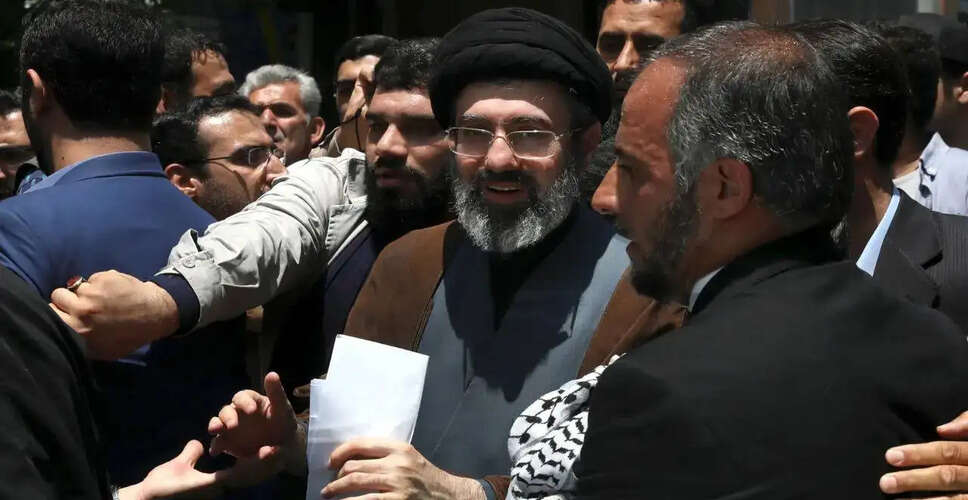

Israel's Concerns Over Iran's New Regime
Tel Aviv: As peace negotiations between the United States and Iran are set to take place in Islamabad, the Israel Defence Forces (IDF) have expressed concerns regarding the new Iranian leadership under Mojtaba Khamenei. They described this regime as significantly more "extreme and rigid" compared to the previous one led by Ali Khamenei. During a confidential intelligence briefing to the Knesset, IDF officials stated, "Iran’s new leadership is even more extreme than its predecessor," according to reports from a local media outlet.
The IDF highlighted that many leaders in the current regime are affiliated with the Islamic Revolutionary Guard Corps (IRGC). Notably, following the death of Supreme Leader Ayatollah Ali Khamenei on February 8, the United States and Israel initiated a campaign aimed at regime change, resulting in the deaths of several high-ranking officials. Mojtaba Khamenei, upon taking over leadership, pledged to avenge his father's death and the deaths of other officials due to US and Israeli actions.
Ceasefire Agreement with the US: In a recent development, former President Trump announced a two-week suspension of military actions against Iran after discussions with Pakistani leaders, just before his ultimatum to Tehran was set to expire. Trump stated that this decision followed talks with Shehbaz Sharif and Asim Munir, who requested a delay in military action.
In response, Iran's Foreign Minister Abbas Araghchi confirmed that Tehran accepted Pakistan's ceasefire proposal, indicating that if attacks on Iran cease, the country would also halt its defensive operations. He mentioned that for the next two weeks, safe passage through the Strait of Hormuz would be coordinated with Iran’s Armed Forces.
Iran's Preconditions for Ceasefire: Ahead of the formal talks in Islamabad, Iran has set forth two conditions. MB Ghalibaf, the Speaker of Iran's Parliament, stated on social media that a ceasefire in Lebanon and the release of Iran's frozen assets must be addressed before negotiations commence. He emphasized that these conditions are crucial for maintaining the fragile truce.
Ghalibaf reiterated, "Two of the measures mutually agreed upon between the parties have yet to be implemented: a ceasefire in Lebanon and the release of Iran’s blocked assets prior to the commencement of negotiations. These two matters must be fulfilled before negotiations begin."