
Israel Intensifies Airstrikes on Iran's Isfahan Facility
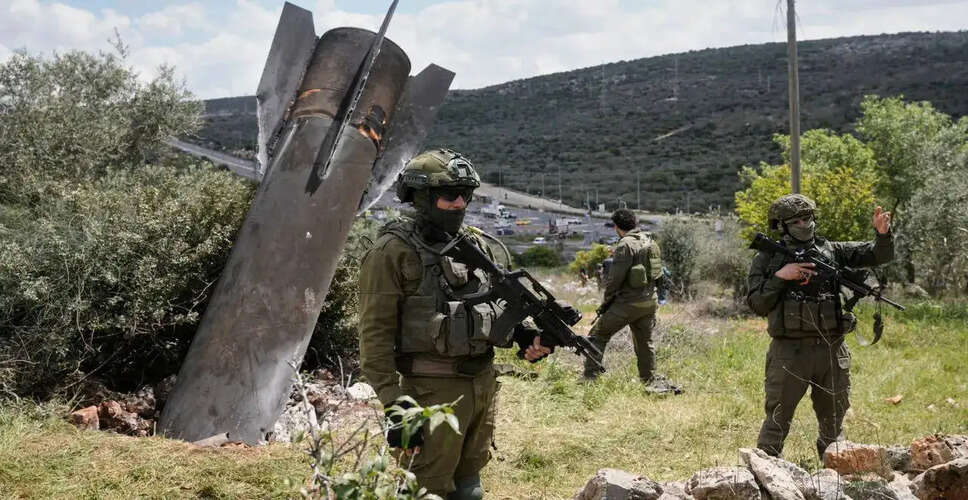
Israel's Strategic Airstrike on Isfahan
Israel's recent airstrike on Isfahan marks a significant escalation in its ongoing military campaign. On Tuesday, the Israel Defense Forces (IDF) announced that they targeted what they labeled as Iran's primary explosives production facility in Isfahan, a site previously bombed and rebuilt. This operation seemed more calculated, aiming not only to inflict damage but also to hinder recovery efforts. The Israeli Air Force unleashed over 120 munitions on various targets, including missile launch sites, weapons manufacturing facilities, and air defense systems, with the Isfahan site being a focal point of this assault, indicating its critical role in Iran's military-industrial framework.
🎯STRUCK: Iran’s central explosives production facility in Isfahan, used by the regime to develop materials for weapons.The site had been previously targeted, and recent efforts to restore its capabilities were identified.In parallel, dozens of additional targets were struck,… pic.twitter.com/txvFgng2wH
— Israel Defense Forces (@IDF) March 24, 2026
Significance of Isfahan and the Rationale for Repeated Strikes
The Isfahan facility is not merely a single production site; it is integral to a larger defense-industrial network that supports Iran's missile and drone capabilities. Military evaluations indicate that this facility manufactures high-grade explosives essential for warheads used in ballistic missiles and payloads for drones. This includes components associated with Iran's medium-range missile systems, which can target various locations across the Middle East, as well as explosive payloads for the Shahed-series drones that have been prominently utilized in the ongoing conflict. This context explains the rationale behind repeated strikes on the facility.Israeli officials have noted that the site had been partially restored following previous attacks. In contemporary warfare, particularly against industrial targets, inflicting damage alone is often insufficient. Facilities can be repaired, and production can resume. Supply chains are adaptable. A single strike may delay capabilities, but repeated strikes aim to systematically degrade them over time, a strategy often referred to as 'deepening the damage.'
Wider Campaign to Disrupt Iran's Military Operations
The strike on Isfahan is part of a broader operational strategy that has developed since February 28, when coordinated strikes by the US and Israel against Iran initiated a cycle of retaliation. Israel's focus has increasingly shifted towards targeting infrastructure rather than merely launch sites. The strategy now emphasizes dismantling the systems responsible for producing these weapons.חיל-האוויר ביצע יותר מ-600 מטסי תקיפה נגד מערך הטילים הבליסטיים של משטר הטרור האיראני.בעקבות תקיפות חיל-האוויר, אמ"ן מזהים בשבוע האחרון מורל ירוד, נפקדות ושחיקה בקרב חיילי יחידות הטילים הבליסטיים של משמרות המהפכה.בנוסף, פעילי היחידה פוחדים ומסרבים להגיע לאתרי השיגור בעקבות… pic.twitter.com/iazYwxsryX
— Israeli Air Force (@IAFsite) March 24, 2026
This includes targeting explosives manufacturing plants, missile assembly facilities, drone production sites, and other supporting industrial nodes. The cumulative goal is to diminish Iran's capacity to replenish its stockpiles after extensive exchanges of missiles and drones. The Israeli Air Force has indicated that this strategy is already yielding results, with intelligence suggesting a decline in morale, increased absenteeism, and operational strain within Iran's ballistic missile units following sustained attacks. While these claims are challenging to verify independently, they align with the overarching objective of maintaining pressure on both capabilities and personnel.