
Is Pakistan's Defense Pact with Saudi Arabia Just for Show? Insights from Kabul

Pakistan's Defense Pact Under Scrutiny
Kabul: Recent reports suggest that Pakistan's obligations under its defense agreement with Saudi Arabia may be more symbolic than substantive, particularly in light of its lackluster response to Iranian attacks on the Kingdom.
As per the Afghan Diaspora Network, Deputy Prime Minister Ishaq Dar addressed the Senate on March 3, reminding the Iranian Foreign Minister of the Strategic Mutual Defence Agreement (SMDA) with Saudi Arabia.
However, merely referencing the treaty does not equate to fulfilling its commitments. The report indicates that Islamabad has not deployed air defense systems, fighter jets, or interceptor batteries, opting instead to offer mediation.
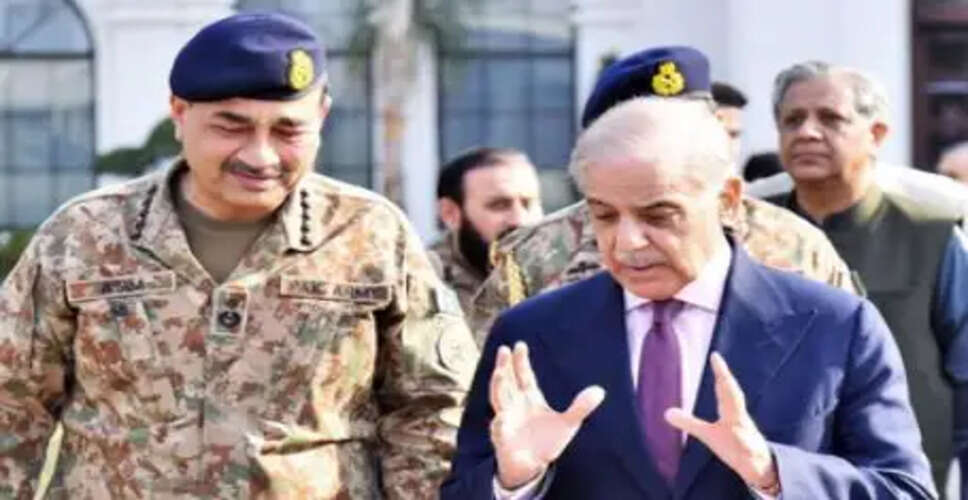
On March 12, Saudi Crown Prince Mohammed bin Salman summoned Pakistani Prime Minister Shehbaz Sharif, along with Army Chief Asim Munir and Dar, to Jeddah.
The report highlighted that Saudi Arabia explicitly called for Pakistan's active military participation under the SMDA.
As Pakistan hesitated, the Crown Prince reportedly expressed frustration over Islamabad's reluctance, viewing it as a 'clear breach' of the SMDA.
Pakistan has cited its ongoing military engagement with Afghanistan as a reason for its inaction, claiming it cannot allocate resources for Saudi defense due to its focus on the Taliban. However, this rationale appears weak, especially as Pakistan has escalated its conflict with Afghanistan, ignoring mediation attempts.
The Afghan Diaspora Network noted that Pakistan's Defense Minister had warned in February that action would precede Ramadan, but the timing of the escalation, just days before the Iran conflict, seems more about strategic positioning than counterterrorism.
Saudi Arabia and Qatar, previously mediators in the Pakistan-Afghanistan conflict, are now preoccupied with the Iran crisis, allowing Pakistan to continue hostilities without external pressure.
The report emphasized that Pakistan's reluctance is part of a broader pattern. In 2015, when Saudi Arabia initiated Operation Decisive Storm against Houthi rebels in Yemen and requested Pakistani military support, the Pakistani parliament unanimously chose neutrality, leading to a cooling of relations.
Now, in 2026, a similar scenario unfolds despite a signed defense agreement. Pakistan has historically viewed its alliances as opportunities for extraction, having received billions from the United States during the war on terror while harboring groups opposed to U.S. interests. Additionally, China has invested heavily in Pakistan through the China-Pakistan Economic Corridor (CPEC), yet Pakistan struggles to ensure security for Chinese projects.
The report concludes that Pakistan's unwillingness to act on its defense pact commitments has eroded Saudi Arabia's trust.
Saudi Arabia, which significantly supports Pakistan's economy, deposits billions in its central bank, and employs millions of Pakistani workers, now feels betrayed amidst ongoing Iranian aggression.