
Is Andy Burnham Set to Become Britain's Next Prime Minister? Key Developments Unfold!
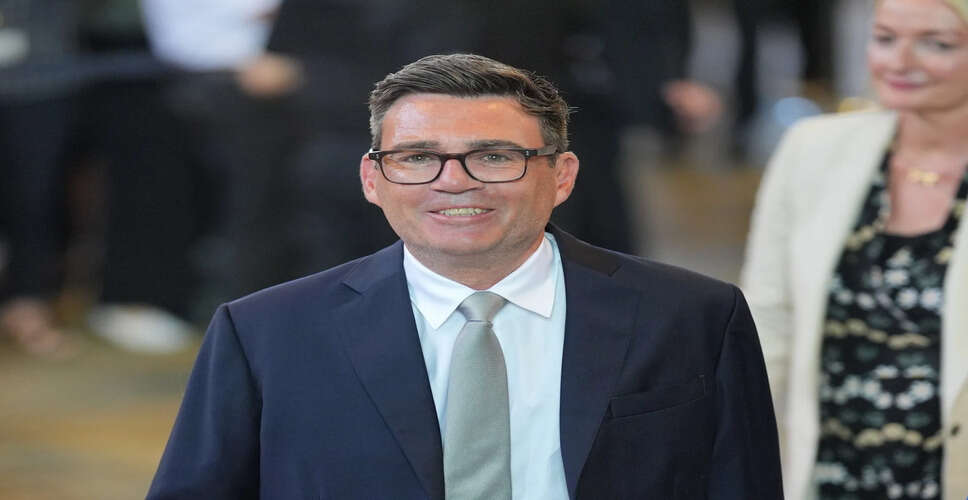

Andy Burnham's Path to Leadership
In London, Andy Burnham is inching closer to potentially becoming the next Prime Minister of the UK, especially after Cabinet minister Darren Jones announced he would not be entering the race against him. This development could pave the way for Burnham's unchallenged ascent.
Meanwhile, Keir Starmer, who is preparing to leave his position, faced the weekly Prime Minister's Questions in Parliament before heading to Berlin for discussions with European allies regarding Ukraine and the Middle East.
Starmer revealed his intention to resign on Monday, with plans to step down shortly after the Labour Party elects a new leader.
During the session, Conservative leader Kemi Badenoch criticized Starmer's leadership, claiming the Labour Party had abandoned him in favor of Burnham, whom she mockingly described as merely a pair of eyelashes and a black T-shirt.
In response, Starmer defended his tenure, asserting that he had worked diligently to reverse the austerity measures imposed by the Conservatives.
He stated, "The test for every prime minister is to leave the country in better condition than you found it. I am confident I can achieve that."
Jones, an ally of Starmer, was encouraged to run to ensure Burnham's policies and ideas were scrutinized by Labour lawmakers and members. However, some believe that a leadership contest could exacerbate the party's internal conflicts and prolong political instability.
Jones confirmed to Sky News that he would not pursue the leadership role but advised Burnham to avoid straying too far left in economic policies, a concern echoed by some in the business sector. Burnham is anticipated to appoint a new Treasury chief to succeed Starmer's choice, Rachel Reeves. Jones emphasized the need for someone who can instill confidence in the markets, trade unions, and the parliamentary Labour Party, ultimately reassuring the public.
Burnham is expected to deliver a speech next week detailing his economic strategies.
Starmer's two-year term has been marred by missteps that have diminished his standing within the party and among the public.
Burnham, who has served as the mayor of Greater Manchester since 2017, recently won a special election for a parliamentary seat, aiming to challenge Starmer for leadership.
Currently, he has no opponents, as former Health Secretary Wes Streeting, once viewed as a potential rival, has pledged his support for Burnham.
Nominations for the Labour leadership will commence on July 9 and conclude a week later. If Burnham remains the sole candidate, he could assume the role of Prime Minister by July 17. In the event of a contest, the new leader is expected to be in place by September 1, coinciding with Parliament's return from its summer recess.
Starmer informed his Cabinet on Tuesday that he would oversee a smooth transition to his successor.
He is also maintaining a busy agenda, aiming to solidify his legacy during his remaining time in office. However, he is restricted from making significant new policy announcements or financial commitments.
Starmer's upcoming trip to Berlin for a meeting with the E5 nations—Germany, France, Italy, Poland, and the UK—highlights his involvement on the global stage, particularly in supporting Ukraine and addressing the repercussions of the Iran conflict, where he has appeared more decisive than in domestic matters.
The British government is anticipated to release a long-awaited defense investment plan, which led to the resignation of Defence Secretary John Healey on June 11, ahead of a NATO summit in Turkiye on July 7 and 8, which Starmer is likely to attend.