
Iran's Supreme Leader Vows to Safeguard Nuclear and Missile Assets Amid US Tensions
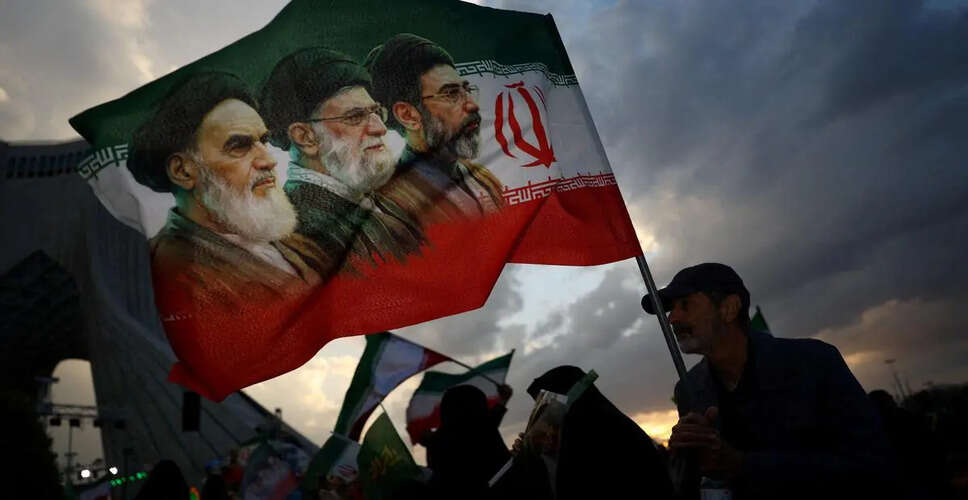

Iran's Stance on Nuclear Capabilities
In a recent address, Iran's Supreme Leader asserted that the nation will steadfastly defend its nuclear and missile capabilities, viewing them as vital national assets. This declaration comes as President Trump seeks to negotiate a broader agreement to solidify a fragile ceasefire that has lasted three weeks.
Khamenei, who has maintained a resolute stance since succeeding his father, emphasized that the only place for Americans in the Persian Gulf is 'at the bottom of its waters,' indicating a significant shift in the region's dynamics.
As Iran's oil sector faces challenges due to a US Navy blockade preventing its tankers from operating, the global economy is also feeling the strain. The Strait of Hormuz, a crucial passage for a significant portion of the world's oil supply, remains under Iran's control.
On the same day, Brent crude oil prices surged to $126 per barrel, intensifying pressure on Trump, who proposed a new strategy to reopen the Strait of Hormuz.
This strategy involves maintaining the blockade on Iranian ports while collaborating with allies to impose greater costs on Iran's efforts to disrupt energy flow, according to a senior official who requested anonymity.
With the ceasefire in a delicate state, tensions between the US and Iran persist over the strait. The blockade aims to hinder Iran's oil sales, depriving it of essential revenue and potentially forcing Tehran to halt production due to storage limitations.
The closure of the strait poses challenges for US allies in the Gulf, who rely on this waterway for their oil and gas exports.
Iran has suggested postponing discussions regarding its nuclear program, while Trump has reiterated that one of his primary motivations for military action was to prevent Iran from acquiring nuclear weapons. Iran, however, insists that its nuclear program is peaceful, despite enriching uranium to near weapons-grade levels of 60%.
Pakistan has expressed its role in facilitating indirect talks between the US and Iran to alleviate tensions, welcoming the possibility of direct communication between the two nations.
Khamenei's remarks during the Persian Gulf Day celebrations indicated that Iran's nuclear and missile programs would not be negotiable.
'Ninety million proud Iranians, both domestically and abroad, view all of Iran's capabilities, from nanotechnology to nuclear and missile technology, as national treasures that they will defend as fiercely as they protect their land and waters,' Khamenei stated.
Labeling the US as the 'Great Satan,' a term historically used by Iranian leaders since the 1979 Islamic Revolution, Khamenei asserted that Americans have no rightful place in the Persian Gulf.
'Foreigners who come from thousands of kilometers away with greed and malice have no place here—except at the bottom of its waters,' he added, referencing the recent attack that resulted in the death of his father, the former Supreme Leader.
Khamenei's comments suggest that Iran intends to maintain its authority over the Strait of Hormuz, which lies within Iranian and Omani territorial waters. Reports indicate that Iran has charged some vessels up to $2 million to navigate through the strait.
He claimed that Iran's management of the strait would enhance security in the Gulf and that Tehran's 'legal rules and new management' would benefit all nations in the region.
However, the international community views the strait as an open waterway, accessible to all without tolls, and Gulf Arab nations, particularly the UAE, have condemned Iran's control as akin to piracy.