
Iran's Revolutionary Guard Announces Blockade of Strait of Hormuz Amid Rising Tensions

Iran's Bold Move
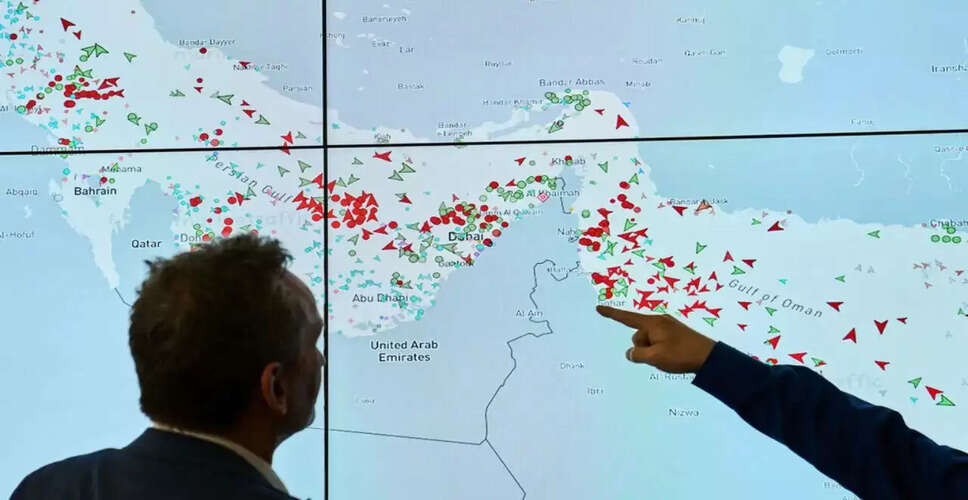
On Saturday, the Islamic Revolutionary Guard Corps (IRGC) of Iran declared a blockade of the Strait of Hormuz, significantly heightening tensions in a crucial global shipping route and intensifying its standoff with the United States. The IRGC's naval forces issued a warning via Telegram, stating that any vessel approaching the strait would be seen as collaborating with adversaries, and such vessels would be targeted.
A Sudden Change in Stance
This announcement came just a day after Iranian officials had assured that the strait was open for commercial navigation. Iran's foreign minister had previously stated that there were no restrictions on passage through the waterway, a sentiment echoed by President Trump. However, by Saturday, Iranian officials reversed their position, citing ongoing violations of a ceasefire agreement by the U.S. The IRGC claimed, "Due to the American enemy's failure to lift the naval blockade on Iranian vessels and ports, the Strait of Hormuz will be closed until this blockade is removed."
Rising Tensions and Verbal Confrontations
Iranian leaders characterized this blockade as a direct response to U.S. actions. Mohammad Bagher Ghalibaf, the parliamentary speaker and a key negotiator, criticized the U.S. blockade as an "ill-considered and ignorant decision," asserting, "It is impossible for others to navigate the Strait of Hormuz while we are restricted." Meanwhile, the U.S. has reiterated its commitment to maintaining its naval blockade of Iranian ports, with Trump stating that these measures would remain "in full force" until a comprehensive agreement is reached, complicating regional stability efforts.
Incidents in the Strait
On the same day, India summoned Iran's ambassador following what it termed a "serious incident" involving two Indian-flagged vessels in the strait. Reports from TankerTrackers.com indicated that both ships retreated after facing threats. A monitoring service linked to the British military reported that one tanker was fired upon by two Iranian gunboats, while another vessel was hit by an "unknown projectile." An Iranian naval commander warned that any aggression towards Iranian vessels would provoke a "hard blow," highlighting the potential for further escalation. The Strait of Hormuz has been a focal point of tensions since the onset of conflict between Iran and the U.S. earlier this year, with numerous attacks on commercial vessels reported. Iran contends that the U.S. blockade violates the ceasefire, while Washington insists on maintaining pressure until a broader agreement is achieved. Both sides appear resolute, with neither willing to back down.