
Iran's Proxy Militias in Iraq: Hesitation Amid Rising Tensions
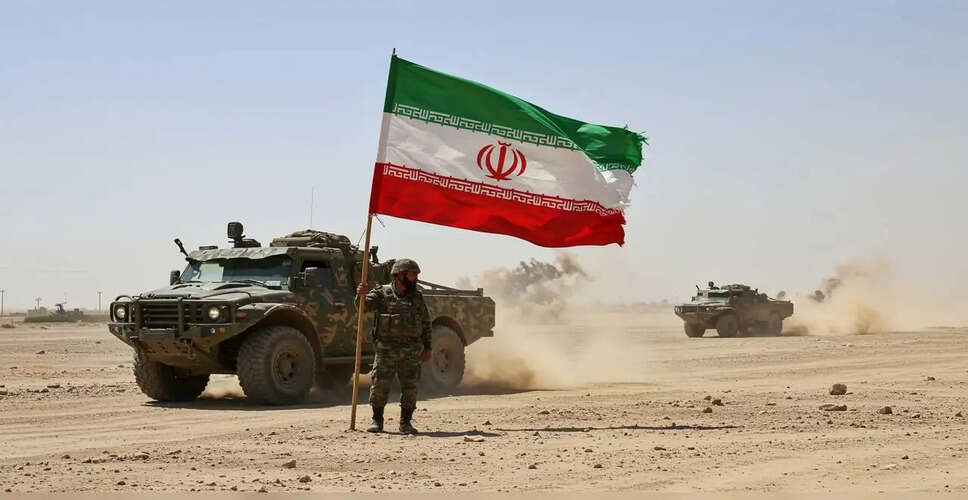
Iran's Investment in Proxy Forces
For decades, Iran has invested heavily in establishing a network of proxy militias throughout Iraq. However, as Tehran confronts what many perceive as a critical threat due to its ongoing conflict with the United States and Israel, many of these fighters have yet to engage in the hostilities. A commander from a pro-Iranian paramilitary faction in Iraq, referred to as A.J., mentioned that he has been awaiting directives from Tehran since the onset of the war a week ago, as reported by a news agency. Although some pro-Iranian groups in Iraq have claimed responsibility for attacks recently, their involvement in the conflict has been relatively minimal. One faction announced it had deployed drones against what it termed 'enemy bases in Iraq and the region,' with several explosions noted in Erbil, a Kurdish city that hosts a US military installation. Nevertheless, Kurdish officials assert that most missile and drone strikes targeting the area have originated directly from Iran.
Over two dozen attacks have been reported online under the banner of the Islamic Resistance of Iraq, a term used by various militant groups. However, many of these incidents seem to have resulted in little to no damage, and in some cases, there is no evidence that the attacks took place, according to the news report.
A.J. expressed skepticism that even if Tehran eventually issues direct orders, they would likely involve only a select few of the numerous Iraqi Shi’ite paramilitary groups that Iran has nurtured over the years. He stated, 'I just don't think most of them are reliable anymore.' He elaborated that while some factions may act, others might use front groups to carry out attacks while maintaining plausible deniability. Many, he believes, are primarily focused on their own interests at this point.
Reasons Behind the Inactivity of Iran's Iraqi Proxies
Why are Iran's Iraqi proxies staying out?
A.J. outlined several reasons contributing to the diminished military effectiveness of Iran's Iraqi proxies: the ongoing war of attrition waged by Israel and the United States against other regional allies, the loss of Syria as a vital supply route, and the integration of key commanders into Iraqi political and economic spheres. Since 2011, Iran has deployed proxy fighters to Syria to support Bashar al-Assad’s regime during an uprising that escalated into a civil war, primarily dominated by Sunni Islamist factions. For the broader Iran-backed coalition in the region, Syria has served as a critical land corridor connecting Iran to Hezbollah in Lebanon, facilitating the movement of weapons, fighters, and supplies across the Middle East.
Officials from Iraqi security and members of paramilitary groups suggest that Iran’s proxies could still mobilize in greater numbers if the conflict intensifies. This escalation could occur if the fighting prolongs, if a coordinated US-Israeli strike is perceived as targeting Shi’ites more broadly, or if US-supported Kurdish factions initiate attacks against Iran.
(With agency inputs)