
Iran's Protests Escalate: Death Toll Rises Amid Government Crackdown
Rising Casualties in Iran's Unrest
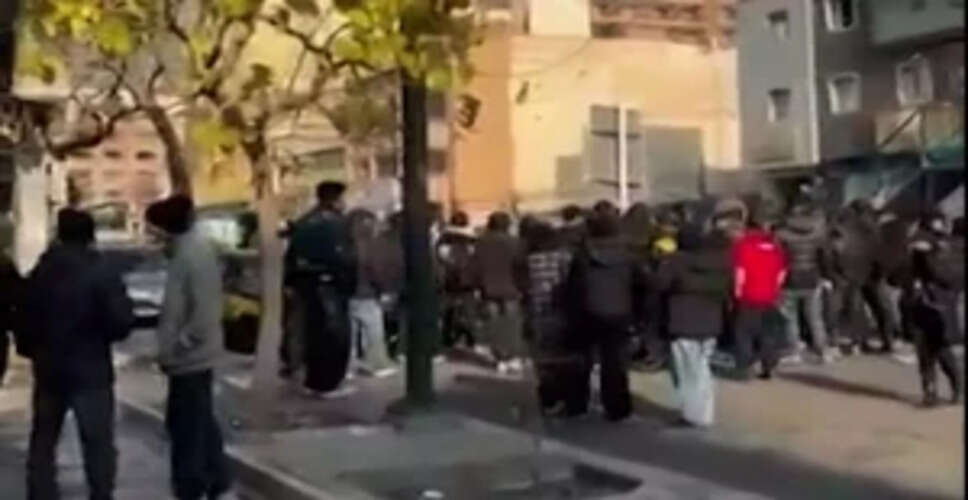
The violence surrounding protests in Iran has led to at least 35 fatalities, according to activists on Tuesday. The unrest has prompted the Iranian theocracy to acknowledge the situation in a western province, where security forces reportedly stormed a hospital.
The US-based Human Rights Activists News Agency reported that over 1,200 individuals have been arrested during the protests, which have persisted for more than a week. Among the deceased are 29 protesters, four children, and two members of the security forces.
Demonstrations have erupted in more than 250 locations across 27 of Iran's 31 provinces. The activist network, which provides information from within Iran, has a history of accurate reporting during previous unrest.
The semiofficial Fars news agency, linked to Iran's paramilitary Revolutionary Guard, stated that approximately 250 police officers and 45 members of the Basij force were injured during the protests. However, the Iranian government has not released comprehensive statistics regarding the unrest.
Investigation Promised by Iran
On Monday, Iranian President Masoud Pezeshkian tasked the interior ministry with establishing a special team to conduct a thorough investigation into the events in Ilam province. This area, located about 515 kilometers southwest of Tehran, has witnessed fatalities among protesters, with online footage allegedly showing security forces firing on civilians.
The presidency also confirmed an incident involving a hospital in Ilam, where security forces in riot gear were seen raiding the facility in search of demonstrators, drawing condemnation from the US State Department, which labeled the act a 'crime.'
The US State Department criticized the assault, stating, 'Storming the wards, beating medical staff, and attacking the wounded with tear gas and ammunition is a clear crime against humanity.'
Earlier reports from Fars suggested, without evidence, that protesters were armed with firearms and grenades. While firearms are more common in western Iran near the Iraq border, the government has not substantiated claims of armed demonstrators.
Ilam province, primarily inhabited by Kurdish and Lur ethnic groups, is grappling with severe economic challenges.
Potential US Intervention
The increasing death toll raises the possibility of American intervention. President Donald Trump warned Iran on Friday that if the government 'violently kills peaceful protesters,' the US 'will come to their rescue.'
Although it remains uncertain how or if Trump will act, his remarks elicited a swift and furious response from Iranian officials, who threatened to target American troops in the region. This situation gained further significance after the US military captured Venezuelan President Nicolas Maduro, a long-time ally of Tehran.
These protests mark the largest in Iran since 2022, when the death of 22-year-old Mahsa Amini in police custody ignited nationwide demonstrations. However, the current protests have not yet reached the same intensity as those following Amini's death, which was sparked by her detention for not adhering to hijab regulations.
Iran has experienced multiple waves of protests in recent years, particularly as sanctions tightened and the economy faltered following a brief conflict with Israel. The Iranian rial collapsed in December, trading at 1.4 million to USD 1, leading to protests where demonstrators voiced their opposition to the theocracy.
As of Tuesday, USD 1 was valued at 1.46 million rials.
Understanding the full scope of these protests has proven challenging, as Iranian state media has provided limited coverage. Online videos offer only brief glimpses of the unrest, and journalists face restrictions on reporting, including needing permission to travel and the risk of harassment or arrest.
Despite Supreme Leader Ayatollah Ali Khamenei's statement on Saturday that 'rioters must be put in their place,' the protests show no signs of abating.